Bike theft in London: the numbers by borough and what to do
Met Police data on 14,395 bikes stolen in London in a year, by borough and ward, with hotspots, a first-hour checklist, recovery odds and insurers' lock grades.
By the tyred mechanics
Short answer: the Metropolitan Police recorded 14,395 bicycle thefts in London in the twelve months to July 2026, 4% fewer than the year before. Hackney, Southwark, Tower Hamlets, Lambeth and Westminster account for nearly four in ten. Only 1.0% of the Met's recorded bicycle thefts ended in a charge in the year to March 2026. A Sold Secure Gold or Diamond lock through the frame, the frame number on BikeRegister and a photo and receipt improve your odds.
Key numbers, all from published data:
- 14,395 bicycle thefts recorded in London, August 2025 to July 2026, down 4.0% on the previous twelve months (Metropolitan Police data, London Datastore).
- 1.6 thefts per 1,000 residents across London, rising to 5.0 in Westminster and 4.6 in Hackney.
- 1.0% of bicycle thefts recorded by the Met in the year to March 2026 ended in a charge or summons, against 2.3% nationally (Home Office outcomes data).
- 2,966 e-bikes reported stolen in London in 2025, up 21% on 2024 (Met figures analysed by Pelion).
- 62% of bicycle thefts in England and Wales happen at or around the victim's home, and in 45% of cases the bike was not locked (Crime Survey for England and Wales, year to March 2025).
How many bikes are stolen in London
The Metropolitan Police recorded 14,395 bicycle thefts in London in the twelve months to July 2026, down 4.0% from 15,002 in the twelve months before.
The monthly pattern is strongly seasonal. February 2026 was the quietest month with 810 thefts, and July 2026 the busiest with 1,531, close to double. Every month from May to October in that window saw more than 1,300.
The national picture moves the same way. Police in England and Wales recorded 56,835 bicycle thefts in the year to March 2026, 5.1% fewer than the year before and 34% fewer than a decade earlier, according to the Office for National Statistics. London accounts for roughly a quarter of the national total.
Recorded crime undercounts the problem, because many victims never report it. The Crime Survey for England and Wales, which asks households directly, estimates 196,000 bicycle thefts in the year to March 2026, about three and a half times the number the police recorded. Around 1.7% of bicycle-owning households were victims in that year.
What the figures do not include
The figures above count theft of a pedal cycle, Home Office offence code 44. A bike taken from you by force or the threat of it, sometimes called bikejacking, is recorded as robbery and is not in these numbers; call 999 if that happens.
Thefts in the Square Mile are recorded by the City of London Police and thefts at railway stations by British Transport Police, so neither is in the Met's borough figures.
Bike theft in London by borough
Hackney recorded the most bicycle thefts of any London borough in the twelve months to July 2026, with 1,221, followed by Southwark, Tower Hamlets, Lambeth and Westminster. Westminster has the highest rate per resident at 5.0 per 1,000.
The list covers the same twelve months, the latest full year in the Met's published borough data, ranked by count, with thefts per 1,000 residents and the change on the previous twelve months. Rates use the Office for National Statistics mid-2024 population estimates. The City of London is policed by a separate force and is not included.
- Hackney: 1,221 thefts, 4.6 per 1,000, down 10.6%
- Southwark: 1,155 thefts, 3.7 per 1,000, down 0.7%
- Tower Hamlets: 1,096 thefts, 3.3 per 1,000, down 4.3%
- Lambeth: 1,044 thefts, 3.3 per 1,000, up 19.2%
- Westminster: 1,041 thefts, 5.0 per 1,000, up 2.8%
- Camden: 893 thefts, 4.1 per 1,000, down 10.3%
- Islington: 819 thefts, 3.7 per 1,000, down 13.8%
- Wandsworth: 742 thefts, 2.2 per 1,000, up 25.8%
- Hammersmith and Fulham: 575 thefts, 3.0 per 1,000, down 6.5%
- Newham: 569 thefts, 1.5 per 1,000, up 3.3%
- Hounslow: 427 thefts, 1.4 per 1,000, down 14.9%
- Waltham Forest: 373 thefts, 1.3 per 1,000, down 15.6%
- Ealing: 364 thefts, 0.9 per 1,000, down 16.7%
- Lewisham: 345 thefts, 1.1 per 1,000, down 2.5%
- Richmond upon Thames: 344 thefts, 1.7 per 1,000, down 23.4%
- Haringey: 335 thefts, 1.3 per 1,000, up 20.9%
- Kensington and Chelsea: 333 thefts, 2.3 per 1,000, down 15.9%
- Kingston upon Thames: 286 thefts, 1.7 per 1,000, down 7.4%
- Brent: 285 thefts, 0.8 per 1,000, down 6.9%
- Greenwich: 266 thefts, 0.9 per 1,000, down 19.6%
- Hillingdon: 258 thefts, 0.8 per 1,000, up 7.5%
- Merton: 242 thefts, 1.1 per 1,000, up 13.1%
- Croydon: 209 thefts, 0.5 per 1,000, up 8.3%
- Barnet: 204 thefts, 0.5 per 1,000, up 5.7%
- Enfield: 194 thefts, 0.6 per 1,000, down 4.0%
- Redbridge: 168 thefts, 0.5 per 1,000, down 21.5%
- Bromley: 137 thefts, 0.4 per 1,000, up 6.2%
- Barking and Dagenham: 122 thefts, 0.5 per 1,000, up 4.3%
- Harrow: 100 thefts, 0.4 per 1,000, down 23.1%
- Havering: 99 thefts, 0.4 per 1,000, down 20.2%
- Sutton: 83 thefts, 0.4 per 1,000, down 24.5%
- Bexley: 66 thefts, 0.3 per 1,000, down 4.3%
All 32 boroughs: 14,395 thefts, 1.6 per 1,000 residents, down 4.0% on the previous twelve months.
Three things stand out:
- The five worst boroughs by count are all inner boroughs, and together they hold 38.6% of London's thefts.
- Per head of population, Westminster tops the list at 5.0 per 1,000 residents, because the rate divides thefts by residents and many of the bikes parked there belong to people who live elsewhere.
- The trend is not uniform: Lambeth and Haringey each rose by around a fifth and Wandsworth by a quarter, while Hackney, Camden and Islington fell by a tenth or more.
Where and when bikes are stolen in London
Bicycle theft in London concentrates in a small number of central wards where people park for work, study or a night out. Household bikes are a different case: the Crime Survey puts 62% of thefts nationally at or around the victim's home.
The Met publishes the same data by ward, and the ten wards below recorded the most bicycle thefts in the twelve months to July 2026.
- St James's, Westminster: 213 thefts
- Hoxton East and Shoreditch, Hackney: 194
- Bloomsbury, Camden: 194
- West End, Westminster: 153
- Waterloo and South Bank, Lambeth: 138
- Spitalfields and Banglatown, Tower Hamlets: 127
- Borough and Bankside, Southwark: 119
- Bunhill, Islington: 116
- London Bridge and West Bermondsey, Southwark: 113
- Haggerston, Hackney: 113
The list is the West End and St James's, the Shoreditch and Old Street office and nightlife belt, the university quarter in Bloomsbury, and the South Bank, Bankside and London Bridge. All of them draw commuters, students and visitors.
The ten wards together account for one theft in ten across the whole city. A bike left outside in any of them for a working day is parked where London's thefts concentrate.
62% of thefts nationally are at or around the home
The picture at home is different. The Crime Survey for England and Wales asks victims where the bike was when it went. In the year to March 2025, 16% of bicycle thefts happened inside the home and 4% in the street outside it.
Another 42% happened in a semi-private area of the home such as a garden, shed, garage or communal hallway. That is 62% at or around the home, against 9% in other streets and 10% in the grounds of a public place.
The survey also asks whether the bike was locked. In the year to March 2025 it was locked in 55% of cases, which means nearly half of stolen bikes had no lock on them at all. The reasons given were:
- "never thought about it" (30%)
- "safe area, no need" (24%)
- "forgot" (16%)
- "do not own a lock" (11%)
In the same survey year, 70% of thefts happened on a weekday and 53% in the evening or at night.
How many bikes are stolen at railway stations?
Railway stations are their own problem, policed by British Transport Police. Figures obtained by the insurer Cycleplan under Freedom of Information, and reported by road.cc in August 2026, show 1,900 bikes reported stolen at stations across Britain between January and June 2026. That is down 11% on the same period in 2025.
Clapham Junction recorded 27 thefts in those six months, up from 7 the year before.
What to do if your bike is stolen: the first hour
Report the theft to the police first, mark the bike as stolen on the register you used, and tell your insurer, all on the same day. The Met's own bike theft page says to act fast: "the sooner we know, the sooner we can act, which might stop it being sold on."
- Report it to the police straight away. If the theft is happening now or the thief is still there, call 999. Otherwise report online through the Met's reporting form or call 101. A theft in the Square Mile is reported to the City of London Police. A theft at a station or on railway land is reported to British Transport Police, online, on 0800 40 50 40 or by text to 61016.
- Give the details and keep the reference number. Give the frame number, the number from the register you used, a photo and anything distinctive. You will get a crime reference number, and every later step needs it.
- Mark the bike as stolen on the register. If you registered on BikeRegister, log in and change the status to stolen. BikeRegister says every police force in the UK uses its database to search for stolen and recovered bikes, so an entry marked stolen is how a recovered bike finds its way back to you.
- Tell your insurer. Policies can set a deadline for reporting a theft and ask for the crime reference number, so do this on the same day. That applies whether the bike is on a cycle policy or your home contents policy. Have the receipt, photos and lock details ready.
- Post it where London cyclists look. The Met's bike theft page suggests posting a description and photo on the road.cc forum, CycleChat and the London Fixed Gear and Single-Speed forum (LFGSS). Stolen Ride, which runs a London stolen-bike listing and the Stolen Bikes in London Facebook group, is the other place to post. Include a clear photo, the frame number and where the bike was taken from.
- Watch the resale sites. Set searches on Facebook Marketplace, Gumtree, eBay and Vinted for your make, model and colour. Stolen bikes can reappear for sale within days, stripped of the obvious accessories. If you find yours, send the listing to the police with your crime reference number and let them arrange any meeting.
- Ask about CCTV. Shops, offices and building managers near the spot may hold footage for a few days only. Ask them to keep it and tell the police it exists. British Transport Police's own figures show CCTV helped in 10.3% of station bike theft cases in the first half of 2026, up from 6.7% a year earlier.
- If the bike has a tracker, pass the location to the police. Give the live location to the police through the crime reference number, and do not go to the address on your own.
How likely are you to get a stolen bike back?
About one recorded bicycle theft in a hundred in London ends in a charge.
Home Office outcomes data for the year to March 2026 covers 56,835 bicycle thefts recorded in England and Wales: 85% were closed with no suspect identified and 2.3% ended in a charge or summons. For the Met's 14,321 recorded bicycle thefts in the same year, 92% were closed with no suspect and 1.0% ended in a charge.
The Met's own dashboard measures "positive outcomes", which counts charges, cautions, community resolutions and similar results. Across London in the twelve months to July 2026 it counted 262 positive outcomes against 14,470 bicycle theft offences, a rate of 1.8%. The dashboard is a separate Met dataset, so its offence count differs slightly from the borough figures.
The 1.8% rate is low, but it is up from 1.1% in the previous twelve months. At railway stations the change has been sharper. British Transport Police charged or summonsed someone in 9% of concluded bike theft cases in the first half of 2026, double the 4.4% of a year earlier.
The Met and the Home Office publish outcome rates rather than recovery rates, and bikes do come back without a charge when a recovered frame number leads to a registered owner. The steps below take about five minutes.
Register, photograph, keep the receipt
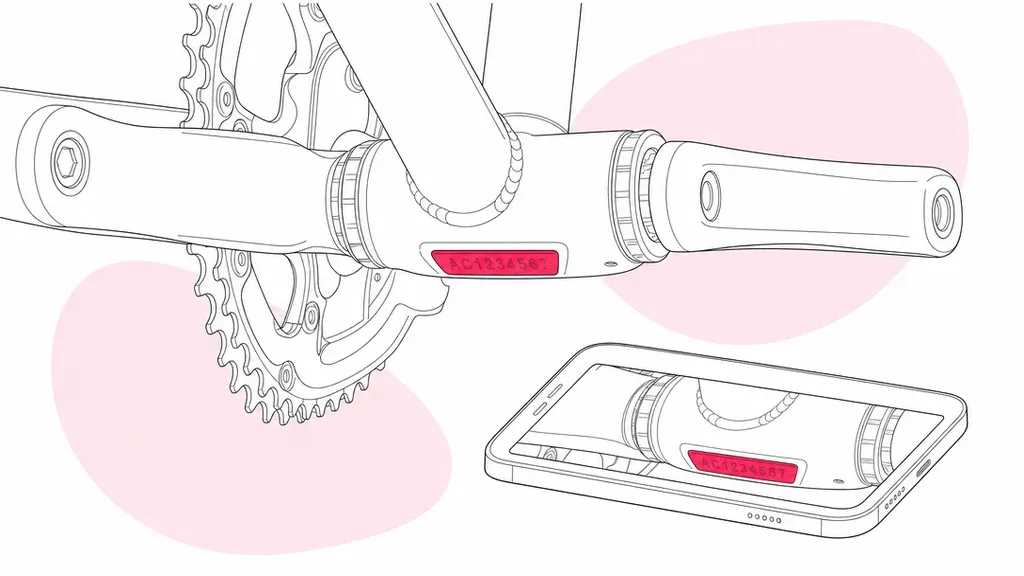
The frame number is stamped into the frame, on the underside between the pedals or where the back wheel slots in; the Met's page gives the same two places. Photograph it now, and photograph the whole bike from both sides with anything distinctive in shot.
Register the number on BikeRegister, which is free, police-approved and, in its own words, used by every police force in the UK to search for stolen and recovered bikes. At the time of writing it holds over 1.5 million bikes.
Keep the purchase receipt, or for a second-hand bike the seller's details and the listing. Security marking, which etches or tags the frame with a registered code, is what the Met's page calls "a highly effective, visible deterrent to bike thieves".
E-bike theft in London
E-bike thefts in London reached 2,966 in 2025, up 21% from 2,448 in 2024 and from 2,120 in 2023. The figures are Met data analysed by the research firm Pelion and reported in May 2026.
The reason is value. An e-bike costs more than a comparable bike without a motor, and a removable battery is a high-value part that lifts off in seconds.
Two habits reduce the exposure. Take a removable battery with you whenever the bike is left outside, because the bike is worth much less to a thief without it.
The second habit is to check how any policy values the bike. A home contents policy sets its own limit for a single item, so compare that limit with what the e-bike cost before you rely on it.
One legal point matters for insurance. In the UK an electric bike is treated as a bicycle only if the motor is rated at 250 W or less and assistance cuts out at 15.5 mph.
A converted or de-restricted bike outside those limits is classed as a motorcycle or moped in law. That means registration, a licence and motor insurance, and a bicycle policy is not written for it.
The Met seized more than 2,500 illegal e-bikes and e-scooters in the first seven months of 2026, against 2,200 in the whole of 2025. If you are unsure what you own, check the motor's rating plate before you buy cover.
Locks that meet insurance requirements
Sold Secure is the testing body UK insurers refer to when they specify a lock. Its own guidance says many insurers require a Sold Secure rated lock and will state the grade. It has four grades.
In its own words, Bronze gives "a good level of resistance against the opportunist thief" and Silver is for "the more determined thief".
Gold gives "a very good level of resistance against the dedicated thief" in a high-risk environment. Diamond is for "the most determined thief" in the highest threat environments, tested against a specialist tool list.
Which grade a policy names varies by insurer. Sold Secure says providers will often specify the grade they require, and Secured by Design, the police security initiative, says to look for Gold or Diamond on an e-bike.
If you are choosing a lock for a bike you intend to insure, check the grade your policy names before you buy. Gold is the grade Sold Secure describes for a high-risk environment, and Diamond is for the highest threat environments, a fair description of the ten wards above.
The thief's side of this is on record. In Stolen Ride's interview with a former London bike thief, his tool was a pair of bolt cutters. Cable and chain locks were the quickest to cut, and a small, stiff D-lock with no room to move the cutters was what slowed him down.
How you use the lock matters as much as the grade. The Met's ten-point advice comes down to this:
- Use two locks of different types, at least one a D-lock, because a thief is less likely to carry tools for both.
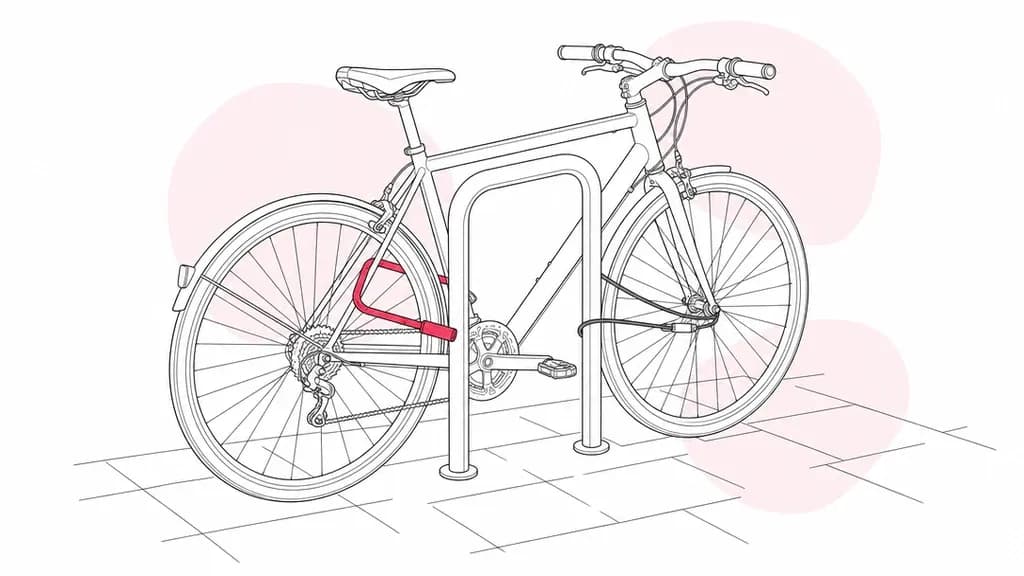
- Lock the frame and both wheels to a secure cycle stand, and keep the lock as close to the stand as possible so there is little room to work a lever in.
- Take removable parts with you, such as wheels, lights, baskets or the saddle, or fit locking skewers or nuts.
- Choose recognised secure cycle parking that is well lit and covered by CCTV, and in the ten wards above treat any long stay outdoors as a risk.
- Take the same care at home as on the street. With 42% of thefts from gardens, sheds, garages and communal areas, a locked shed on its own is not enough. Fit a ground or wall anchor inside it and lock the bike to that through the frame. In a communal hallway or a council cycle hangar, lock through the frame to the rack as you would in the street.
- Do not advertise the bike. The Met suggests removing car roof racks and setting privacy zones on apps such as Strava so your home does not appear at the end of every ride.
What theft insurance requires after a theft
After a theft, a cycle insurer asks for a crime reference number, proof of ownership, proof of the lock and its grade, and an account of how and where the bike was locked. Cycle insurers publish their own conditions and the details vary, so check your policy for each of these before you need it.
- A police report and crime reference number, made promptly. Check the policy for a reporting deadline.
- Proof of ownership: the receipt, or photos plus the frame number for a bike bought second-hand.
- Proof of the lock: the grade required by the policy and the receipt for the lock.
- How the bike was locked: through the frame, to an immovable object, and within any time limit the policy sets for being left unattended away from home.
- Where it was at home: inside a locked home, in a locked shed or garage, or locked to a fixed object in any shared area or hangar. Check whether the policy requires evidence of forced entry for a theft from inside a building.
- What the bike is: an e-bike outside the 250 W and 15.5 mph limits, or a bike whose value was understated, can lead to a declined claim.
- If the bike is on a home contents policy, check whether it is covered away from home at all, and what the limit for a single item is.
Read the lock clause before you buy the policy, because the insurer will ask for the lock's grade and its receipt after a theft.
Related pages
- Mobile bike repair across London, including the inner boroughs in the list above
- Cycling insurance from Tyred
- How to fix a bike puncture (and when to call a mechanic)
Sources and further reading
- London Datastore: MPS recorded crime, borough and ward level, most recent 24 months (Metropolitan Police Service, August 2024 to July 2026, downloaded 2 September 2026). Borough and ward figures above are the "Bicycle theft" subgroup summed for August 2025 to July 2026.
- London Datastore: MPS Monthly Crime Dashboard data, offences and positive outcomes by borough (Metropolitan Police Service, refreshed 2 August 2026).
- ONS: Crime in England and Wales, appendix tables, year ending March 2026 (23 July 2026), police recorded bicycle theft (Table A5) and Crime Survey estimates (Tables A1 to A4).
- ONS: Nature of crime, bicycle theft, year ending March 2025, location, timing, value and whether the bike was locked.
- Home Office: police recorded crime and outcomes open data tables, year ending March 2026 (23 July 2026), outcomes for offence code 44, theft or unauthorised taking of a pedal cycle, nationally and for the Metropolitan Police.
- ONS: mid-2024 population estimates for local authorities, used for the per-1,000 rates.
- Metropolitan Police: protect your bike from theft, the "ten ways to protect your bike" list and the forums it recommends (read 8 September 2026), and how to report a crime.
- British Transport Police: contact us, the non-emergency number 0800 40 50 40 and the 61016 text service for thefts at stations and on railway land.
- Sold Secure: ratings explained, the official definitions of Bronze, Silver, Gold and Diamond and the note on insurers specifying a grade.
- BikeRegister, the police-approved national cycle database; registration count checked 2 September 2026.
- Secured by Design: bike security, the police initiative's advice on lock grades for e-bikes, sheds, garages and ground anchors.
- Stolen Ride: an interview with a former London bike thief, tools, targets and what slowed him down, in his own words.
- road.cc: reported bike thefts at train stations fall by 11% (19 August 2026), British Transport Police figures obtained by Cycleplan under Freedom of Information.
- GOV.UK: electric bikes, licensing, tax and insurance, the 250 W and 15.5 mph limits for an electrically assisted pedal cycle, and Metropolitan Police: record seizures of illegal e-bikes and e-scooters (25 July 2026).
- CMO Tech: London e-bike thefts hit record high (25 May 2026), Metropolitan Police e-bike theft figures analysed by Pelion.
- road.cc: what's Britain's most stolen bike? (16 May 2014), BikeRegister theft data by brand for the year to April 2014.