Bike tyre sizes explained: markings, chart and rim fit
How to read bike tyre sizes, a chart by rim diameter, the tyre widths each rim takes, hookless rules, inner tube ranges, valves and frame clearance.
By the tyred mechanics
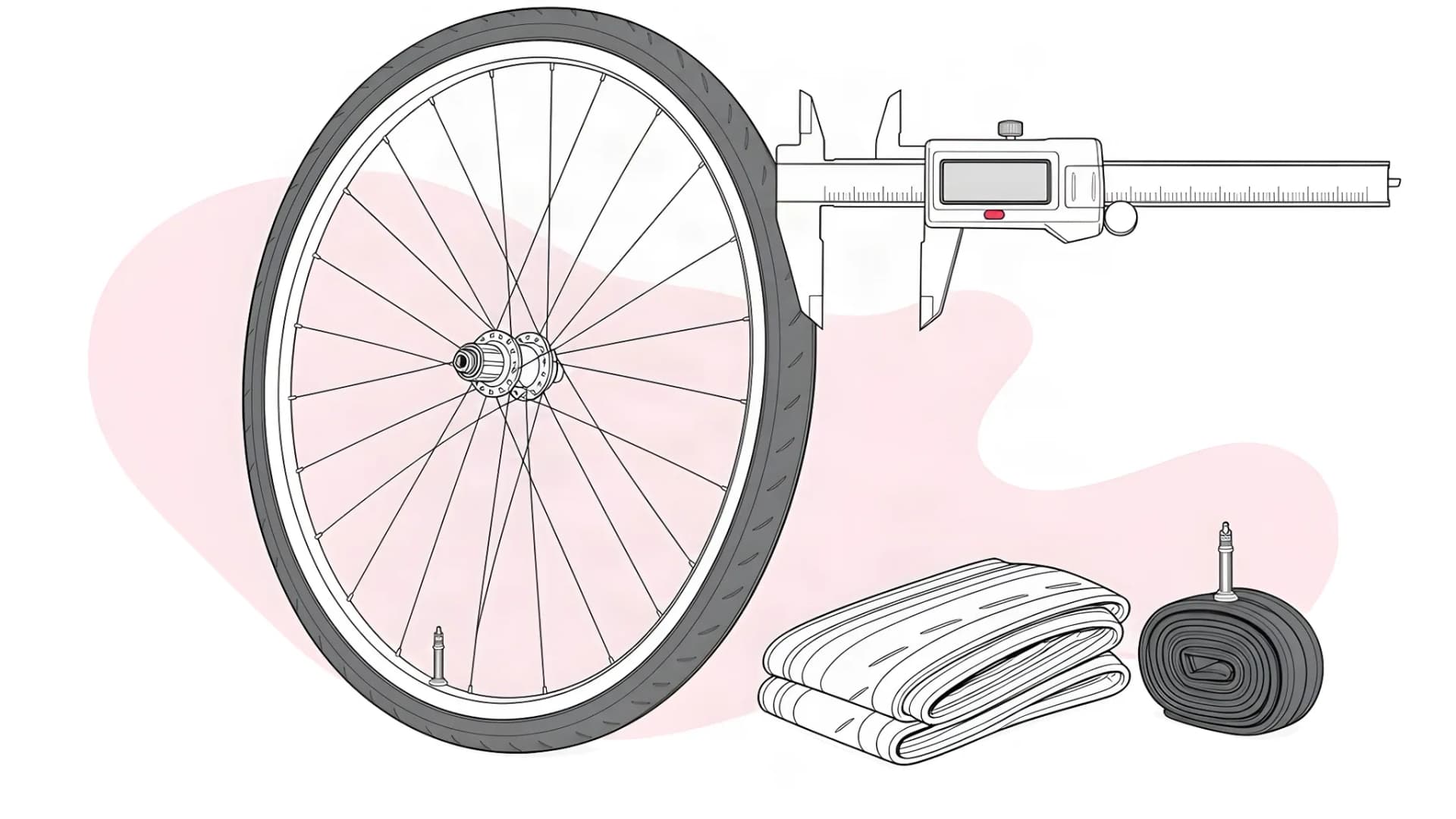
Short answer: bike tyre sizes are fixed by the ETRTO number on the sidewall, such as 37-622. The first figure is the tyre's width in millimetres, and the second is the bead seat diameter of the rim it fits. Match the second number first, because labels such as 28 inch or 26 inch cover several different rims. Then check the width against the rim's internal width, the tyre type and the space in your frame.
How to read the size on a bike tyre
The size of a bike tyre is moulded into its sidewall in up to three systems: an ETRTO number, a French size and an inch size. BikeRadar's size guide calls the ETRTO number the definitive size, and it is the one that decides fit.
BikeRadar also notes that the moulding can be black on black, so read it outdoors or under a bright light.
ETRTO size: 37-622
An ETRTO size is two numbers in millimetres. Schwalbe's size guide reads 37-622 as a tyre 37 mm wide with a 622 mm inner diameter. Mavic's technical manual notes that ETRTO, the European Tyre and Rim Technical Organisation, developed the ISO 5775 standard behind it.
The second number, the bead seat diameter, is the diameter of the rim where the tyre's bead sits, without the tyre. Cycling UK's tyre size guide states the rule: any tyre marked xx-622 will fit any 622 mm rim at a pinch, unless the rim is hookless (see below).
The first number is a nominal width. Cycling UK notes that the measured width is normally a little less, and varies with the tyre's design and the rim it sits on.
French size: 700 x 35C
A French size such as 700 x 35C gives an approximate outside diameter and width in millimetres, then a letter. Schwalbe's guide explains that the letter stands for the rim diameter: C means 622 mm, so a 700c rim does not measure 700 mm across.
Sheldon Brown's tables give 650B as 584 mm, 650C as 571 mm and 650A as 590 mm. The French width is nominal: Cycling UK's table lists 700 x 35C as 37-622 and 700 x 38C as 40-622.
Inch sizes: 29 x 2.25 and 28 x 1 5/8 x 1 3/8
A decimal inch size such as 29 x 2.25 gives an approximate outside diameter and width in inches, and Michelin's guide notes its use on mountain bike and city tyres. A fractional size such as 28 x 1 5/8 x 1 3/8 gives outside diameter, tyre height and width, as Schwalbe reads it.
Schwalbe calls both inch systems imprecise. A 23 mm road tyre on a 622 rim, sold as 28 inch, is just over 26 inches across, and a 60 mm tyre on the same rim is almost 30 inches.
Rim markings: 622 x 19C
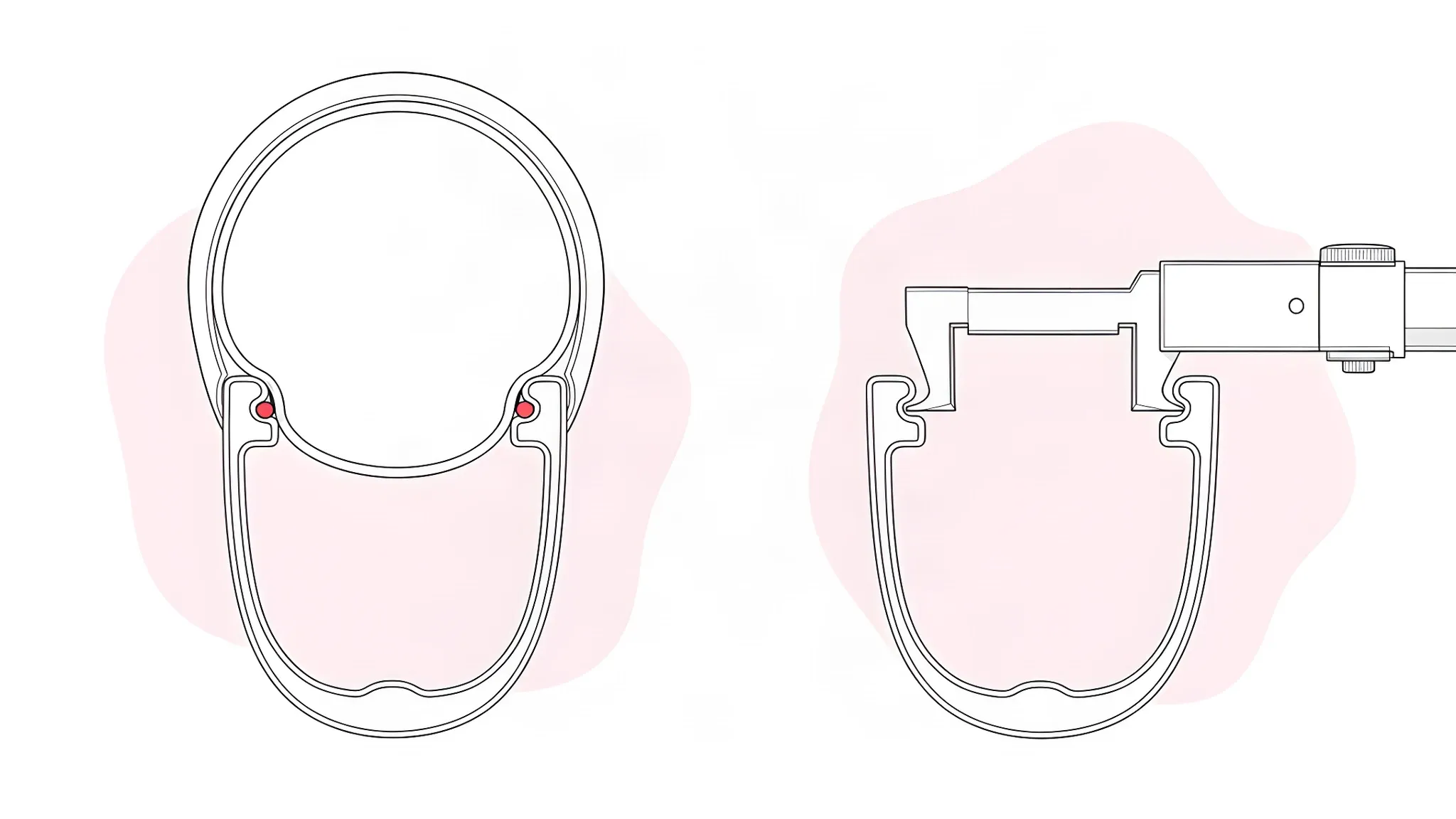
A rim label gives the bead seat diameter first, then the internal width. Schwalbe's example of a 622 x 19C rim has 19 mm between the rim walls.
Mavic's manual shows the label beside the valve hole, such as 622x19TC, where TC marks a hooked tubeless rim and TSS a hookless one. Cycling UK warns that some rim makers quote the overall width instead of the internal width.
Markings that are not the size
Three other markings sit near the size:
- A pressure range in psi and bar. These are the tyre's limits, and our bike tyre pressure guide covers where to set it inside them.
- e25 or e50. Continental's tyre FAQ explains that e25 marks tyres suitable for pedelecs, and e50 marks tyres with ECE-R75 approval for faster S-pedelecs.
- Tubeless-ready, TLR or TLE. Cycling UK and Schwalbe use these marks for tyres that can run without a tube on a suitable rim.
Why the same inch size can be two different tyres
An inch label can cover several rims, so a 26 inch or 28 inch tyre may not fit a wheel with the same label. Schwalbe's guide lists 559, 571 and 590 mm rims sold as 26 inch, and 622 and 635 mm rims sold as 28 inch.
The same guide gives 27 inch as 630 mm, a different rim from 27.5 inch, which BikeRadar puts at 584 mm. By contrast, 700c and 29 inch share the 622 mm rim, and Schwalbe explains that 29 inch is a mountain bike name for wide 622 tyres.
Sheldon Brown names the mix of decimal and fractional labels as the main cause of mismatches. Cycling UK points out that 26 x 1½ fits a 584 mm rim and 26 x 1.5 a 559 mm rim, a whole inch apart.
Sheldon Brown's rule is that a decimal size and a fraction of the same value will not interchange, apart from three exceptions in his tables. Small wheels repeat the problem: Cycling UK's table lists 20 x 1⅛ against two rims, 451 mm and 406 mm.
Bike tyre size chart by rim diameter
This bicycle tyre size chart lists each bead seat diameter with the labels it is sold under. The bikes come from Sheldon Brown's tables and the widths from Cycling UK's size table, unless another source is named. A matching diameter is the first check; width, tyre type and clearance follow below.
Adult wheels, largest first:
- 635 mm (28 x 1½, 700B). Rod-brake roadsters, English and Dutch. Widths: 40-635. It is also sold as 28 inch, like 622, so check the number.
- 630 mm (27 inch). Older road bikes. Widths: 25-630 and 32-630.
- 622 mm (700c, 28 inch, 29 inch). Road, hybrid, gravel and 29in mountain bikes. Widths: 18-622 to 60-622, and BikeRadar lists a 29 x 2.6 in tyre as 66-622.
- 597 mm (26 x 1¼). Older British sport and club bikes. Widths: 32-597.
- 590 mm (26 x 1⅜, 650A). English three-speeds, and Dutch touring bikes in Schwalbe's guide. Widths: 28-590 to 42-590.
- 584 mm (650B, 27.5 inch, 26 x 1½). 27.5in mountain bikes and 650b gravel wheels in BikeRadar's guide, and French utility and touring bikes. Widths: 28-584 to 70-584.
- 571 mm (650C, 26 x 1). Triathlon, time trial and road bikes for smaller riders. Widths: 20-571 to 40-571.
- 559 mm (26 inch decimal). Older mountain bikes and cruisers; BikeRadar calls 26in more or less obsolete on new mountain bikes. Widths: 25-559 to 57-559.
Smaller wheels, for folders, cargo bikes and children's bikes:
- 540 mm (24 x 1⅜). British juvenile bikes and wheelchairs. Widths: 32-540.
- 507 mm (24 inch decimal). Children's mountain bikes and cruisers. Widths: 37-507 and 47-507.
- 451 mm (20 x 1⅛, 20 x 1⅜). Adult BMX and some folding bikes. Widths: 28-451 and 35-451.
- 406 mm (20 inch decimal). BMX, children's bikes, folders, trailers, and cargo bikes such as the Tern GSD. Widths in Cycling UK's table: 28-406 to 54-406; cargo bikes go wider, such as the Tern GSD's 62-406.
- 349 mm (16 x 1⅜, 16 x 1.35). Brompton and other folders. Widths: 35-349 and 37-349.
- 305 mm (16 inch decimal). Children's bikes, trailers and some folders. Widths: 47-305.
Widths vary more by type of bike, and BikeRadar's guide gives these ranges:
- Road bikes, 700c. 25 mm is the narrowest fitted to new road bikes, many bikes run 28 mm, and some recent frames clear 32 mm or more.
- Hybrids, 700c. From just over 30 mm into the high 40s.
- Gravel bikes. 700c from about 32 mm to around 50 mm where the frame allows; 650b from about 40 mm towards 60 mm.
- Mountain bikes. 2 to 2.6 in, written in inches; BikeRadar's list puts a 2.4 in tyre at 61 mm.
Tyre sizes for Bromptons, folders, cargo bikes and e-bikes
On small wheels one inch label can mean several rims, so read the ETRTO number on these bikes:
- Brompton A, C, P and T Line. 16 inch here means 349 mm: Brompton lists its Schwalbe Marathon Racer as 35-349 for these models and their electric versions. A 16 x 1.75 tyre is a 305 mm size in Sheldon Brown's table and will not fit.
- Brompton G Line. Brompton lists its G One tyre as 20 x 2.1, which Schwalbe's size list places at 54-406.
- Other folders. Sheldon Brown lists folding bikes on 406, 451, 349 and 305 mm rims, so check the number after the dash.
- Cargo bikes. Tern lists the GSD S00 with a 55-406 front tyre and a 62-406 rear, one diameter in two widths. Read both sidewalls before you order for a cargo bike.
- E-bikes. E-bikes use the same ETRTO sizes: Brompton fits the Electric C Line with the same 35-349 tyre as the pedal models. Check the e25 or e50 rating as well.
- Dutch-style roadsters. A roadster sold as 28 inch can have a 635 mm rim, the 28 x 1½ size in Cycling UK's table, or a 622 mm rim. The two take different tyres.
How to measure bike tyre size when the sidewall is worn
When the sidewall is worn, read the rim label and the bike's records first, and use a tape measure to narrow the choice. The tyre's outside diameter is no guide: Schwalbe's figures show it changing by nearly four inches with width on one 622 rim.
1. Read both sidewalls and the rim
Wipe the tyre and read both sidewalls all the way round, because the moulding can survive on one side. Then check the rim near the valve hole, where Mavic's manual shows the size label.
2. Check the tyre model or the bike's specification
A legible model name leads to the tyre maker's size list. The bike maker's specification page lists the original tyres, as Tern's page for the GSD does.
3. Measure the bare rim
With the tyre off, lay a tape measure across the rim between two opposite points, and slide one end until the reading is largest. Sheldon Brown's rim guide says to average several diameters, and that the result is about 10 mm larger than the bead seat diameter.
4. Confirm the size before you order
Find the nearest size in the chart above, then confirm it. The 622, 630 and 635 mm sizes, and the 584, 590 and 597 mm sizes, sit 5 to 8 mm apart. If the rim label, the bike's specification and your measurement disagree, have a mechanic measure the bead seat diameter before you buy.
5. Measure the width you actually have
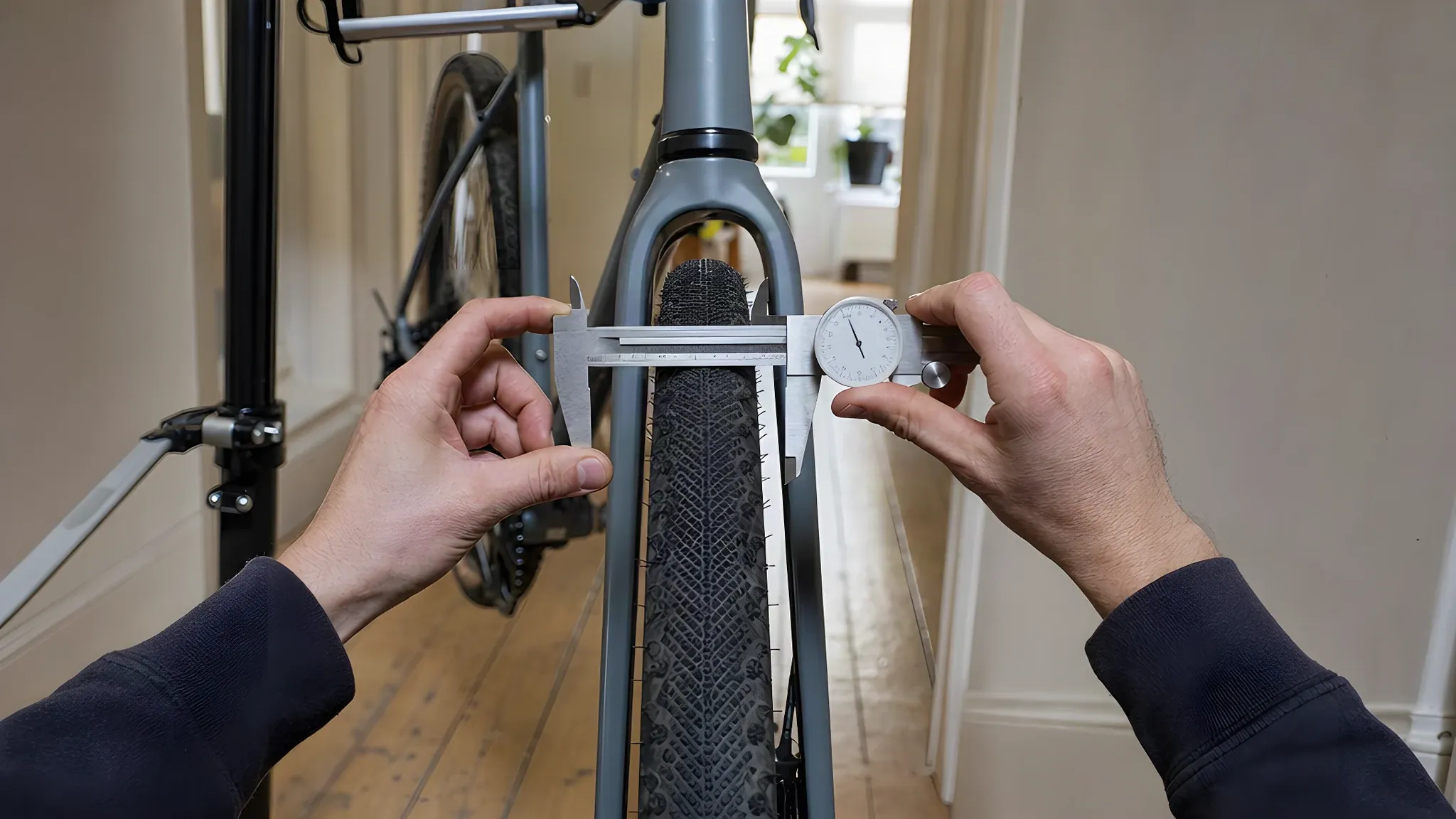
Measure the inflated tyre with callipers at its widest point, which Schwalbe's guide takes as the outside of the tread knobs on an off-road tyre. Measure the rim with the tyre off, between the inside faces of the two rim walls. That internal width is the figure the rim chart uses.
What tyre widths fit your rim?
A tyre width fits a rim when the pair appears in the ETRTO combination chart and both the wheel maker and the tyre maker allow it. Schwalbe publishes the ETRTO combinations (ETRTO standard 2024, chart dated May 2024). A selection, by internal rim width:
- 15 mm: tyres from 20 to 27 mm.
- 17 mm: 20 to 57 mm.
- 18–20 mm: 22 to 57 mm.
- 21–22 mm: 25 to 65 mm.
- 23 mm: 28 to 65 mm.
- 25 mm: 29 to 71 mm.
- 26–27 mm: 35 to 71 mm.
- 28–30 mm: 47 to 71 mm.
- 31–35 mm: 58 to 83 mm.
For a rim marked 622 x 19C, the 18–20 mm row allows tyres from 22 to 57 mm. A 28-622 road tyre and a 47-622 hybrid tyre both qualify, and a 60-622 mountain bike tyre does not.
Schwalbe's notes add that the rim maker's limits on tyre type and pressure apply too, and on hookless rims its minimum tyre width in particular.
Rim width also changes the measured width. BikeRadar measured a 28 mm Michelin Power tyre at 30.9 mm on a Zipp 303 Firecrest wheel, which has a 25 mm internal width. Continental explains that a tyre sits higher on a narrower rim and sinks in on a wider one.
Schwalbe gives two more reasons a tyre differs from its label. Makers work to a tolerance of plus or minus 3 mm, and a tyre grows by 1 to 2 mm with pressure and as it settles after fitting.
Clincher, tubeless, hookless or tubular: which tyre type fits your rim
The tyre's construction has to suit the rim, because the same diameter and width do not make two systems interchangeable:
- Clincher. An inner tube holds the air and, Cycling UK notes, keeps the bead located under the rim hook.
- Tubeless-ready, TLR or TLE. A stretch-resistant bead seals without a tube. Cycling UK advises against running a non-tubeless tyre without a tube because of the risk of blow-off.
- Hookless, TSS. Straight rim walls with no hook, which need a tyre approved for them.
- Tubular. The tyre is glued or taped to a tubular rim, and Cycling UK says tubulars need skilled fitting.
Continental says an inner tube can go into a tubeless-ready tyre once the tubeless valve is out. That is the fallback in our guide to repairing a tubeless puncture.
Hookless rims need an approved tyre
A hookless rim takes only tubeless tyres approved for hookless use, and an inner tube does not change that. Schwalbe's chart limits hookless rims to TLE or TLR tyres, run tubeless or with a tube. Zipp's compatibility guide says tubes are fine only inside a TSS-compatible tyre.
Wheel makers publish approval lists. Giant lists the tyres with a printed maximum above 72.5 psi (5 bar) that passed its test protocol for its hookless wheels, and says an unlisted one is used at the rider's own risk.
The minimum width is where makers disagree. Cyclingnews reported in 2023 that ETRTO raised the smallest recommended tyre on a 25 mm internal rim to 29 mm, while Zipp and ENVE said 28 mm tyres on their own rims remained safe. Follow the list for your exact wheel.
Hookless rims also cap the pressure, and the tyre pressure calculator has a hookless setting for it.
Will a wider tyre fit your frame, fork and mudguards?
A wider tyre fits when it clears the frame, fork, brakes and mudguards once inflated. BikeRadar advises checking the frame's clearance before you buy. Check front and rear separately, because BikeRadar also describes mullet mountain bikes with a 29in front wheel and a 27.5in rear.
Five checks for each wheel:
- Diameter. The rim's bead seat diameter, from the chart.
- Rim width. Inside the ETRTO range and the wheel maker's limits.
- Construction. Tube-type, tubeless-ready or hookless-approved, to suit the rim.
- Clearance. Room at the fork crown, chainstays, seatstay bridge and brake, measured at the widest point including any knobs. Sheldon Brown names the fork crown and the two stay bridges, and adds a few millimetres either side for a wheel slightly out of true.
- Inner tube. A range that covers the new width.
Start from the bike maker's stated maximum tyre size where there is one. Schwalbe publishes the exact widths and diameters of its widest tyres for riders to compare with their frame, and says a tyre grows 1 to 2 mm after fitting.
Mudguards are sized by tyre width. SKS lists its Bluemels Cable Line 28 inch set with a 45 mm mudguard for 28–37 mm tyres and a 55 mm mudguard for 32–47 mm tyres.
Rim brakes add a check when the diameter changes. Cycling UK notes that moving from a 630 rim to a 622 rim needs 4 mm more brake reach. A wider tyre on the same rim also has to pass between the brake arms.
What size inner tube do you need?
An inner tube is sized by a range of widths on one diameter, and your tyre's ETRTO size has to fall inside it. Schwalbe's tube listing gives these ranges for 622 rims:
- No. 15 Extra Light: 23 to 28 mm.
- No. 17 Extra Light: 28 to 44 mm.
- No. 19 Extra Light: 40 to 62 mm.
A tube can also stretch across neighbouring diameters, which a tyre cannot: the same listing rates the No. 12 Extra Light for both 584 and 590 rims. On the Tern GSD, a single 406 tube rated 40 to 62 mm, such as Schwalbe's No. 7, covers both tyres.
The valve has to suit the rim's valve hole:
- Presta. Schwalbe gives its stem as 6 mm against 8 mm for the other two, so it needs the smaller hole. Schwalbe warns that a Presta tube in a larger hole can have its valve sheared off, and that some rims are 6.5 mm outside but 8.5 mm inside.
- Schrader. The 8 mm car-type valve, which Schwalbe notes older and simpler bike pumps do not fit.
- Dunlop. Also 8 mm. Schwalbe notes that the core and locknut come out to pass it through the rim hole.
Deep rims need longer valves, and Schwalbe sells tubes with valves from 32 to 80 mm long. Our puncture repair guide covers fitting the tube.
Common mistakes when buying bike tyres
- Buying by the inch label. Schwalbe lists three rims sold as 26 inch, so order by the ETRTO number.
- Treating 26 x 1.5 and 26 x 1½ as one size. Cycling UK puts them a whole inch apart.
- Going below the rim maker's minimum width. On a 25 mm internal rim, the ETRTO chart starts at 29 mm; where the wheel maker's list allows narrower, follow that list.
- Using a tube to put an unapproved tyre on a hookless rim. Schwalbe and Zipp both rule it out.
- Fitting a Presta tube in a rim drilled for Schrader. Schwalbe links the larger hole to valves tearing off.
When it is a job for a mechanic
- No readable size on the tyre or the rim. A mechanic can measure the bare rim's bead seat diameter, which separates sizes 5 to 8 mm apart.
- A new tyre rubs the frame, fork, mudguard or brake. The clearance and the wheel's position in the frame need checking before you ride.
- The bead sits unevenly on the rim. A tyre that bulges or sits low in one place has not seated, and needs refitting before it is ridden.
- Hookless or tubeless wheels. The tyre has to be on the wheel maker's list, and a tubeless tyre can need a burst of air to seat.
- A worn or cut tyre. A puncture repair starts from £30 with the tube repaired or replaced, and a new tyre is not included in that price. A Tyred mechanic can fit a new tyre at your door, and the part is priced before it is fitted, as the pricing page shows.
A mechanic comes to you with a fully stocked workshop, 9am to midnight, seven days a week, across London.
Book a repair · Mobile puncture repair →
Related guides
- Bike tyre pressure: the right psi for your weight, tyre and bike
- How to fix a bike puncture (and when to call a mechanic)
Sources and further reading
- Schwalbe: tyre sizes, the ETRTO, French and inch systems, C for 622 mm, the rims sold as 26 and 28 inch, 27 inch as 630 mm, 28 and 29 inch on the same rim and the outside diameter of 23 mm and 60 mm tyres.
- Schwalbe size list (PDF, March 2024), 20 x 2.10 as 54-406 and 700 x 38C as 38-622 or 40-622.
- Schwalbe: tyre dimensions, the plus or minus 3 mm tolerance, 1 to 2 mm growth after fitting, width measured at the widest point, frame clearance and the hookless rule.
- Schwalbe: possible combinations of tyre widths and inner rim widths (PDF, ETRTO standard 2024, dated 05/2024), the rim width ranges used here.
- Schwalbe: valves, Presta, Schrader and Dunlop valves, stem widths, the 6.5 mm and 8.5 mm valve holes and valve tear-off.
- Schwalbe: butyl tubes, the size ranges of tubes No. 7, 12, 15, 17 and 19 and the valve lengths.
- Cycling UK: a guide to cycle tyre sizes (Richard Hallett), the ISO size table, fractional against decimal sizes, rim markings, tubeless and tubular tyres and the brake reach example.
- Sheldon Brown and John Allen: tire sizing systems, the fractional, decimal and French tables, the bikes that use each size, the decimal and fractional rule and frame clearance points.
- Sheldon Brown: measuring bicycle rims for tyre fit, the diameter and circumference methods and the 630 mm size going out of fashion.
- BikeRadar: bike tyre sizes explained (Paul Norman, August 2025), the ETRTO number as the definitive size, widths by type of bike, mullet bikes, hookless approval lists and the 30.9 mm measurement on a 25 mm rim.
- Michelin UK: bike tyre sizes explained, the three size systems and the 29 inch figure as the overall diameter including the tyre.
- Continental: bicycle tyre FAQ, how the tyre sits on narrow and wide rims, the e25 and e50 markings and inner tubes in tubeless-ready tyres.
- Mavic technical manual: ETRTO/ISO recommended rim-tyre combination (PDF), ISO 5775, the rim label and the TC and TSS codes.
- Zipp: hookless tyre compatibility guide, TSS-compatible tyres only, tubes allowed, dual-validated tyres.
- Giant UK: hookless technology and what tyres can be used, the tested tyre list and the 72.5 psi (5 bar) threshold.
- Cyclingnews: changes to ETRTO (Josh Ross, May 2023), the 29 mm minimum on 25 mm internal rims and the Zipp and ENVE responses.
- Brompton: Schwalbe Marathon Racer tyre, 35-349 and the compatible models; and Brompton: Schwalbe G One tyre for G Line, 20 x 2.1.
- Tern: GSD S00 specification, the 55-406 front and 62-406 rear tyres.
- SKS: Bluemels Cable Line mudguard set, the tyre widths for the 45 mm and 55 mm mudguards.