Electric bike law in the UK: what makes an e-bike legal, and what it means in London
The GOV.UK EAPC rules, throttles, 750 W and derestricted bikes, speed pedelecs, conversion kits, TfL's e-bike rules and what changed in 2026.

Written by Conor DonoghueCargo bike mechanic
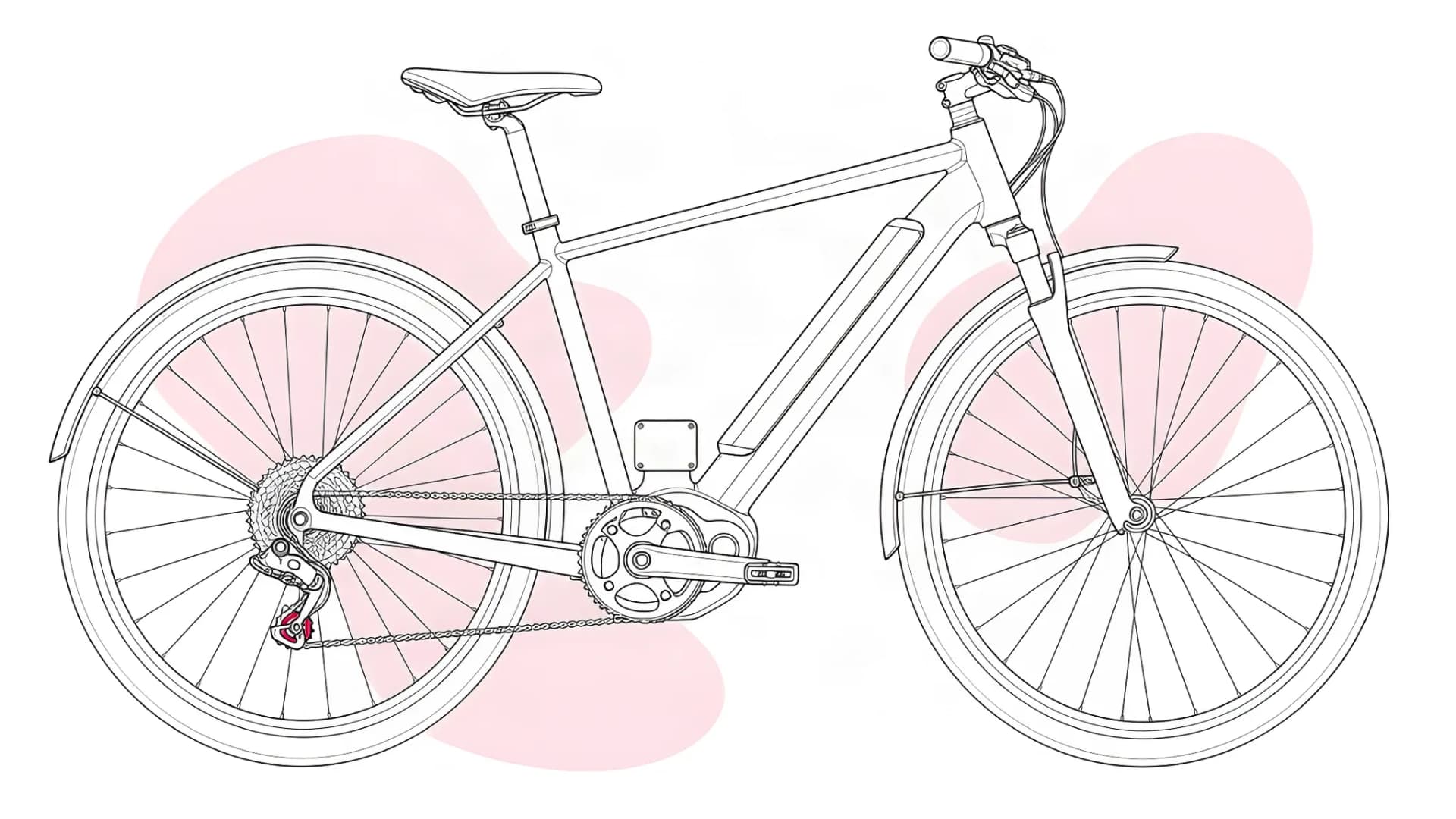
Short answer: yes. GOV.UK treats an e-bike like a pedal cycle when it is an electrically assisted pedal cycle (EAPC) and the rider is 14 or over. Its rules require pedals that can propel the bike and a motor of no more than 250 watts continuous rated power that cannot propel it above 15.5 mph. An EAPC needs no licence, registration, tax or insurance; GOV.UK classes a bike outside those limits as a motorcycle or moped. TfL bars non-folding e-bikes from the Tube, Overground, Elizabeth line and DLR.
What electric bikes are legal in the UK: the EAPC test
An electric bike counts as a pedal cycle when it meets GOV.UK's three conditions: pedals that can propel it, a motor with a continuous rated power of no more than 250 watts, and a motor that cannot propel it above 15.5 mph. GOV.UK adds that an EAPC can have more than two wheels, for example a tricycle.
GOV.UK says you can ride an EAPC on cycle paths and anywhere else pedal bikes are allowed, but not on pavements.
GOV.UK says the bike must also carry a marking with its continuous rated power and manufacturer, plus either the battery voltage or the maximum assisted speed. The DfT information sheet on GOV.UK explains the "either": a fitted plate shows the battery's nominal voltage, while a bike marked without a plate shows the maximum speed instead.
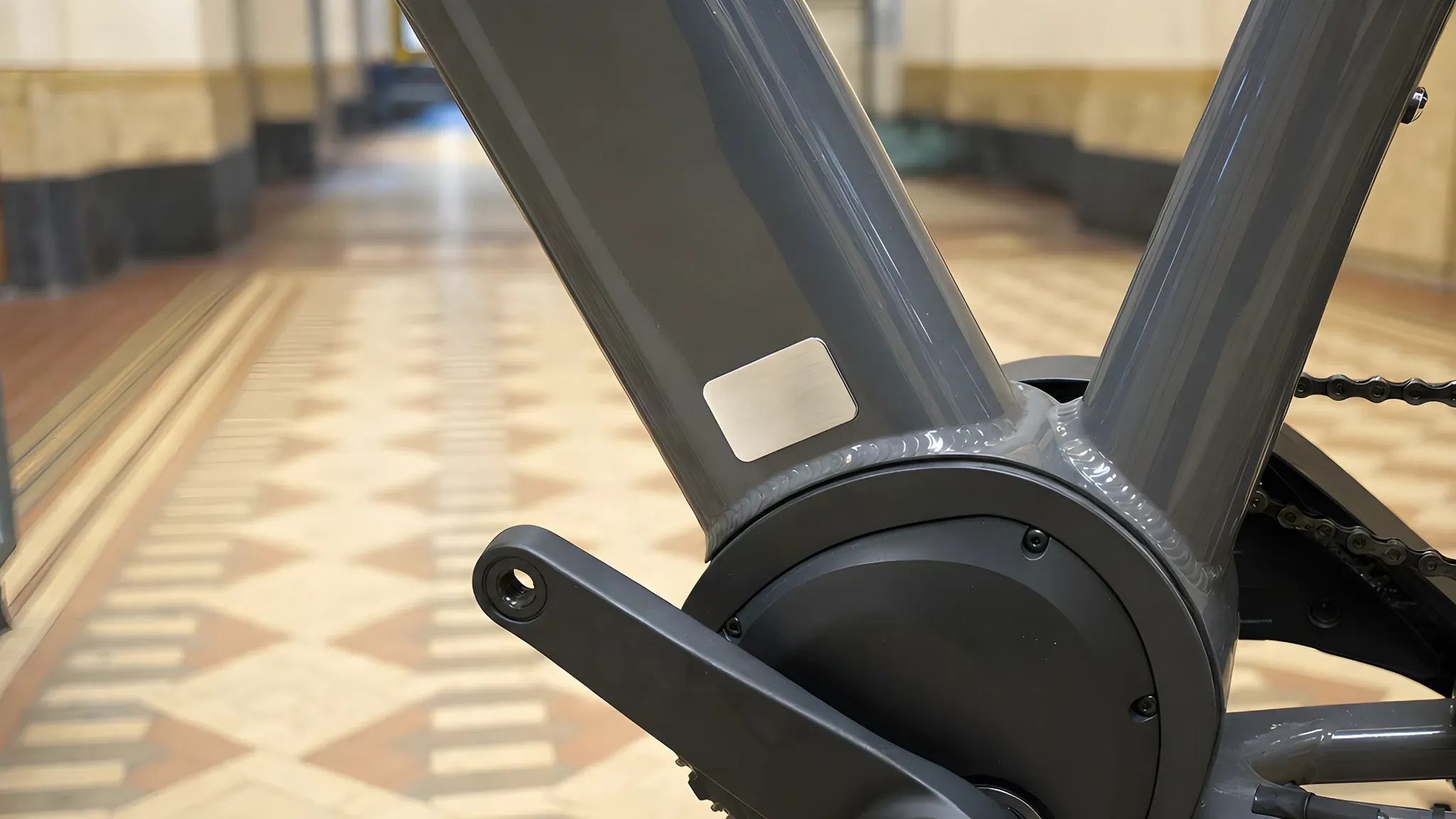
Cycling UK's guide notes that the plate is often a sticker placed discreetly on the frame, so you may have to search for it. On a second-hand bike, read it before you pay and compare it with the listing.
The 250 watt and 15.5 mph figures come from the Electrically Assisted Pedal Cycles (Amendment) Regulations 2015 on legislation.gov.uk. In force since 6 April 2015, they raised the assistance limit from 15 mph and removed the old weight limits.
Are throttle (twist and go) electric bikes legal in the UK?
Under GOV.UK's rules, a throttle e-bike can be an EAPC once it has been approved: an EAPC "can be propelled up to 15.5mph without pedalling but only if it's been approved". GOV.UK says the manufacturer or importer should have done this before you bought it, and an approved bike "will be marked with the approval number".
The DfT information sheet on GOV.UK dates the rule to twist and go bikes placed on the market or entering into service after 1 January 2016. That gives three readings of a throttle bike:
- The throttle only moves the bike at walking pace. The DfT sheet puts walk assist, up to 3.7 mph, outside the scope of type approval.
- The throttle drives the bike to 15.5 mph and an approval number is marked on it. The manufacturer or importer has done the approval GOV.UK describes.
- The throttle drives the bike to 15.5 mph with no approval number. GOV.UK points to Motorcycle single vehicle approval (MSVA), where the DfT sheet places these bikes in the 250W Low Powered Moped category.
Is a 500 W or 750 W electric bike legal in the UK?
An e-bike whose motor is rated at 500 or 750 watts continuous is not an EAPC, and GOV.UK says a bike outside the EAPC rules is "classed as a motorcycle or moped". The same applies to a bike whose motor can propel it above 15.5 mph, however much it looks like a bicycle. GOV.UK lists what that class requires:
- Registration and tax for the bike.
- A valid driving licence for the rider.
- A motorcycle helmet that meets British safety standards.
- Insurance. GOV.UK warns that if the bike has not been insured, you may get a fine or it may be seized by the police.
- The road only. It cannot be ridden on cycle tracks or cycle lanes.
The 250 watts is the motor's maximum continuous rated power. The 2015 Regulations take the term from EU Regulation 168/2013, which their footnote says defines it as the maximum thirty-minute power at the motor's output shaft. An advert quoting a higher "peak" wattage is giving a different figure, so compare the rating on the frame marking with the limit.
What a derestricted e-bike is in law
A derestricted e-bike is one changed so the motor keeps assisting above 15.5 mph. Bosch's tuning page names two routes, plug-in "tuning dongles" and chip tuning. Once the motor can propel the bike above 15.5 mph, GOV.UK's rules class it as a motorcycle or moped, even though nothing about it looks different.
The motor works out road speed from a sensor reading a magnet on the wheel, which is why some tuning devices sit on that sensor's cable.
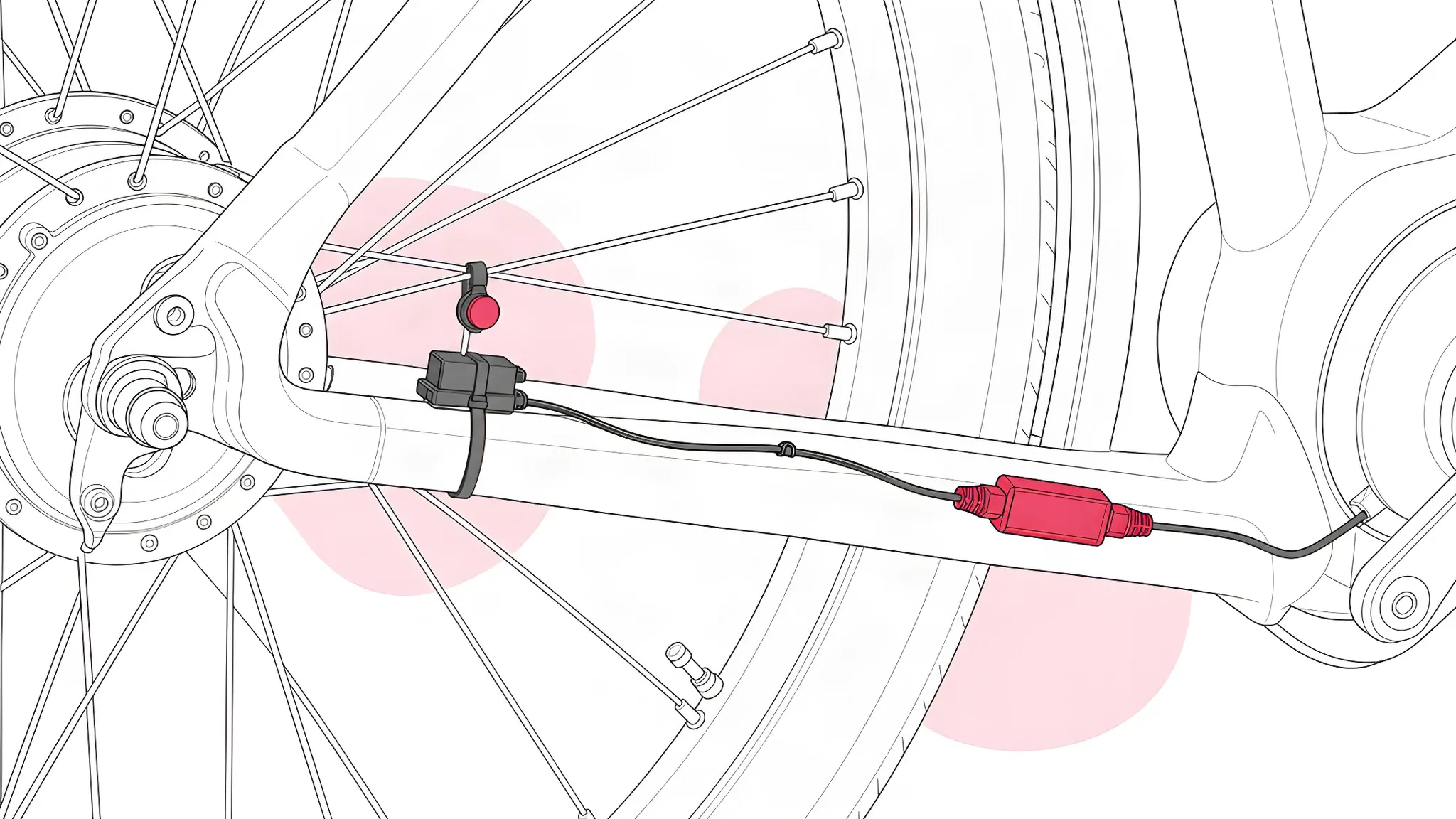
The DfT information sheet covers e-bikes that offer a temporary "off road" mode, in which the motor can propel the bike above 15.5 mph. Vehicles with that feature "do not, in our opinion, comply with the EAPC regulations and are considered motor vehicles", in the DfT's words.
Bosch says its software can detect tuning through a sensor while riding. The system then switches to an emergency mode, shows an error code and reduces support; about 90 minutes of riding restores the normal settings. After the third detection, only a specialist dealer with the Bosch DiagnosticTool can clear the limp home mode.
Bosch adds that tuning puts warranty claims at risk.
Will the UK e-bike law change in 2026?
The EAPC limits have not changed. On 19 October 2026, GOV.UK's rules page still gave 250 watts and 15.5 mph, last publicly updated on 16 January 2025.
The Department for Transport consulted in 2024 on a 500 watt limit and on twist and go throttles to 15.5 mph without type approval. Its outcome on GOV.UK, dated 28 January 2025, says "the government will not continue with the proposals at this time" and notes that a majority of the main stakeholder organisations opposed them.
Police seizure without a warning, in force since 29 June 2026
Section 8 of the Crime and Policing Act 2026 removed the warning police in England and Wales had to give before using section 59 of the Police Reform Act 2002 to seize a motor vehicle. The section has been in force since 29 June 2026, according to legislation.gov.uk.
Section 59 applies when a motor vehicle is used in breach of the Road Traffic Act 1988's careless, inconsiderate or off-road driving rules. The use must also cause, or be likely to cause, alarm, distress or annoyance. The Home Office factsheet on the Act places the change under tackling e-bikes and other vehicles used in anti-social behaviour.
Section 59 is a power over motor vehicles. The DfT information sheet on GOV.UK says a non-compliant e-bike is treated as a motor vehicle under the Road Traffic Regulation Act 1984 and the Road Traffic Act 1988.
New dangerous cycling offences, not yet in force
Section 141 of the same Act adds offences of causing death or serious injury by dangerous, careless or inconsiderate cycling to the Road Traffic Act 1988. On 3 November 2026, legislation.gov.uk still showed section 141 as not yet in force.
The Electrically Assisted Pedal Cycles Bill, which went no further
Julie Minns MP introduced the Electrically Assisted Pedal Cycles Bill on 27 January 2026 as a Ten Minute Rule bill. Its long title describes a bill to prohibit the marketing, sale and supply of e-bikes outside the EAPC class and of equipment that converts a pedal cycle into one.
A bill is a proposal, not law. The bill's news page on bills.parliament.uk says the 2024-26 session has ended and the bill "will therefore make no further progress". No bill of that title was listed for the 2026-27 session on 19 October 2026.
E-bikes in London: the Tube, rail and the fire brigade
Since 31 March 2025, TfL has not allowed non-folding e-bikes on most of its services. Its "Cycles on public transport" page sets out where an e-bike can go:
- Tube, Overground, Elizabeth line and DLR. No non-folding e-bikes, and the rule "includes standard cycles that have been converted to e-bikes using a conversion kit".
- Folded e-bikes. Allowed "anywhere, at any time on almost all our transport services", though a bus driver can refuse you if it is too busy.
- London Cable Car. No e-bikes, folded or not.
- Woolwich Ferry, Silvertown Tunnel cycle shuttle, some river and coach services. Non-folding e-bikes are allowed; check with the operator for river and coach services.
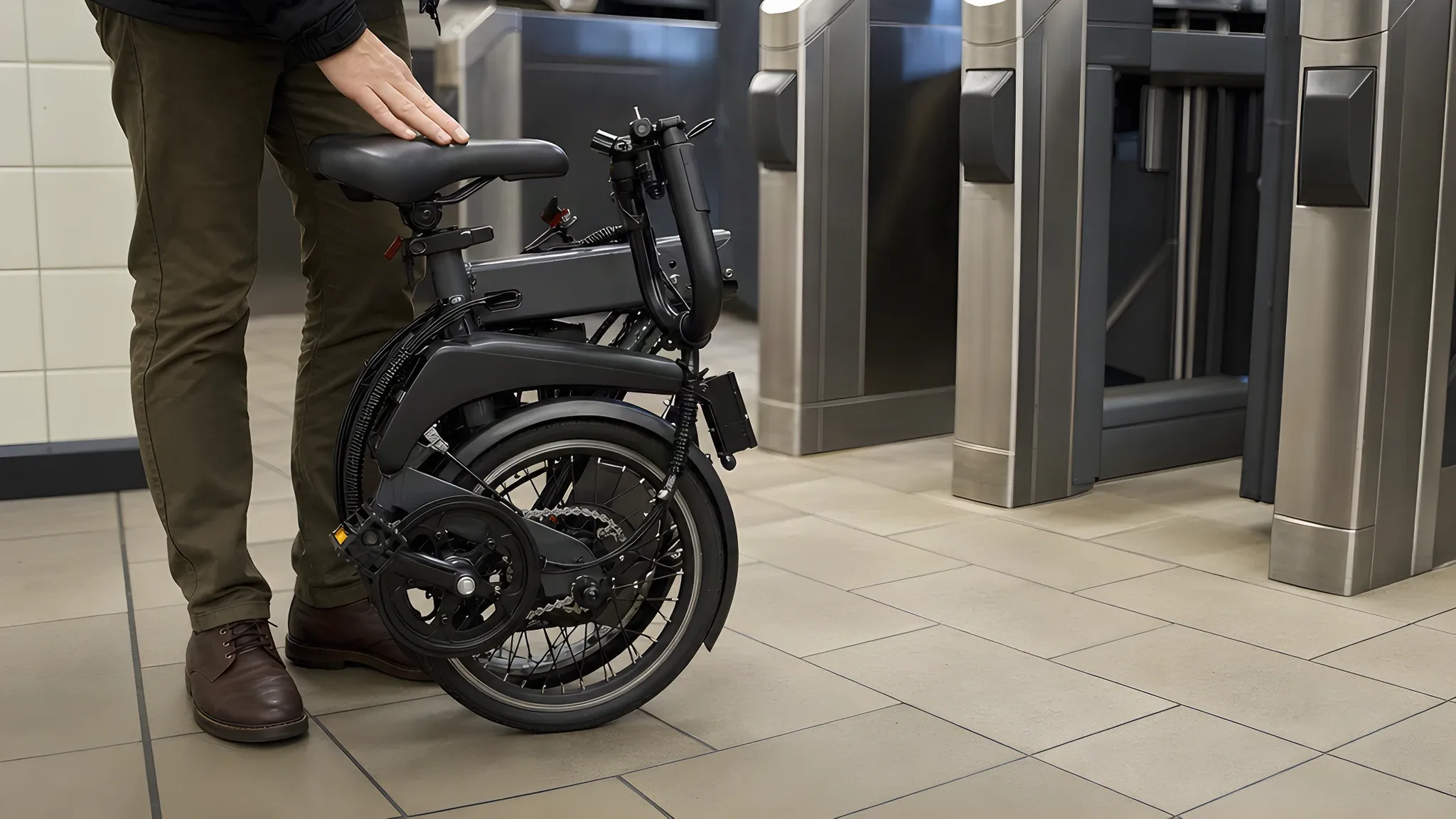
TfL's press release of 26 March 2025 says the ban followed a safety review with London Fire Brigade, after fires that included one at Rayners Lane station in February 2025. Anyone who does not comply "may be refused entry, directed to leave the network, or face a fine of up to £1000, if prosecuted under the bylaws".
TfL also said it can be hard to tell a modified e-bike from an unmodified one, which is why the ban covers every non-folding e-bike. A factory-built e-bike that meets every EAPC rule is still refused on the Tube if it does not fold.
London Fire Brigade's safety hub puts the background in one figure: on average, there is a fire from a lithium-ion battery in an e-bike or e-scooter every two days in London. Many of these fires happen in homes while batteries are charging.
Conversion kits: the same rules, plus a fire risk
A pedal bike converted with a kit is judged by the same EAPC rules on GOV.UK, marking included. The DfT information sheet says the throttle approval requirement also applies when someone is "creating a new 'Twist and Go' EAPC", so a kit with a 15.5 mph throttle needs approval too.
London Fire Brigade's conversion-kit page says kits "can also increase the risk of battery fires if they are poorly installed or use incompatible components". Not every kit includes a battery or charger, so the two may come from different sellers, and batteries bought online "may not meet UK safety regulations and are more likely to fail".
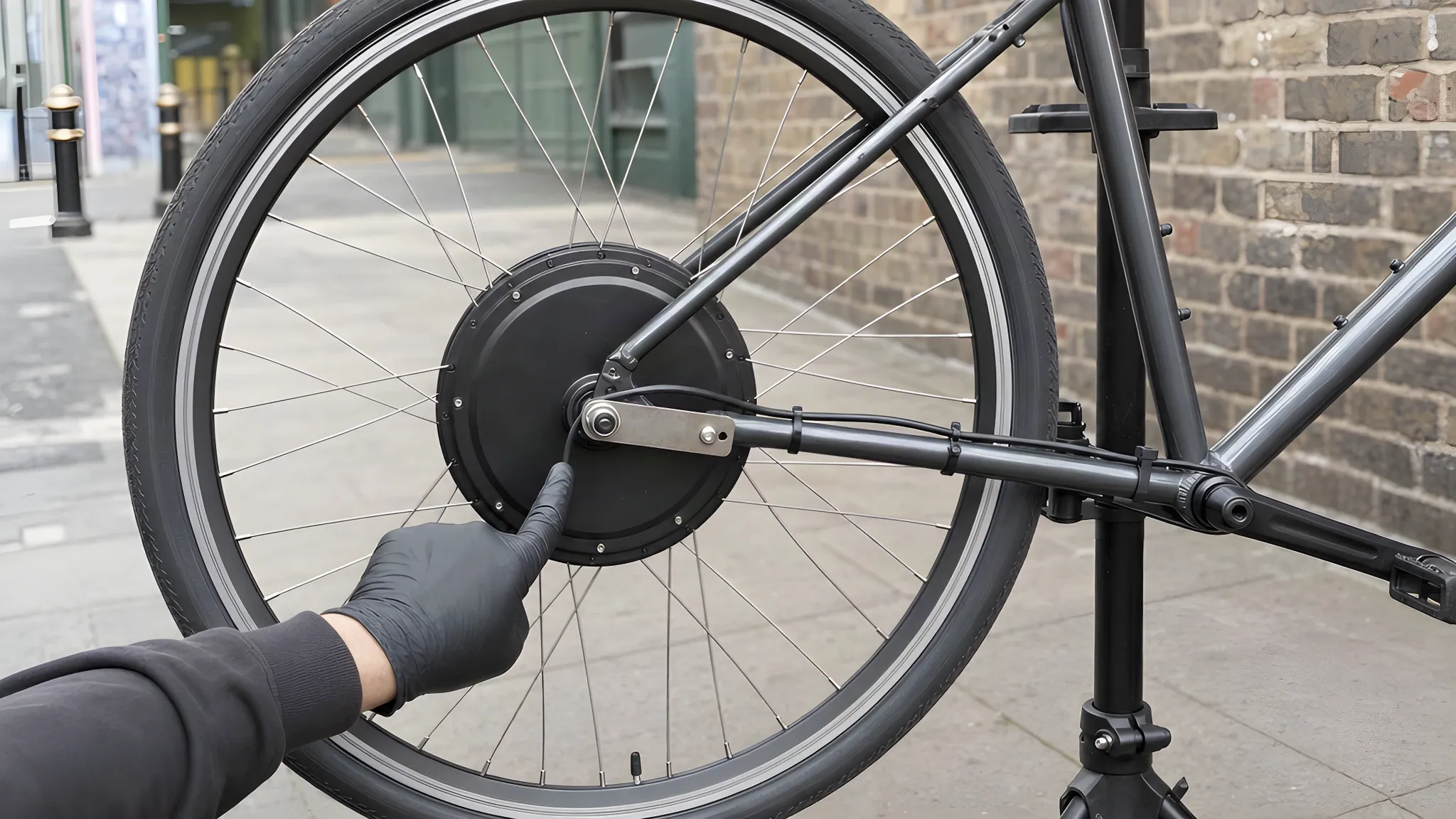
The Brigade's advice for a conversion:
- Buy kits from reputable sellers.
- Avoid second-hand batteries, which "may already be damaged or degraded".
- Do not modify or tamper with the battery, and use the correct charger.
- Have the conversion carried out by a qualified professional.
TfL's analysis, published with the Tube ban, suggests converted cycles pose a greater fire risk than purpose-built e-bikes. Charging one is covered in our guide to charging an e-bike battery safely in a London flat.
Speed pedelecs: 28 mph e-bikes in the UK
A speed pedelec (S-pedelec) assists up to 45 km/h, about 28 mph, so GOV.UK's rules class it as a motorcycle or moped. Cycling UK describes speed pedelecs as limited to 45 kph or 28 mph, in the EU's L1e-B moped category.
road.cc's S-pedelec guide (December 2022, updated 2025) describes the route its test bike went through:
- DVLA forms V267 and V55/4, filled in from the bike's Certificate of Conformity and sent to the DVLA, which returns a V5C registration document.
- A standard number plate on the rear.
- A kite-marked motorcycle helmet.
- A motorcycle CBT course for riders who passed their driving test after 2001.
- An MOT every year once the bike is three years old.
road.cc adds that shared-use and traffic-free paths are out of bounds, which matches GOV.UK's line on cycle tracks and cycle lanes.
What Tyred's mobile e-bike repair covers
Tyred's mobile e-bike repair in London page says its mechanics work on e-bikes with Bosch, Shimano STEPS, Fazua, Brose and other major systems. It lists all mechanical work: brakes, gears, wheels, tyres, chains and general servicing. Tyred does not work on bikes converted with a kit.
For motor, battery or controller faults, the page says Tyred will diagnose the fault and refer you to an authorised service centre if the repair is outside its scope. Our e-bike maintenance guide sets out what you can do, what a mechanic does and what goes to a service centre.
What to check in your policy if you ride an e-bike
For a bike classed as a motorcycle or moped, GOV.UK says the vehicle must be insured. For an EAPC, put these questions to the policy wording:
- How does it describe the bike? Check whether it names e-bikes or EAPCs, and whether that matches the rating on your frame.
- What does it say about modifications? Look for wording on tuning devices, changed speed settings and non-original parts.
- Does it mention converted bikes? Check whether a kit conversion, and a battery bought separately, fall within its wording.
- Are the battery and motor named? Check whether they count as part of the bike or are listed on their own.
- What does it say about storage and charging? Check for any conditions on where the bike is kept and charged.
Tyred's own cycling insurance is in early access, and its page says: "We expect e-bikes to be covered, subject to final policy terms and conditions." See Tyred cycling insurance early access.
When it is a job for a mechanic
- A rear puncture or a loose wheel on a hub-motor e-bike. The motor cable and any torque arm come into the job, and the bike is heavy to move; Tyred's e-bike page says its mechanics come to your location for this.
- Brakes that feel weaker than they did. Tyred's e-bike page notes that an e-bike's extra weight and speed put more stress on brakes.
- Assistance that cuts out early, or a speed reading that drops to zero. A speed-sensor magnet knocked out of line is one cause. The sensor gap is covered under do e-bike motors need maintenance.
- An error code that returns after a power cycle. Tyred's e-bike page says electrical faults get a diagnosis first. Motor, battery or controller faults are referred to an authorised service centre if the repair is outside its scope.
A mechanic comes to you with a fully stocked workshop, 9am to midnight, seven days a week, across London.
Book a repair · About mobile e-bike repair →
Related guides
- Electric bike maintenance: routine checks, cleaning and who fixes what
- How long does an e-bike battery last? Charging, storage and care
- How to store a bike in a flat, a shed or outside
Sources and further reading
All pages opened on 19 October 2026.
- GOV.UK: riding an electric bike, the rules (last public update 16 January 2025, re-read 19 October 2026), the EAPC conditions, age, markings, where you can ride, the motorcycle or moped class and what it requires, the fine or seizure line, and vehicle approval for twist and go bikes.
- Department for Transport: EAPC standards and legal requirements (GOV.UK, updated 10 December 2024), treatment as a motor vehicle, twist and go approval after 1 January 2016, MSVA and the 250W Low Powered Moped category, walk assist to 3.7 mph, the "off road" mode opinion and the plate and marking contents.
- Department for Transport: smarter regulation, proposed changes to legislation for EAPCs (GOV.UK, outcome 28 January 2025), the 500 watt and throttle proposals and the decision not to continue.
- legislation.gov.uk: the Electrically Assisted Pedal Cycles (Amendment) Regulations 2015, the 250 watt maximum continuous rated power and its thirty-minute definition (footnote), the change from 15 to 15.5 mph, the removal of weight limits and the in-force date of 6 April 2015.
- legislation.gov.uk: Crime and Policing Act 2026, section 8, the removal of section 59(4) and (5) of the Police Reform Act 2002, in force 29 June 2026 by SI 2026/689, with the conditions of the seizure power in section 59 of the Police Reform Act 2002; and section 141, the new cycling offences, shown as not yet in force.
- Home Office: Crime and Policing Act 2026, anti-social behaviour factsheet (GOV.UK, updated 30 September 2026), the seizure change under the e-bikes and other vehicles question.
- UK Parliament: Electrically Assisted Pedal Cycles Bill, the sponsor, long title, Ten Minute Rule status, first reading on 27 January 2026 and the news-page notice that the bill will make no further progress.
- TfL: cycles on public transport, the rules for folded and non-folding e-bikes, converted cycles, the cable car and the services that still allow non-folding e-bikes.
- TfL: safety ban of non-folded e-bikes on its transport network (press release, 26 March 2025), the start date, the review with London Fire Brigade, the conversion-kit analysis, the Rayners Lane fire and the bylaw enforcement line.
- London Fire Brigade: e-bikes and e-scooters fire safety advice, the average of one battery fire every two days in London and fires while charging at home.
- London Fire Brigade: e-bike conversion kits, fire risks and safety advice, why kits raise the fire risk and the Brigade's advice for a conversion.
- Cycling UK: is your e-bike legal? (Richard Peace), the plate as a discreet sticker and speed pedelecs in the L1e-B category; and Cycling UK: electric cycles and the law, the 45 kph or 28 mph speed pedelec limit.
- road.cc: buying and riding an S-pedelec in the UK (20 December 2022, updated October 2025), the DVLA forms, number plate, helmet, CBT, MOT and the paths a speed pedelec cannot use.
- Bosch eBike Systems: eBike tuning, tuning dongles and chip tuning, tuning detection, emergency and limp home modes, the Bosch DiagnosticTool and the warranty risk.
- legislation.gov.uk: Road Traffic Act 1988, section 32, the rule that an EAPC is not to be ridden on a road by anyone under 14 (FAQ).
- legislation.gov.uk: the Electrically Assisted Pedal Cycles (Construction and Use) Regulations (Northern Ireland) 2020, the Northern Ireland limits and the date the Assembly affirmed them.