Bike GPS tracker or AirTag: how bike trackers work and which type suits a London commuter
GPS trackers and AirTag-type tags for London riders: which type suits your situation, where to fit one and what to do when it shows the bike's location.

Written by Conor DonoghueCargo bike mechanic
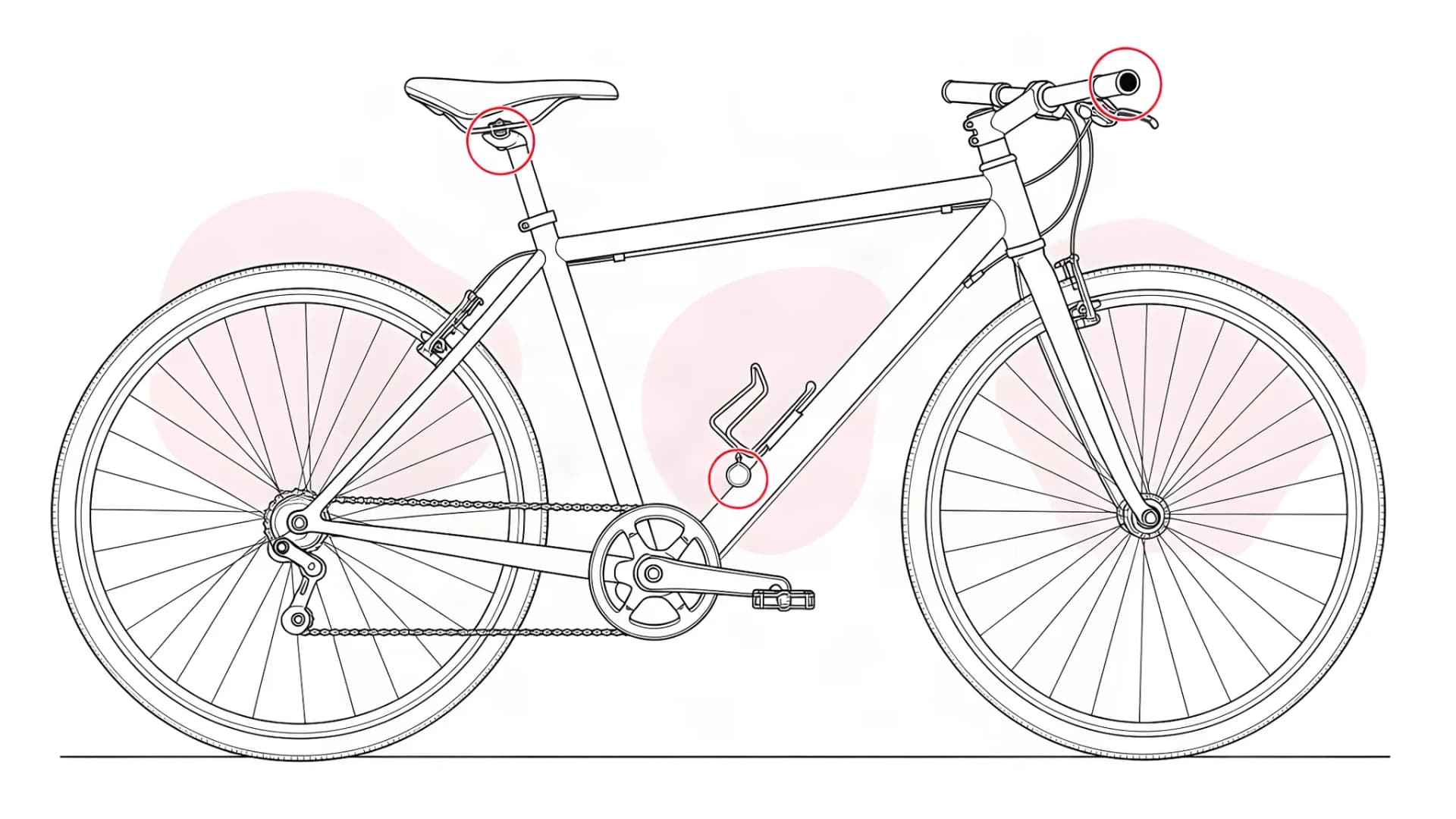
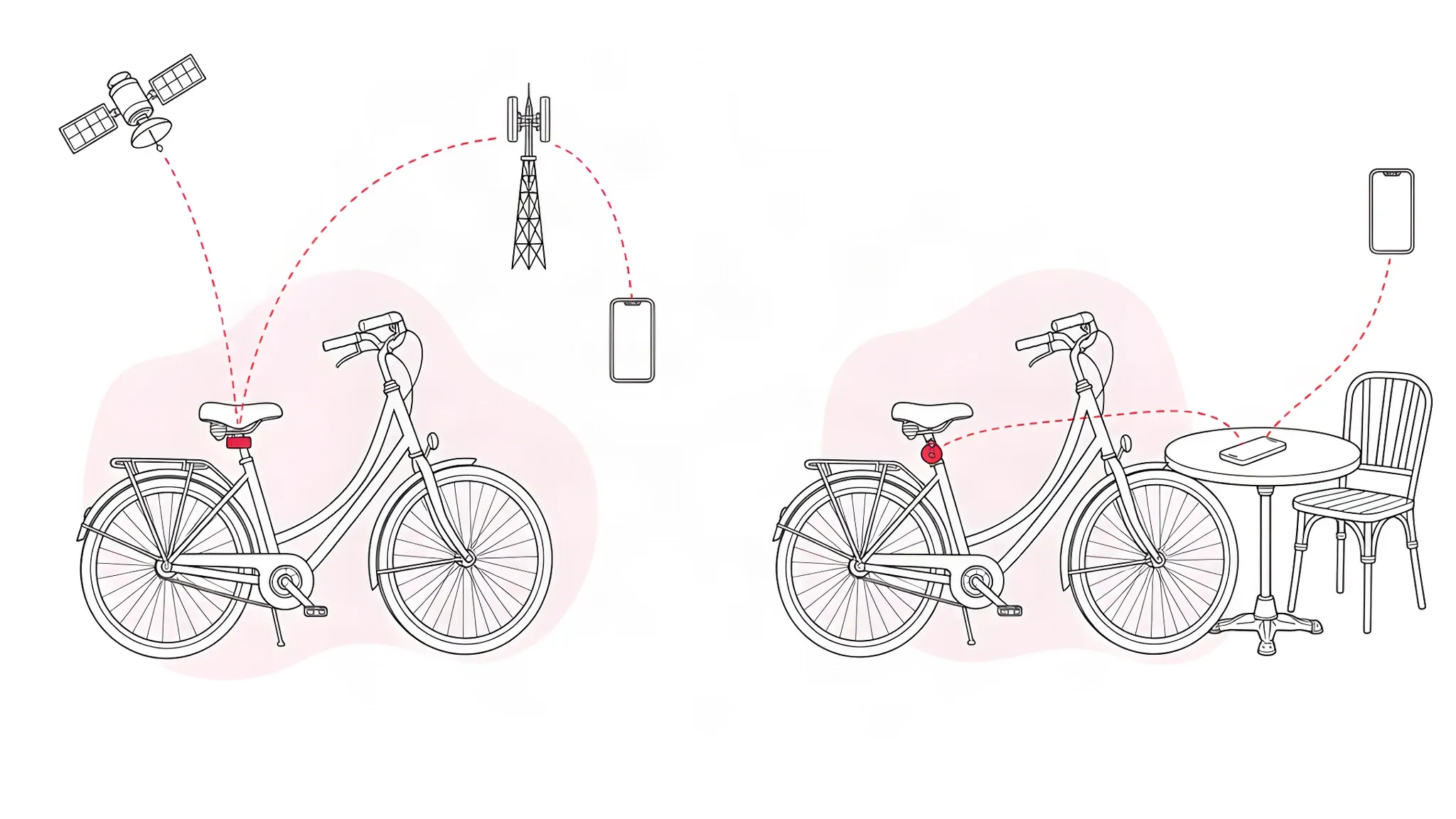
Short answer: a bike GPS tracker has its own SIM: it fixes its position from satellites and sends it over the mobile network, for a subscription. An AirTag-type tag has no GPS or SIM; phones on Apple's Find My or Google's Find Hub network report where they passed it. Either can lead you to a stolen bike, but neither stops the theft, so how you lock your bike and which Sold Secure grade you use still comes first.
How does a bike tracker work?
A bike tracker either finds and sends its own position, or relies on other people's phones to report it.
- GPS tracker. The unit fixes its position from satellites and sends it through a built-in SIM or eSIM, so it needs mobile signal, charge and a paid data connection. Some units add Bluetooth for the last few metres.
- Bluetooth tag. The tag has no position of its own. Apple's AirTag page says it "sends out a secure Bluetooth signal that can be detected by nearby devices in the Find My network", and those devices send its location to iCloud. Google's Find Hub does the same with Android phones.
Do bike GPS trackers need a subscription?
Yes. Cycling Weekly's buying guide says trackers that use a SIM card to send information to your phone "require a subscription", while Bluetooth trackers "rarely require a subscription". What the fee buys, as the makers list it:
- Live position and history. PAJ's plans include live tracking, and its Premium plan keeps 365 days of route history.
- Movement alerts. PAJ sends a message when the bike is shaken or leaves an area you set.
- An alarm on some systems. Bosch's ConnectModule with its paid Flow+ service responds to a theft attempt with alarm sounds and light signals.
The other costs are charging and signal. PAJ states up to 20 days of battery life for its rear-light tracker, against Apple's "more than a year" for an AirTag. Cycling Weekly notes that GPS "still relies upon a wireless network covering the location".
What an AirTag can and cannot do on a stolen bike
An AirTag shows where a phone on Apple's network last passed your bike, and it is built to warn whoever is carrying it. What it does, in Apple's words:
- Lost Mode. Once the tag is marked as lost, "when it's detected by a device in the network, you'll automatically get a notification." Apple puts the network at "over a billion Apple devices".
- Battery and weather. It runs "for more than a year on a standard battery you can easily replace", a CR2032 coin cell. It is rated IP67, to a "maximum depth of 1 metre up to 30 minutes".
The first limit is freshness. The tag reports only when a Find My device comes within Bluetooth range, and Apple calls the location reported "approximate". If Find My cannot show a current location, it shows the last known one "for up to seven days", then "No location found".
The second limit is Apple's design against unwanted tracking, which treats whoever has your bike like anyone carrying a tag that is not theirs:
- An alert on their phone. "If someone else's AirTag finds its way into your stuff, your iPhone or Android phone will notice it's travelling with you and send you an alert."
- A sound. A tag "separated for a period of time from its owner will emit a sound when it's moved." Apple does not say how long that period is.
- Android too. "Devices with Android 6.0 or later can automatically notify you if an AirTag or another item tracker is moving with you."
- A way to switch it off. The alert links to instructions to disable the tag, and once it is disabled "the owner can no longer get updates on its current location."
Apple says these devices "should not be used to track people, and should not be used to track property that does not belong to you". A tag on your own bike is neither, but the alerts still apply.
Google Find Hub for Android households
Find Hub tags work the same way on Android. Google describes "an opt-in network made up of millions of Android-powered devices", where each owner can take part everywhere or only in busy places. Android's unknown tracker alerts cover "Find Hub network-compatible tags, headphones and Apple AirTags".
Which type of tracker suits a London commuter?
Choose by where the bike spends its unattended hours and which phones your household carries:
- Locked on the street every working day. The deciding factor is whether you need to know the moment it moves. A tag reports whenever a Find My or Find Hub phone passes, which a busy street supplies. A GPS unit with a movement alert adds a message as the bike is taken.
- Kept at home, in a hangar or in a shared hallway. The deciding factor is the movement alert, because few phones pass. The Crime Survey puts 62% of bicycle thefts in England and Wales at or around the home (year to March 2025). Fit a GPS unit with alerts or a tag with a motion alarm.
- An e-bike. The deciding factor is whether the drive system takes a built-in module (see e-bike wiring below). Otherwise fit a tag or stand-alone unit as on any bike, and take the battery with you (e-bike battery care).
- An iPhone or an Android household. The deciding factor is whose phone will look for the tag. Apple says an AirTag can be located only in the Find My app on Apple devices, and a Find Hub tag is found through a Google account, so match the tag to the rider's phone.
- A bike you could not afford to replace. Fit both: a GPS unit for alerts and live position, and a tag hidden elsewhere. Removing one leaves the other reporting.
Securing the bike itself at home is in how council bike hangars work and securing a bike in a shed.
Where to hide a tracker or AirTag on a bike
Hide it where a thief will not look first and where you can still reach the battery. The places, with trade-offs from the press guides and the5krunner:
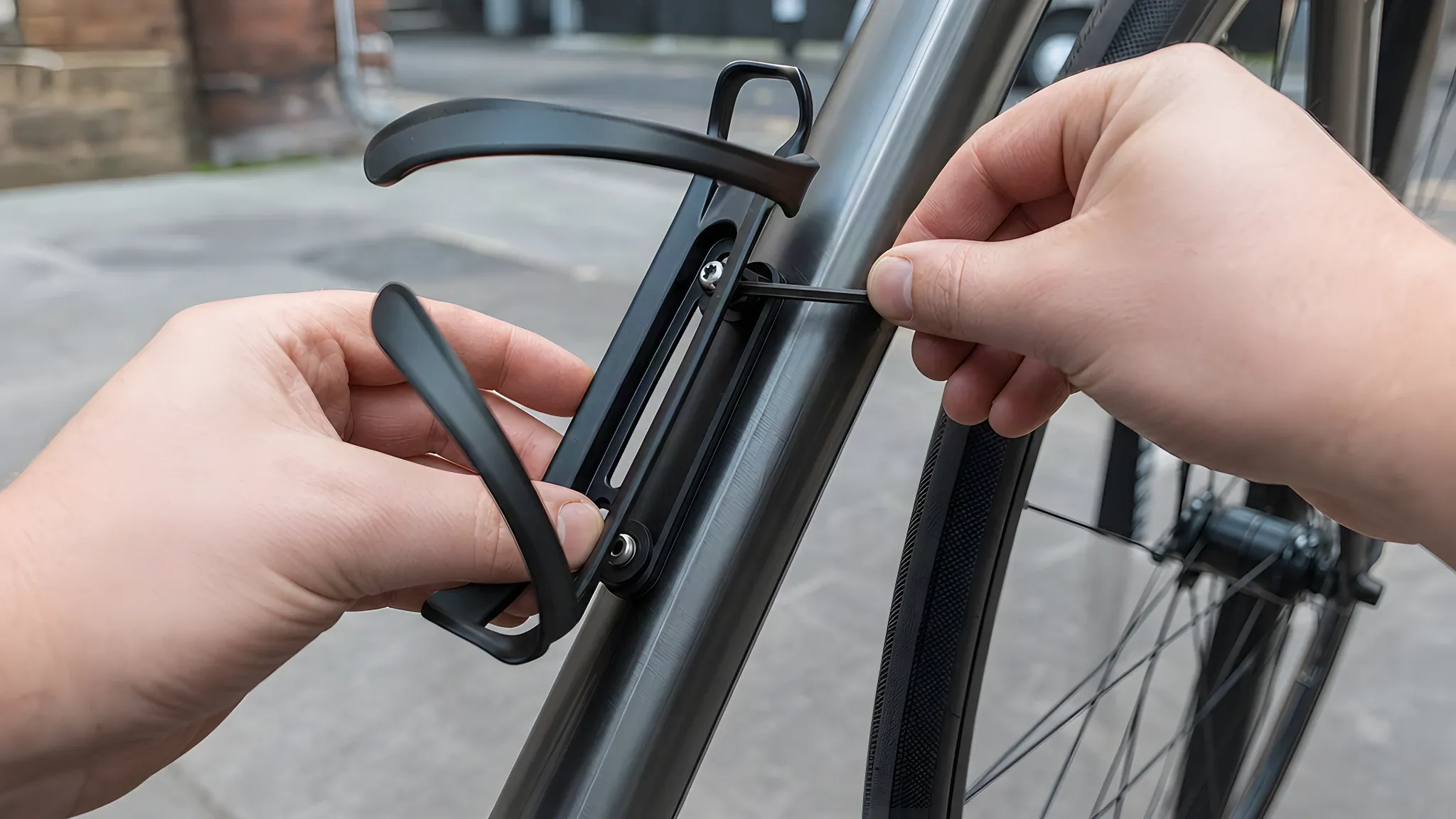
- Under the bottle cage. Easy to reach for battery swaps and the5krunner's top pick, but it warns that once a spot becomes the consensus best, "it also becomes the first place a thief will check".
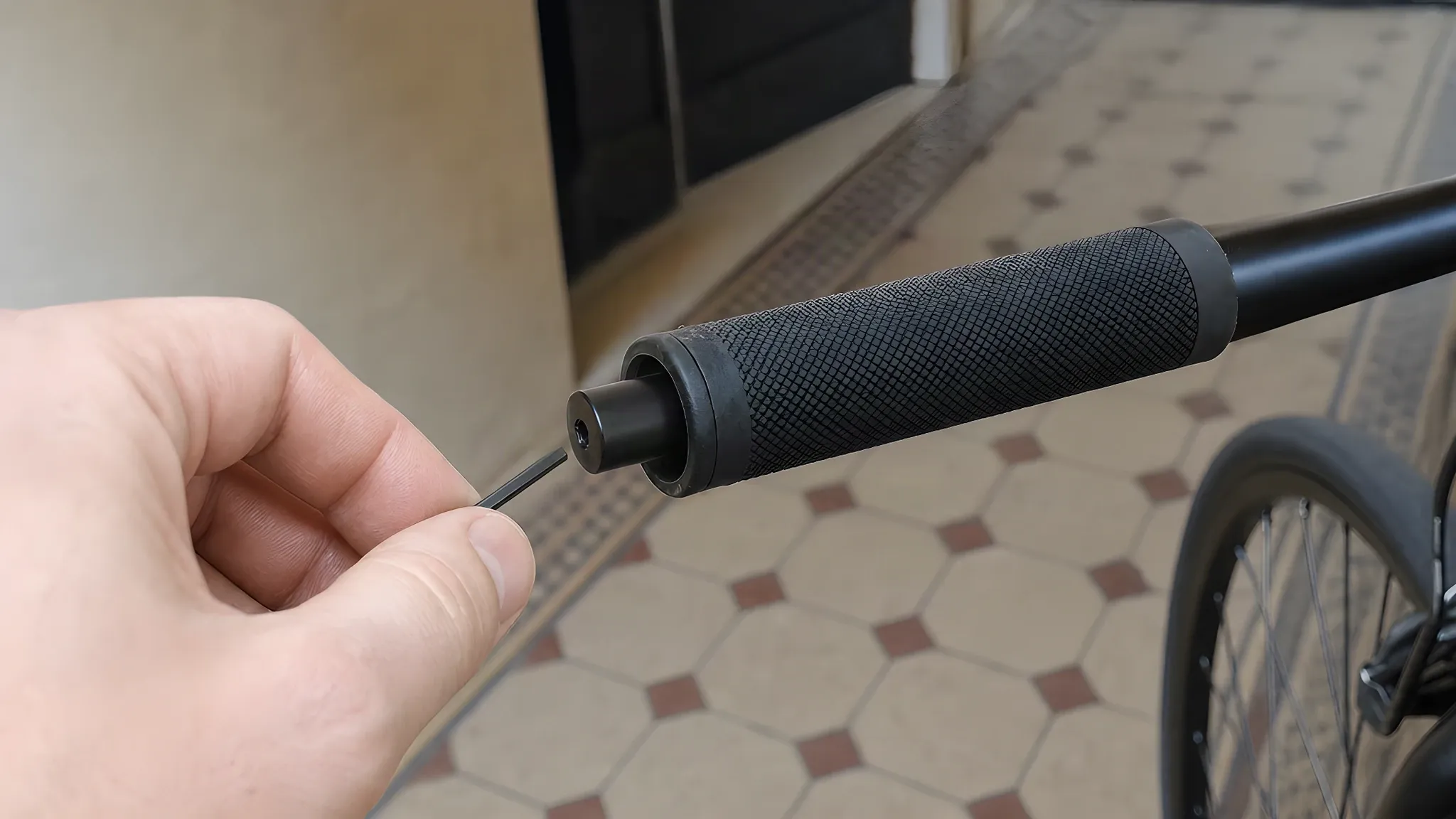
- Inside the handlebar end. The unit replaces the bar-end plug, so it has to match the inner diameter of the bar.
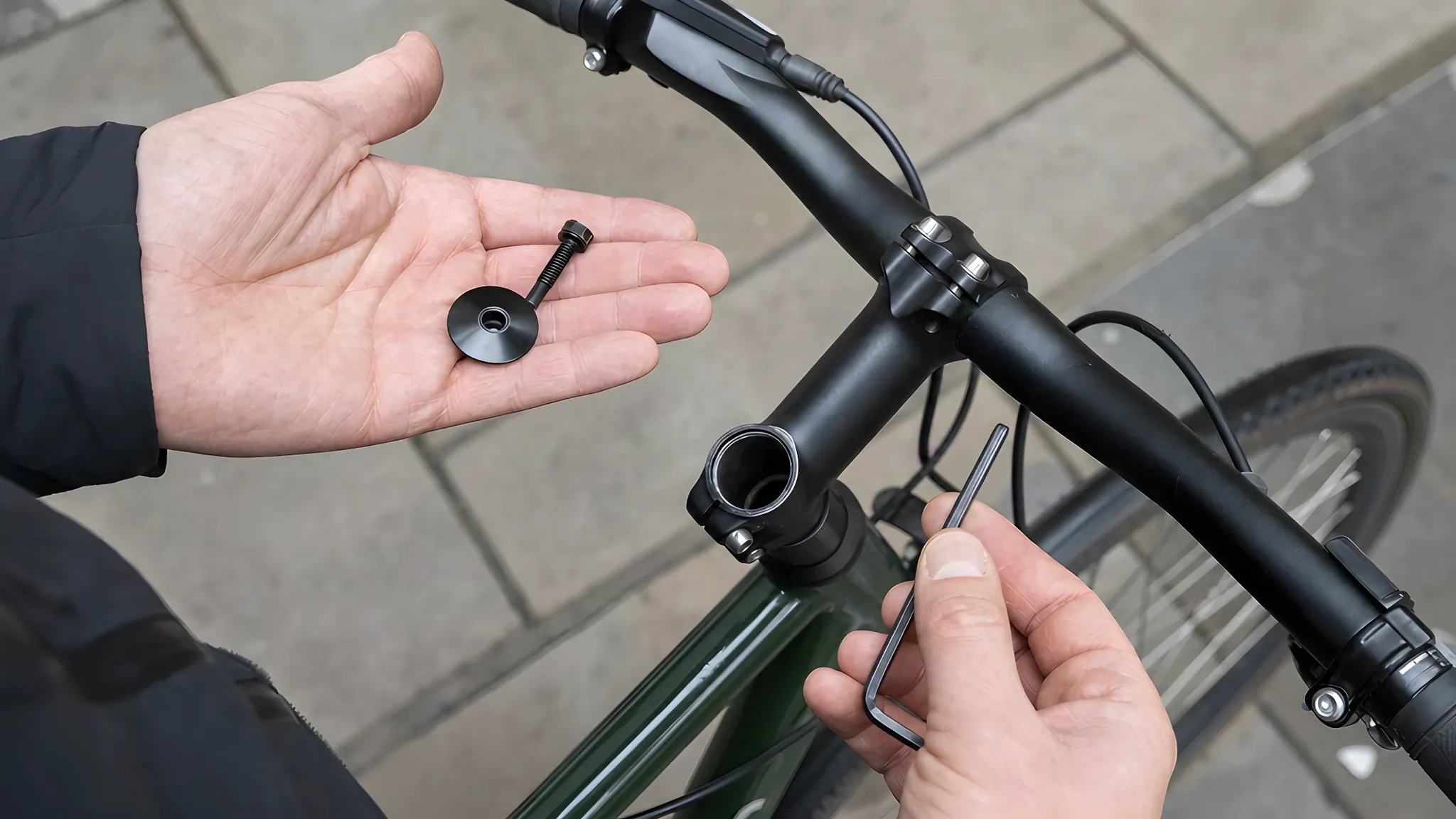
- In the stem cap or steerer tube. Nearly invisible, but the5krunner warns that "Installation and retrieval take more effort than other options" and to "Watch the risk of the plug working loose".
- Under the saddle or in a saddle bag. Quick, but in the5krunner's words "the first places a competent thief will check".
- Inside a reflector, bell or rear light. the5krunner notes "Each is easy to open for battery changes", with durability the drawback.
- Inside the frame. Cycling Weekly mentions the seat tube and bottom bracket shell; the5krunner says aluminium and steel attenuate the signal more than carbon, an observation rather than a measurement.
How to tell whether a bike already carries a tracker
Check the same places. On an iPhone, Identify Found Item in Find My shows details of an item separated from its owner, and Android can run a manual scan for unknown trackers at any time.
What fitting a tracker in the stem or bar end does to the bike
A unit in the steerer or bar end sits inside parts that hold the headset adjustment, the cables or the wiring. A mount on the bottle cage bolts touches nothing else; Shimano's general note for parts fitted to a carbon frame is to confirm the tightening torque with the frame maker.
Steerer or stem cap: the headset preload
On a threadless headset the top cap bolt sets the bearing preload. road.cc's guide explains that torque on the top cap bolt loads the bearings, effectively pulling the fork steerer upwards. Fitting a tracker there means loosening the stem bolts and removing the cap, so the adjustment must be set again.
road.cc's checks: hold the front brake and rock the bike, and a faint knocking means the headset is loose. Lift the front wheel and turn the bar from lock to lock; sticking or binding means it is too tight. Then align the bar and torque the stem bolts.
Bar end: internal routing and Di2 junctions
A bar-end unit needs an empty bar end of the right inner diameter. On a bike with Shimano Di2 shifting, one end may be taken: Shimano's dealer's manual routes the wires through the handlebar to a junction in the bar end. The other end gets an end cap and dummy wires.
Bars with internally routed cables or hoses, and bar-end shifters, can leave no room for a unit either.
E-bike wiring
A wired tracker becomes part of the e-bike's drive system. Bosch's ConnectModule runs from the e-bike battery and can be retrofitted "provided that the manufacturer has prepared the eBike". Bosch says your eBike dealer "can check whether retrofitting is possible and fit the ConnectModule properly".
Removing the module leaves motor support disabled and the battery locked, by Bosch's account. Do not splice any other unit into the battery or lighting circuit.
Your tracker shows the bike's location: what to do
Give the location to the police with your crime reference number and let them decide what to do. The reporting routes are in the first-hour checklist for a stolen bike; the steps below cover the tracker.
1. Do not go to the address
the5krunner's advice is direct: "Do not approach the location yourself." BikeRadar notes that some makers' apps connect to local authorities once you have located the bike, "so you can take the appropriate action rather than single-handedly confronting the thief". Keep the location off social media too.
2. Record the location
Mark the tag as lost in Find My, or switch the GPS app to live tracking, and take screenshots that show the time.
Find My's Share Item Location creates a temporary webpage with the tag's location, which Apple says stops after 7 days or when you end it. Bosch's eBike Flow app builds a theft report with a live tracking link to forward to the police.
3. Report the theft and keep the location updated
If you have not reported the theft yet, do it now and quote the crime reference number with the location. Secured by Design's advice is to "always report it to the police as it might have been recovered".
Send each new location with the same number. A tag's position stops changing when no phone passes it, so give the time of each report.
4. Mark the bike stolen on BikeRegister
If the frame number is registered, change its status to stolen. BikeRegister says "Every Police Force in the UK uses the BikeRegister database to search for stolen & recovered bikes".
5. If the location is a resale meeting, hand it over
If the tracker leads you to a listing, send it to the police with your reference number and let them arrange any meeting, as the theft guide's checklist says.
Trackers and your insurance policy: what to check
Read the policy wording for each point below before you rely on a tracker for cover:
- Does the policy mention trackers at all? If it does, note exactly what it says.
- Does a tracker change the premium, the excess or the lock requirement? Check the wording rather than assuming either way.
- Does the lock clause still apply with a tracker fitted? Check the grade the policy names and how the bike must be locked.
- Will tracker records count after a theft? Check what evidence the policy asks for, and keep the screenshots.
- Does the single-item limit cover the bike and the tracker together? Secured by Design advises checking that "the sum insured is adequate given the high value of some bikes and e-bikes".
For Tyred's own cycling insurance, see the cycling insurance page. The theft guide covers what theft insurance requires after a theft, and the lock guide covers what insurers require for theft cover.
What not to do
- Do not treat a tracker as a lock. Bosch says its own module and Flow+ "won't prevent the theft from occurring".
- Do not rely on a Bluetooth tag alone in a garage or lock-up. With no phones passing, it has nothing to report through, while a unit with its own SIM reports wherever it has mobile signal.
- Do not drill a frame or handlebar to hide a tracker. A hole is a weak point the maker did not design for.
When it is a job for a mechanic
- Steering that knocks with the front brake on, or feels stiff, after the top cap was off. The headset preload needs resetting and the stem bolts torquing.
- An e-bike that shows an error or loses assistance after a tracker was wired in. The drive system needs a diagnosis, as the e-bike repair page explains for motor, battery and controller faults.
- A bottle cage bolt that spins or will not tighten after a mount was added. The threaded insert in the frame may be damaged.
A mechanic comes to you with a fully stocked workshop, 9am to midnight, seven days a week, across London.
Book a repair · About mobile bike repair →
Related guides
- London bike theft: the figures and what to do in the first hour
- How to lock your bike: technique and Sold Secure ratings
- How to store a bike at home, in a hangar or in a shed
Sources and further reading
- Apple (UK): AirTag, the Bluetooth signal and the Find My network, Lost Mode notification, battery life and the CR2032 cell, the IP67 rating, and the unwanted-tracking alert and sound.
- Apple Support: what to do if you receive an alert that an AirTag is with you (24 March 2026), the "Found Moving With You" alert, the sound after a period away from the owner, Android 6.0 alerts, disabling a tag and "should not be used to track people".
- Apple Support: use Find My to locate your lost Apple device or AirTag (1 October 2026), the network of over a billion devices, approximate location, last known location for up to seven days, and the Find My app as the only way to locate an AirTag.
- Apple iPhone User Guide: share location of a lost item in Find My, the temporary webpage and when sharing stops; and mark an AirTag or other item as lost.
- Android: what is Find Hub and how to use it, the opt-in network of Android devices, Bluetooth detection and the choice to take part everywhere or only in busy places.
- Android Help: find unknown trackers, which trackers trigger an alert and the manual scan.
- Bosch eBike Systems: ConnectModule, power from the e-bike battery, iSIM or eSIM, Bluetooth on the newer module, the paid Flow+ subscription, retrofitting, the theft report with a live tracking link, and the disabled motor if the module is removed; and Bosch: digital theft protection, dealer fitting and "won't prevent the theft from occurring".
- PAJ GPS: GPS bicycle tracker, battery life of its rear-light tracker, vibration and geofence alerts and route history by plan. Cited as a specification only.
- Shimano dealer's manual DM-RX815: installing junction [A], the built-in bar-end junction, wires through the handlebar, the end cap and dummy wires, and the carbon torque note.
- road.cc: how to adjust your threadless headset, how the top cap sets bearing preload and the checks for a loose or over-tight headset.
- the5krunner: 6 best places to hide an AirTag on your bicycle (updated 18 October 2026), the hiding places and their trade-offs, signal through metal frames and "Do not approach the location yourself".
- Cycling Weekly: best GPS bike trackers (3 August 2026), subscriptions for SIM trackers, GPS and network coverage, hiding inside the frame and thieves disabling trackers.
- BikeRadar: how to find and follow your bike using a GPS tracker (11 May 2022), apps that pass a located bike to the authorities.
- Cyclingnews: best bike GPS trackers (15 July 2025), whether thieves can disable a tracker.
- Secured by Design: bike security, the police initiative's advice to report every theft and to check the sum insured.
- BikeRegister, the national cycle database used by every UK police force.
- ONS: Nature of crime, bicycle theft, year ending March 2025, where bicycle thefts happen, as cited in our London bike theft guide.