How to clean a bike: wash, dry and lube it properly
How to clean a bike in seven steps, with a bucket-and-bottle method for a flat, what each cleaner is for, brake and e-bike precautions, and how often to wash.
By the tyred mechanics
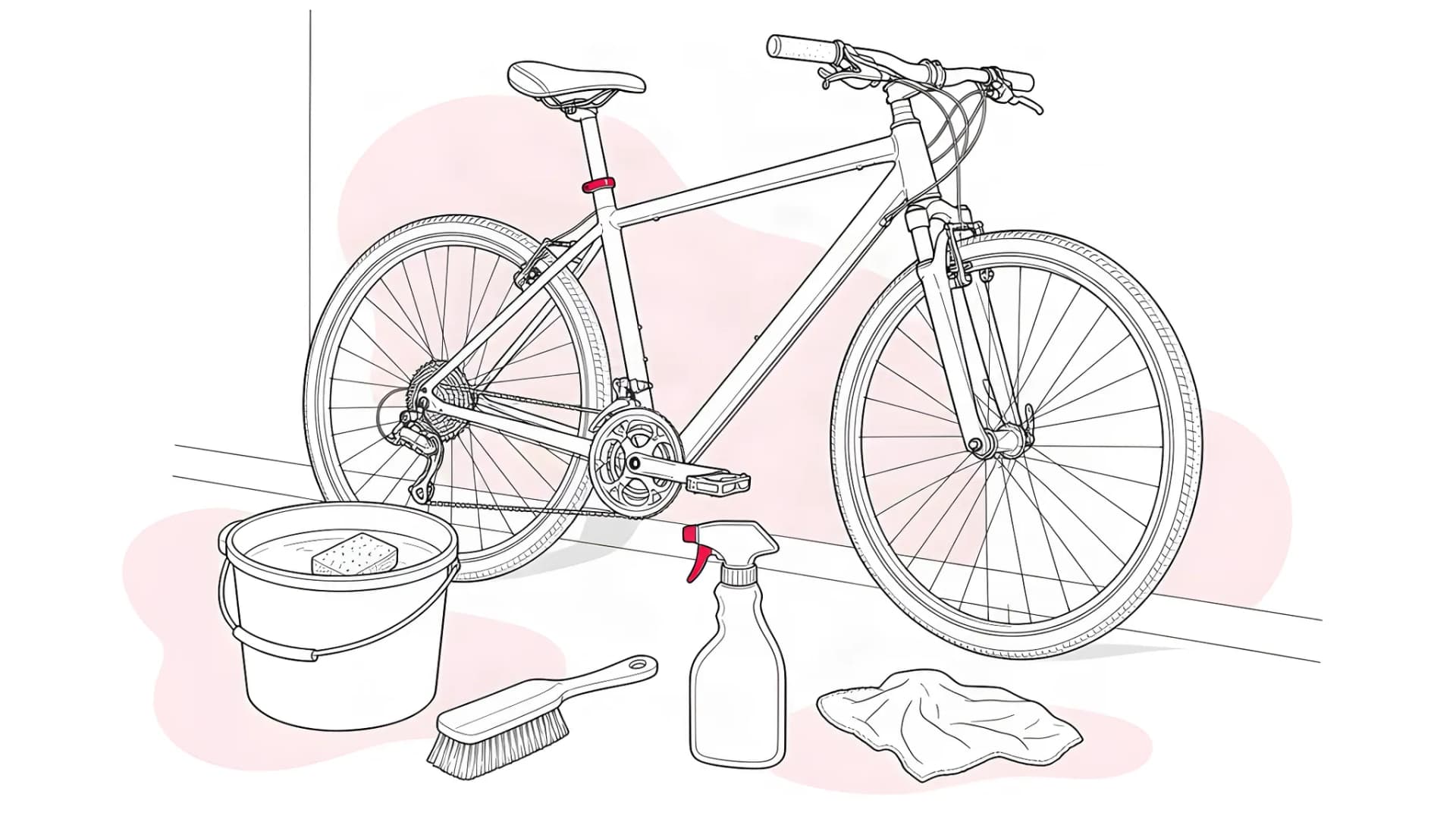
Short answer: how to clean a bike is seven steps in a fixed order: set up, rinse, degrease the drivetrain, wash the frame and wheels from the top down, wipe the brakes on their own, rinse and dry, then lube the chain. A bucket, a sponge, two brushes and a bottle of water do it in a hallway. Keep degreaser, chain lube and the drivetrain brush off disc rotors and pads, and never pressure wash bearings or an e-bike motor.
What to clean a bike with
The kit for cleaning a bicycle at home is a bucket of warm water, a bike cleaner or very diluted washing-up liquid, a sponge and a soft brush for the frame, a separate stiff brush and a degreaser for the drivetrain, three rags and a bottle of chain lube. A hose is optional.
Cycling UK's beginners' guide makes one rule of the brushes: the ones that touched the drivetrain do not go near the frame, or the grease goes with them.
Four kinds of product turn up on the shelf, and they do four different jobs:
- Bike cleaner, sold as bike wash. Muc-Off's instructions for its Bike Cleaner: rinse first, spray, leave three to five minutes, agitate stubborn grime and rinse thoroughly, never in direct sunlight or left to dry. Muc-Off states it is safe on rotors, pads, seals and carbon; Brompton still advises keeping bike wash off rotors, so finish them with alcohol.
- Degreaser. For the chain, cassette, chainrings and jockey wheels only. It dissolves old chain oil, which is why it must stay away from bearings, brakes and an e-bike's seals. Cycling UK's guide suggests a cycle-specific degreaser, and our chain cleaning guide covers how long to leave it.
- Isopropyl alcohol and disc brake cleaner. For the rotors. SRAM's brake service guide says to wipe a noisy rotor with isopropyl alcohol and a clean rag. Shimano's disc brake manual names isopropyl alcohol, soapy water or a dry cloth, and no commercial brake cleaners or silencing agents, which can damage seals. Alcohol on a rag is the common ground.
- Washing-up liquid. Cycling UK says soap or very diluted washing-up liquid works fine. Bosch's care advice for e-bikes accepts it as long as it is not aggressive or strongly degreasing. Brompton's guide notes that not all generic cleaning supplies are safe on components. Use a squirt in a bucket, never neat on the bike, and rinse it off fully.
Hair shampoo, car shampoo and kitchen sprays are not covered by any of these instructions, so we do not recommend them.
How to clean a bike step by step
How to wash a bike, in workshop order, is seven steps: set up, rinse, drivetrain, frame and wheels, brakes, rinse and dry, then lube and check. The dirty jobs come first so the grease is gone before the clean sponge goes on, the brakes are wiped on their own, and lube goes on last, onto a dry chain.
1. Set the bike up
Lean the bike against a wall, or put it in a workstand if you have one. Put cardboard or an old towel under both wheels indoors. Shift to a middle gear so the chain runs straight.
On an e-bike, switch the system off, take the battery out and remove the display, or cover a fixed display with a cloth. Bosch's care advice lists battery and display removal as the first step; Cycling UK adds switching the system off. Brompton says the same for the Brompton Electric: battery out before you start.
On a disc-brake bike, hang a plastic bag over each rotor while the degreaser is out. It takes ten seconds and keeps overspray off the pads.
2. Rinse the loose dirt off
Wet the whole bike with low-pressure water: a hose on a gentle setting, a watering can or a squeezed water bottle. Muc-Off's instructions start with a rinse before the cleaner goes on, so the cleaner works on the grime rather than on the mud sitting over it.
Let the water do the softening, because rubbing dry grit into the paint with a sponge scratches the finish. Keep the flow gentle and away from the hubs, the bottom bracket, the headset and any e-bike component. Bosch's advice is blunt about high pressure: water penetrates the bearings of the motor, the hubs and the rear frame.
3. Clean the drivetrain before the frame
Canyon's cleaning guide puts the drivetrain first, and that is the order used here. Spray or brush degreaser onto the chain, cassette, chainrings and both jockey wheels while you turn the cranks backwards. Scrub with the stiff brush, then rinse until the run-off is clear.
That is the short version. The clip-on tool, the bottle soak and the choice between wet lube, dry lube and wax are in our guide to cleaning a bike chain.
Two drivetrains skip the degreaser. A waxed chain is cleaned and re-waxed the way the wax maker says. A belt drive needs water only; the Gates Carbon Drive owner's manual says to wash it with water and never to lubricate it.
4. Wash the frame and wheels from the top down
Fill the bucket with warm water and a squirt of washing-up liquid, or spray the bike cleaner on. Start at the saddle and bars and work down, as Canyon's guide advises, so dirty water runs over parts you have not cleaned yet.
Use the sponge on the frame and fork, and the soft brush around the head tube, the bottom bracket shell and the cable stops. Handlebars, grips and saddle get the sponge and soapy water only.
Wheels take the soft brush: rim, spokes, hub shells, then the tyre. Brushing the tread shows up embedded glass and cuts before they become a puncture. On a rim-brake bike, wipe the braking track of the rim clean so the pads have something clean to grip.
5. Wipe the brakes on their own
Disc rotors and pads get their own step because degreaser, chain lube and the drivetrain sponge must not reach them. Shimano's manual warns that oil or grease on the rotor or pads may stop the brakes working, and names soapy water as safe. Brompton says bike wash contaminates rotors, and Bosch says keep chain lube off the disc.
Wipe each rotor with isopropyl alcohol on a clean rag until the rag comes away clean; SRAM gives the same wipe as its remedy for a contaminated rotor. Wipe the caliper body with the same rag and do not spray anything into the caliper.
If the brakes squeal or feel weak after a wash, the pads have picked something up. That is a diagnosis job, and our brake squeal guide walks through it.
6. Rinse and dry the bike
Rinse every trace of cleaner off with clean water. Muc-Off's instructions call for a thorough rinse, and dried-on cleaner leaves a residue that attracts dirt.
Bounce the bike on its wheels to shake water out, then dry it with a rag. Cycling UK's guide singles out the places that hold water: the drivetrain and the bolt heads. Add the brake calipers and the seatpost clamp.
Canyon's guide is clear that the bike should be fully dry before any lube goes on. In a flat, that means the bike stands on the cardboard until the chain and the bolt heads are dry to the touch, and only then goes back into the hallway.
Damp steel in a hallway is how rust starts, and salt from gritted roads speeds it up. Bosch's winter advice for e-bikes is to remove the salt after riding and let the bike dry well. If you find orange bloom while drying, our guide to removing rust from a bike covers what to do.
7. Lube the chain and check the bike
Put one drop of lube on each link of the chain while you turn the cranks slowly backwards. Cycling UK's guide and Brompton's give the same instruction: a drop per link, a few turns of the cranks, then wipe off the excess. Bosch adds a placement rule for e-bikes: apply lube where the chain runs freely, away from the disc.
Before you ride, squeeze both brake levers hard. On an e-bike, run Bosch's function check: battery engaged, drive working, buttons responding. Check the tyres against our tyre pressure guide while the pump is out.
How to clean a bike without a hose
The best way to clean a bike without a hose is a bucket, a bowl and a squeezed water bottle, in a hallway or on a balcony. Brompton's guide says a bucket of hot water and a sponge do the job as well as a hose.
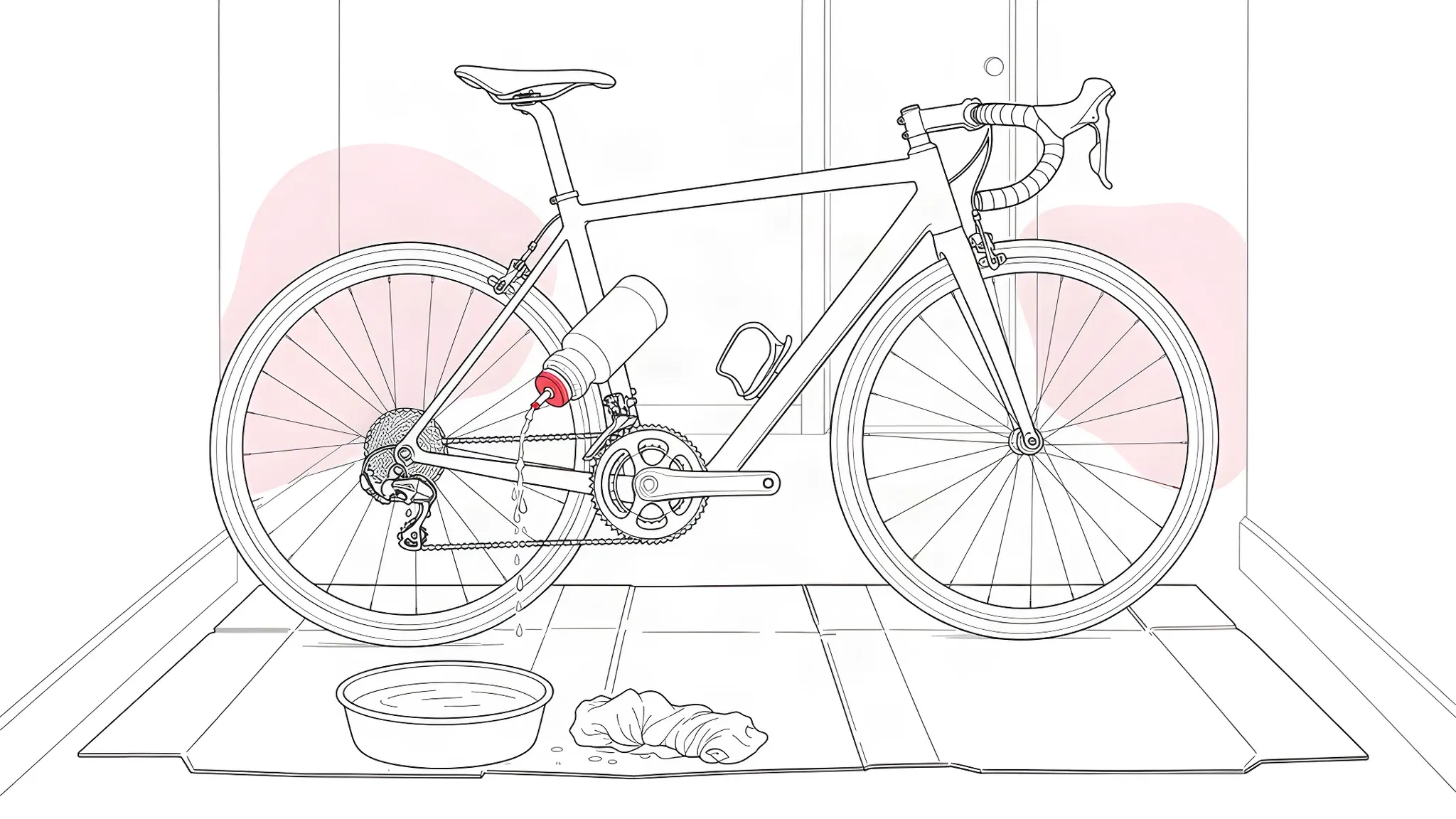
The hallway method:
- Lay cardboard or an old towel under both wheels, wider than the bike, and open a window.
- Knock the dry mud off outside first. Bang the tyres on the pavement and brush the worst off the frame at the kerb, so it never comes indoors.
- Fill a bucket with warm water and a squirt of washing-up liquid, and a bowl with clean water for rinsing.
- Degrease the chain from the brush. Spray degreaser onto the stiff brush, then work it into the chain and cassette. Nothing lands on the floor or the rotor.
- Rinse the drivetrain from a squeezed bottle held close, catching the run-off with a rag underneath.
- Sponge the frame and wheels from the top down, rinsing the sponge in the bucket. Change the water when it turns grey.
- Wipe with a cloth wrung out in clean water to lift the soap off, then dry with a third rag.
- Wipe the rotors with alcohol, lube the chain, and leave the bike to dry on the cardboard before it goes back against the wall.
A bike cleaner spray suits this method, because Muc-Off's instructions only ask for a rinse, and a rinse from a bottle counts. Use small amounts of everything: degreaser sludge on a laminate floor is harder to clean than the bike.
A light wipe-down after a wet commute is a different job. Run a damp cloth over the frame and a dry rag through the chain, add a drop of lube, and the bike is done in a few minutes at the door.
Can you pressure wash a bike?
No, not if you want the bearings to last. Cycling UK's guide says never to use a pressure washer, and Bosch's care advice calls high-pressure cleaning of an e-bike's components a no-go because water gets into the bearings of the motor, hubs and rear frame.
Canyon's guide adds the other problem: a high-pressure hose forces dirt into the crevices. Brompton's guide allows a hose only on a low-pressure stream.
The problem is the force of the water rather than the water itself. A gentle stream wets the bike and carries dirt away. A jet drives water past the seals on the hubs, bottom bracket, headset and suspension pivots, where it washes the grease out. The jet lance at a car wash is the same thing under a different name.
How often should you clean a bike?
Clean the bike when it is dirty, and on a schedule in between. The published figures come from two sources:
- Cycling UK: road riders every 160 km and more often in winter; occasional riders once a month; off-road and gravel riders every couple of weeks and after every particularly muddy ride.
- Canyon: a commuter on a hybrid in dry conditions may be fine with once a week; a mountain or gravel bike after every muddy ride; a road bike's drivetrain cleaned and lubricated about every few hundred kilometres.
- Bosch, for e-bikes: ideally after every trip, so dirt does not become engrained, with salt removed after winter rides.
A London commute in winter sits at the dirty end of those figures. A rinse and wipe after a gritted ride, and a full wash at the weekend, keeps the chain silver.
How to clean a mountain bike after a muddy ride
Rinse a muddy mountain bike while the mud is still wet. Cycling UK's figure for off-road bikes is a clean after every particularly muddy ride, and Canyon says the same for muddy terrain. Dried mud sets like render and needs far more scrubbing, which is what scratches the paint.
The method is the same seven steps with more water at step 2. Let a gentle flow soak the mud off, keep it away from the fork seals, the rear shock and the pivot bearings, and wipe the fork stanchions with a clean rag. The trail-centre pressure washer fails for the reasons above.
Cleaning an e-bike, a Brompton and a belt-drive bike
E-bikes. The whole-bike method works, with the step 1 preparation: system off, battery out, displays removed or covered, and a cleaner that is not strongly degreasing. Bosch says the battery mount is designed so water drains and the contacts dry, and that the mount and plug area should be kept clean; technical vaseline may go on the contacts.
After washing, Bosch's function check takes a minute: battery clicked in, drive responding, buttons working. Our e-bike battery care guide covers the battery itself. If the motor will not wake after a wash, a mechanic from e-bike repair diagnoses it and refers you to an authorised service centre if the fault is in the motor or battery.
Brompton and other folders. Brompton's guide says to use a low-pressure hose or a bucket of hot water and a sponge, to keep bike wash off the disc rotors, and to remove the battery on an electric model first. Unfold the bike fully so the hinges and the chain, which sit low in road spray, can be washed and dried.
Belt drives. Gates' care section for the Carbon Drive says: wash with water to remove debris, and do not lubricate. Water and a soft brush clean the belt and the sprockets, and it needs no degreaser, lube or wax.
Hub gears and single-speeds. Same method, with no cassette or jockey wheels to scrub. With a full chaincase, open the inspection flap, wipe the chain through a rag and add a drop of lube.
What not to do
- Do not use a pressure washer or a jet lance. Cycling UK says never, and Bosch says the water goes into the bearings of the motor, hubs and rear frame.
- Do not let degreaser, lube or the drivetrain brush reach the rotors or pads. Shimano's manual warns that oil or grease on the rotor or pads may stop the brakes working, and Brompton adds a caution to keep bike wash off rotors.
- Do not spray aerosol brake cleaner over the calipers as a matter of course. Shimano's dealer's manual names isopropyl alcohol, soapy water or a dry cloth, and warns that commercial brake cleaners can damage seals. Alcohol on a rag is the safe choice for the rotor.
- Do not use an aggressive or strongly degreasing soap on an e-bike. Bosch's care advice draws that line to protect plastics and seals; a squirt of washing-up liquid in a bucket is fine.
- Do not let the cleaner dry on the bike, and do not wash in direct sun. Muc-Off's instructions say both.
- Do not use the drivetrain brush on the frame or the brakes. Cycling UK's guide keeps the greasy brushes separate.
- Do not put the bike away wet, and do not lube a wet chain. Cycling UK lists the parts that hold water, and Canyon says the bike must be fully dry before lube goes on.
- Do not tip degreaser sludge down the sink. Thames Water says chemicals, solvents and oils go to the local refuse or recycling site. Bottle it and take it to your local household waste and recycling centre.
When it is a job for a mechanic
- Brakes that squeal or feel weak after a wash and do not recover after an alcohol wipe. The pads need replacing and the rotor cleaning before the new pads go in.
- An e-bike that shows an error, cuts out or will not wake after washing. The system needs checking before it is charged again.
- A grinding or rough feel from the hubs, the bottom bracket or the headset after a jet wash. The bearings need regreasing or replacing.
- Rust that a clean has uncovered, where the chain is stiff or the cables have started to drag.
A mechanic comes to you with a fully stocked workshop, 9am to midnight, seven days a week, across London.
Book a repair · About mobile bike repair →
Related guides
Sources and further reading
- Cycling UK: a beginners' guide to cleaning your bike (Rebecca Armstrong), cleaning frequency by riding type, diluted washing-up liquid, the pressure washer warning, separate brushes, the parts that hold water, e-bike hose and battery advice and one drop of lube per link.
- Muc-Off Bike Cleaner, directions for use: rinse first, three to five minutes, do not let it dry or apply in direct sunlight, rinse thoroughly, and the statements on rotor, pad, seal and carbon safety.
- Canyon: how to clean your bike (April 2024), drivetrain first, top-down washing, cleaning frequency by riding type, the high-pressure hose note and drying fully before lubing.
- Bosch eBike Systems: care of eBikes (Harald Sterzl), battery and display removal, no steam or high-pressure cleaner, washing-up liquid not strongly degreasing, the battery mount and contacts, lube away from the disc, salt removal in winter and the function check after washing.
- Shimano dealer's manual, disc brakes (DM-LADBR01): to ensure safety, no oil or grease on the rotor or pads, isopropyl alcohol, soapy water or a dry cloth for the brake system, no commercial brake cleaners or silencing agents.
- SRAM brake service guide, cleaning a noisy rotor with isopropyl alcohol and a clean rag.
- Brompton: the folding bike maintenance guide, low-pressure hose or bucket and sponge, bike-specific products, battery out on an electric bike, bike wash off the rotors, lube per link; and Brompton Knowledge: how to clean your Brompton (video), battery removal on the Brompton Electric.
- Gates Carbon Drive owner's manual, the care section: wash with water to remove debris, do not lubricate.
- Thames Water: bin it, chemicals, solvents, engine oil and paint go to the local refuse or recycling site.