Stuck or slipping seatpost: how to free a seized post, stop a saddle sliding down, and when to stop
How to free a stuck seatpost in a safe order, where to stop for carbon and aluminium frames, why a seatpost keeps slipping and how to make it hold.

Written by Conor DonoghueCargo bike mechanic
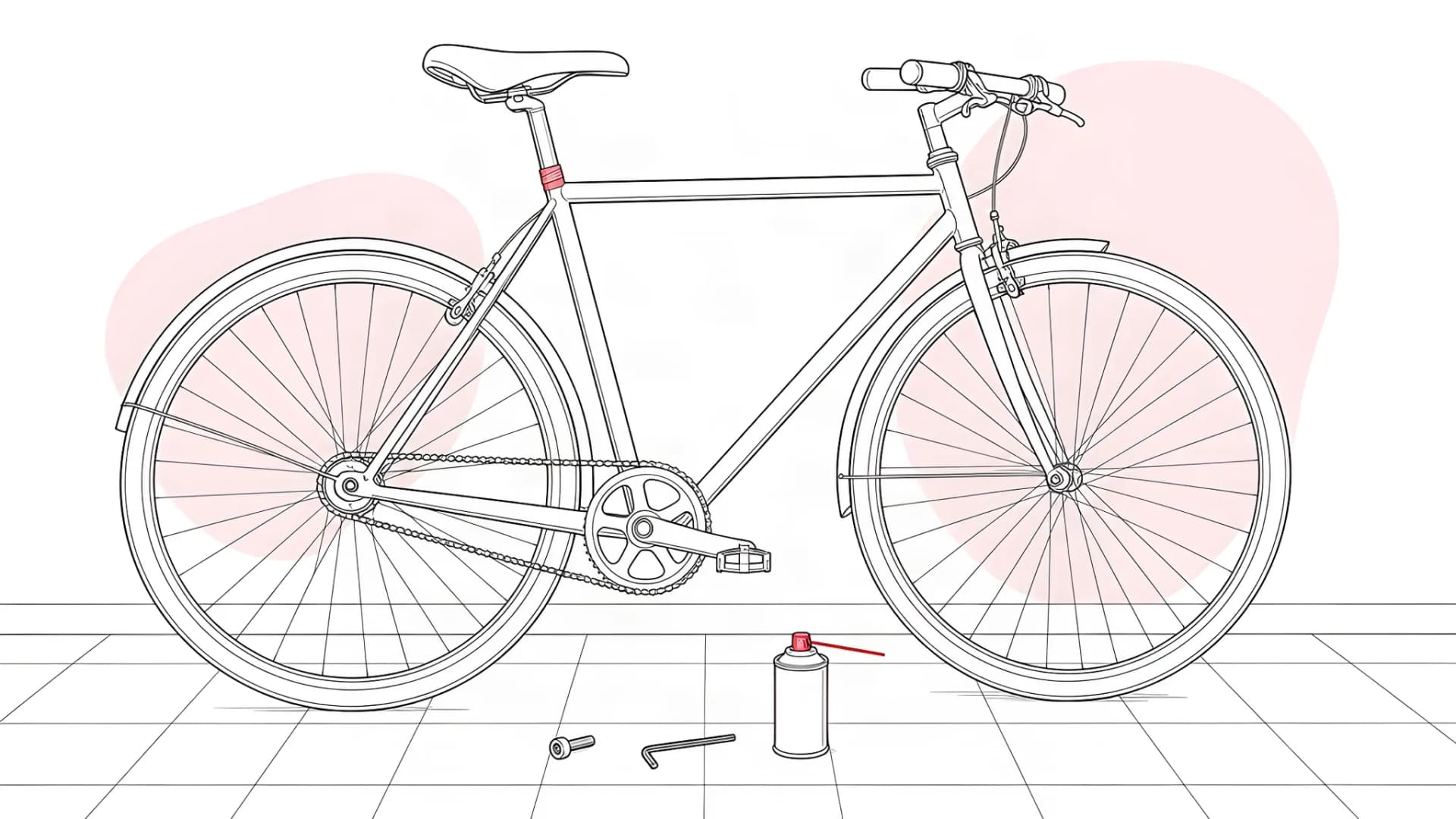
Short answer: a stuck seatpost that will not move with the binder bolt out is bonded to the frame by corrosion, or jammed by a wrong-size post forced in. The safe order is penetrating oil and time, then twisting with the saddle, then a workshop; carbon stops at twisting, with no oil or heat. A post that moves freely but slides down as you ride is a clamping problem instead.
Is the seatpost seized, or is it just slipping?
Take the binder bolt out and try to lift the saddle. A seized post will not come up, though it may twist a little. A slipping post lifts out freely and sinks only when it is clamped and sat on.
Park Tool's guide to seized seatposts puts the bond down to an exchange of ions, especially between an aluminium post and a steel frame.
Three checks first:
- Remove the bolt completely. Sheldon Brown's page on stuck seatposts says that is sometimes all it takes.
- Free anything clamped to the post, such as a light bracket or saddlebag mount, which can hold it on its own.
- Look for a jam. Sheldon Brown says a forced oversize post can leave a bulge you feel in the seat tube. An over-tightened bolt can squeeze a thin-walled post oval, and twisting it too far may jam it tighter. Either sign means a workshop.
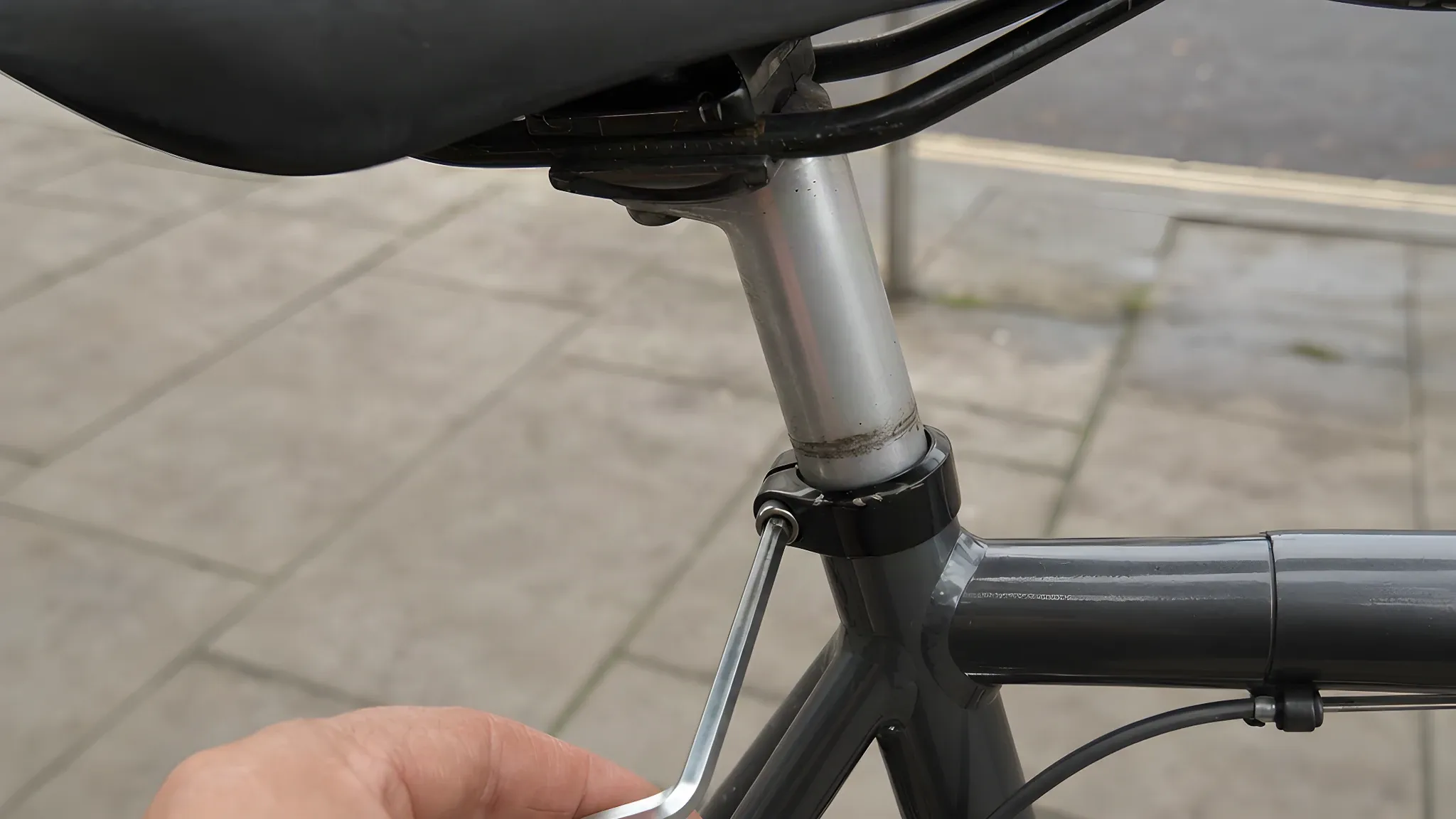
How do you free a stuck seatpost without damaging the frame?
Free it in five steps from reversible to risky, stopping where your materials allow.
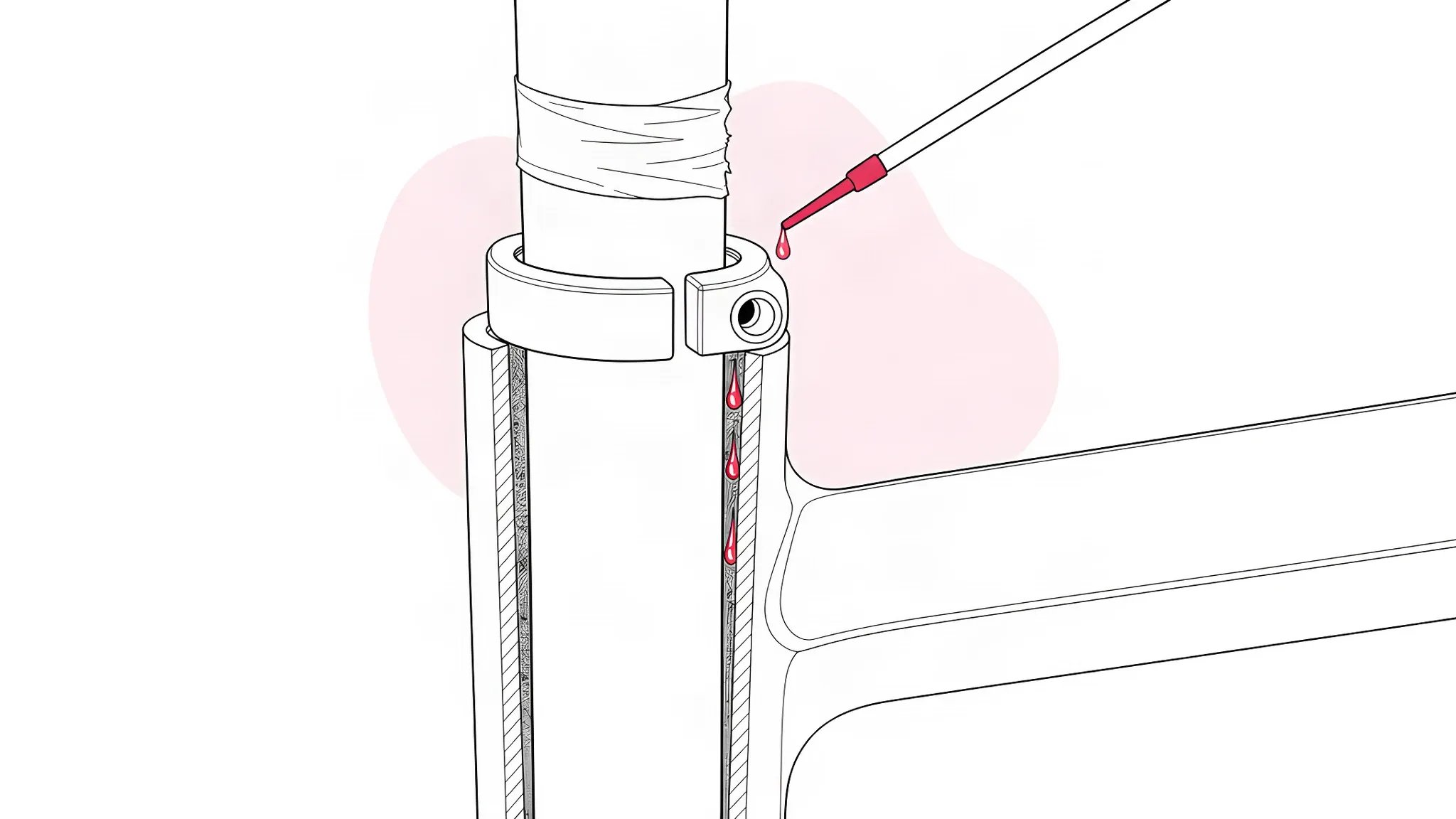
1. Take the bolt out and mark the post
With the binder bolt out, mark the post where it meets the frame, as Park Tool's guide advises, so that any upward progress shows.
2. Run oil in and give it time
Drip penetrating oil into the gap at the top of the seat tube, leave it overnight and repeat. Sheldon Brown's page says penetrating oil can do wonders on steel rusted into steel, and is almost useless against aluminium oxide.
Skip this step on carbon. Sheldon Brown's page says oil expands the resin binder of the composite and can deteriorate it.
3. Twist with the saddle, then pull
Not for an aero or dropper post. A shaped post cannot turn, and Sheldon Brown warns that twisting a telescoping or articulated suspension post from above its mechanism can damage it.
For a round post, put a foot on a pedal, stand behind the saddle and twist it back and forth. Sheldon Brown says turning applies far more force than pulling. When it turns, Park Tool says to pull upward and watch the mark.
Carbon stops here.
4. Heat the seat tube, if the pair suits it
Sheldon Brown's page heats the seat tube around a steel or titanium post, working fast so the tube expands before the post does. Hot water poured on the outside of the tube is the gentle version, followed at once by a twist.
Skip heat for an aluminium post in a steel or titanium frame. His page explains why: aluminium expands twice as much as steel and two and a half times as much as titanium.
5. Decide
Moved at all: keep repeating the steps your materials allow over the following days. Not moved after several days: stop. Everything after this risks the frame or the post, and Park Tool warns that some posts are simply bonded permanently.
When should you stop and take a stuck seatpost to a workshop?
Canyon's road bike manual says not to use brute force on a post that does not move easily. Where to stop depends on the pair:
- Carbon frame or carbon post: after step 3. Sheldon Brown's page rules out oil, heat and cold. Park Tool says not to cut a carbon post out, or to hone a carbon frame.
- Aluminium post in an aluminium frame: after step 3. The caustic soda that dissolves an aluminium post will destroy an aluminium frame, Sheldon Brown's page warns. Heat gains little when both parts expand alike.
- Aluminium post in a steel or titanium frame: after step 3. Oil does little against aluminium oxide, and heat works the wrong way.
- Steel post in a steel frame: after step 4. Sheldon Brown's oil advice is written for this pair, and his heat step for a steel post.
- Aero, integrated or dropper posts: before step 3. Park Tool refers questions on a post proprietary to a bike maker to that maker.
Past that point a workshop turns the frame round a post clamped in a bench vice, as Park Tool describes, or cuts the post out, never a carbon one. BikeRadar's maintenance guide calls the worst case a job for a specialist seatpost removal company.
Why does my bike seat keep slipping down?
A seatpost slips when the post has too little grip in the frame, or the clamp cannot apply its force. Check these causes, cheapest first:
- A bolt below its figure. Park Tool's first check is that the binder bolt is simply not tight enough.
- A dry bolt or quick release. Park Tool says dry threads and a dry bolt head may not pass the load to the clamp.
- Grease where grip is needed. On metal, Park Tool's fix for a greased post that still slips is assembly compound; Canyon's manual says greased carbon may never clamp reliably again.
- The wrong diameter. Park Tool says a post should be only about 0.1 mm smaller than the inside of the seat tube. Canyon's manual adds that a clamp needing real hand strength to hold suggests the wrong size.
- Carbon without paste. BikeRadar's maintenance guide says carbon parts need carbon fibre grip rather than anti-seize.
- A bent or cracked collar, or a stretched bolt, which will not hold at its printed figure.
Torque past the printed figure does not cure a slip: BikeRadar says carbon fibre will fracture if over-tightened, and Park Tool notes that seatposts need only minimal tightening. A post that creaks rather than slips is covered under a creak from the saddle or post when seated.
How to stop a seatpost slipping
Test-ride the bike after each step.
1. Mark the height and take the post out
Wrap tape round the post at the frame. If the mark is lost, Canyon's manual gives the heel check: one heel on the pedal at its lowest point, the leg fully straight and the hips level.
2. Clean the surfaces and grease the bolt
Wipe the post and the inside of the seat tube clean; Canyon's manual says both must be free of oil and grease if either is carbon. Grease the bolt threads and head, or oil a quick-release pivot, as Park Tool advises. Replace a pitted bolt, as our guide to rusty bolts and small parts explains.
3. Refit with the compound the pair needs
Metal in metal takes grease or anti-seize inside the seat tube, Park Tool says, and assembly compound if it still slips at the recommended torque. Where carbon is involved, use a thin film of carbon assembly paste, as Canyon's manual specifies.
The makers disagree on a carbon post in a metal frame: Park Tool accepts grease as a barrier, and Canyon says never to grease a carbon post. Paste meets both concerns: Canyon specifies it, and Park Tool makes its own compound to stop seatposts slipping and to separate different materials. The carbon part's maker has the final word.
4. Tighten to the printed figure, then test
Use the figure printed on the collar or frame, the same rule as fasteners checked to their printed torque in a home service. Park Tool's torque table lists one maker's binder at 4 to 6.8 Nm, and Canyon's manual approaches its maximum in 0.5 Nm steps.
A quick release, set with its adjusting nut, should resist through the second half of its swing, Park Tool says. Then its test: if the saddle will not twist side to side, the post will not move down.
5. Still slipping: measure the post and the tube
Measure the post with a calliper; Park Tool says the size is commonly marked on it. Measure the seat tube in two or three places and average them. A post that is too small needs the right post or a purpose-made shim.
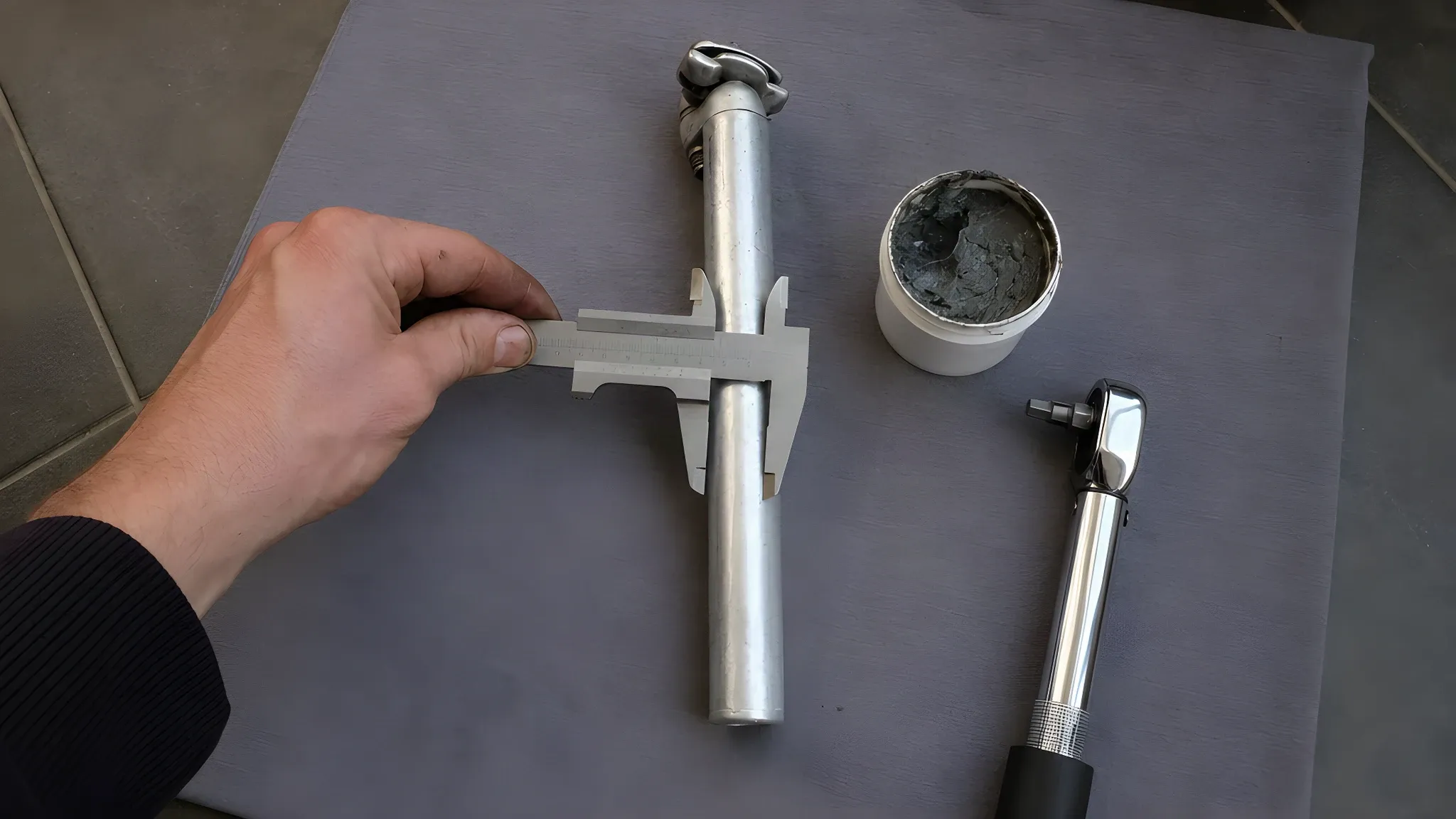
While it is out, check insertion: where the post has no minimum mark, Park Tool asks for at least 2.5 times the diameter inside the frame, 68 mm for a 27.2 mm post.
How to keep a seatpost from seizing again
Take the post out and clean it twice a year, as BikeRadar's maintenance guide suggests, then refit it with grease or anti-seize on metal. Park Tool says anti-seize tends to resist water and corrosion better than grease.
For carbon in carbon, BikeRadar uses carbon fibre grip, while Park Tool says the post can generally go in dry if the frame maker agrees.
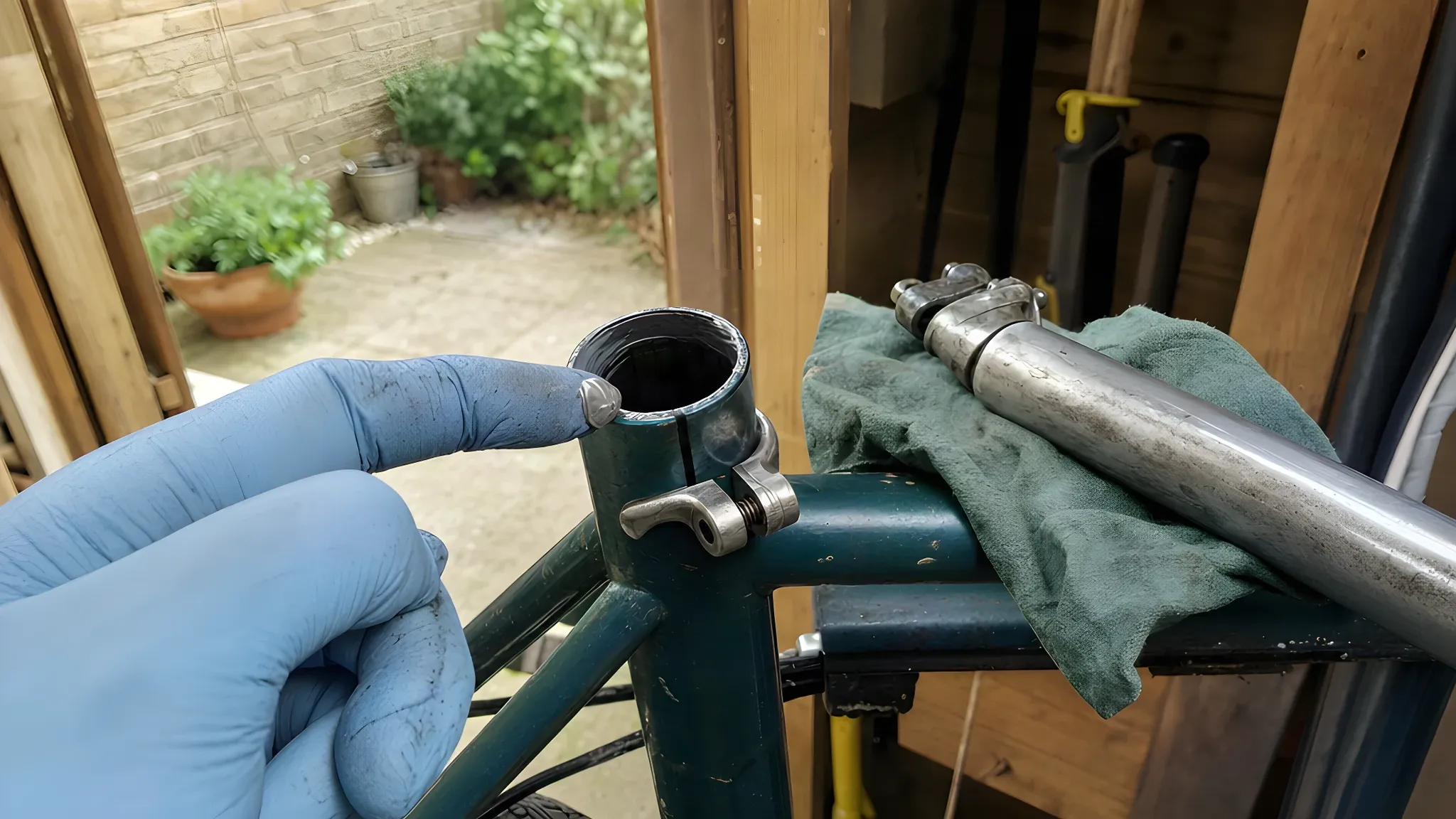
The weekly hand-on-every-clamp check catches a post that has started to creep. Outside, see how to store a bike outside without it rusting and keep gritting salt off the frame.
What not to do
- Do not grip the post with a pipe wrench or pliers, or hammer a post in. Sheldon Brown rules out both.
- Do not lever on the rear dropout, which Park Tool says can bend the rear triangle.
- Do not prise the seat lug apart unless the frame is steel, Sheldon Brown's page warns.
- Do not use oil, heat, cold or grease on carbon, or caustic soda on any frame at home.
- Do not raise the post past its minimum insertion mark. Park Tool warns it may fail catastrophically.
When it is a job for a mechanic
A seized post that has not moved by its stop point above, and any stuck carbon, aero or dropper post, need a workshop. A slipping post needs a mechanic when:
- The clamp will not hold at its printed figure after cleaning, a greased bolt and paste. The post and seat tube need measuring, and the post may need replacing.
- The bolt is rounded or stripped, or the collar is bent or cracked, and the part needs replacing.
- You want the bike checked after the saddle is reset, as in the full safety check of a bike service.
A mechanic comes to you with a fully stocked workshop, across London.
Book a repair · Mobile bike repair in London →
Related guides
- How to remove rust from a bike and stop it coming back
- How to store a bike in a flat, a shed or outside
- Bike maintenance guide: everyday care for beginners
Sources and further reading
- Sheldon Brown: 16 ways to unstick a seatpost (revised by John Allen, copyright 1995 and 2008), removing the bolt completely, the oversize and oval post, working on an assembled bike, the saddle as the grip, oil on steel, aluminium and carbon, heat by post material and expansion rates, heating or cooling carbon, caustic soda and drain cleaner, the seat lug and the hammer rule.
- Park Tool: seized seatposts and stems (26 August 2015), the exchange of ions and the galvanic reaction, anti-seize against water and corrosion, marking the post, oil, twisting and pulling, the mild acid, the vice, the rear dropout warning, cutting out, carbon posts, honing and permanent bonds.
- Park Tool: how to remove and install a seatpost (13 August 2024), the 0.1 mm fit, measuring with a calliper, proprietary posts, grease or anti-seize by material, assembly compound, minimum insertion, the dry bolt, the quick-release swing and the twist test.
- Park Tool: torque specifications and concepts (25 August 2015), the seatpost binder figure of 4 to 6.8 Nm and the note that seatposts need only minimal tightening.
- Park Tool: SAC-2 SuperGrip carbon and alloy assembly compound, made to prevent slipping on seatposts and to form a barrier between different materials.
- BikeRadar: 15 common bike maintenance mistakes (Oscar Huckle, 6 June 2025), carbon fibre fracturing when over-tightened, removing the seatpost twice a year, carbon fibre grip on carbon parts, and the seatpost removal company as the worst case.
- Canyon: road bike manual (PDF, edition 12, July 2021), no brute force on a post that does not move, no grease or oil on carbon, assembly paste, tightening in 0.5 Nm steps and the heel check for saddle height.