Bike noises: what each creak, click and knock means, and how to find it
How to trace a bike noise by timing and load: the creak order, clicks while pedalling or coasting, knocks over bumps, and when it is the bottom bracket.

Written by Conor DonoghueCargo bike mechanic
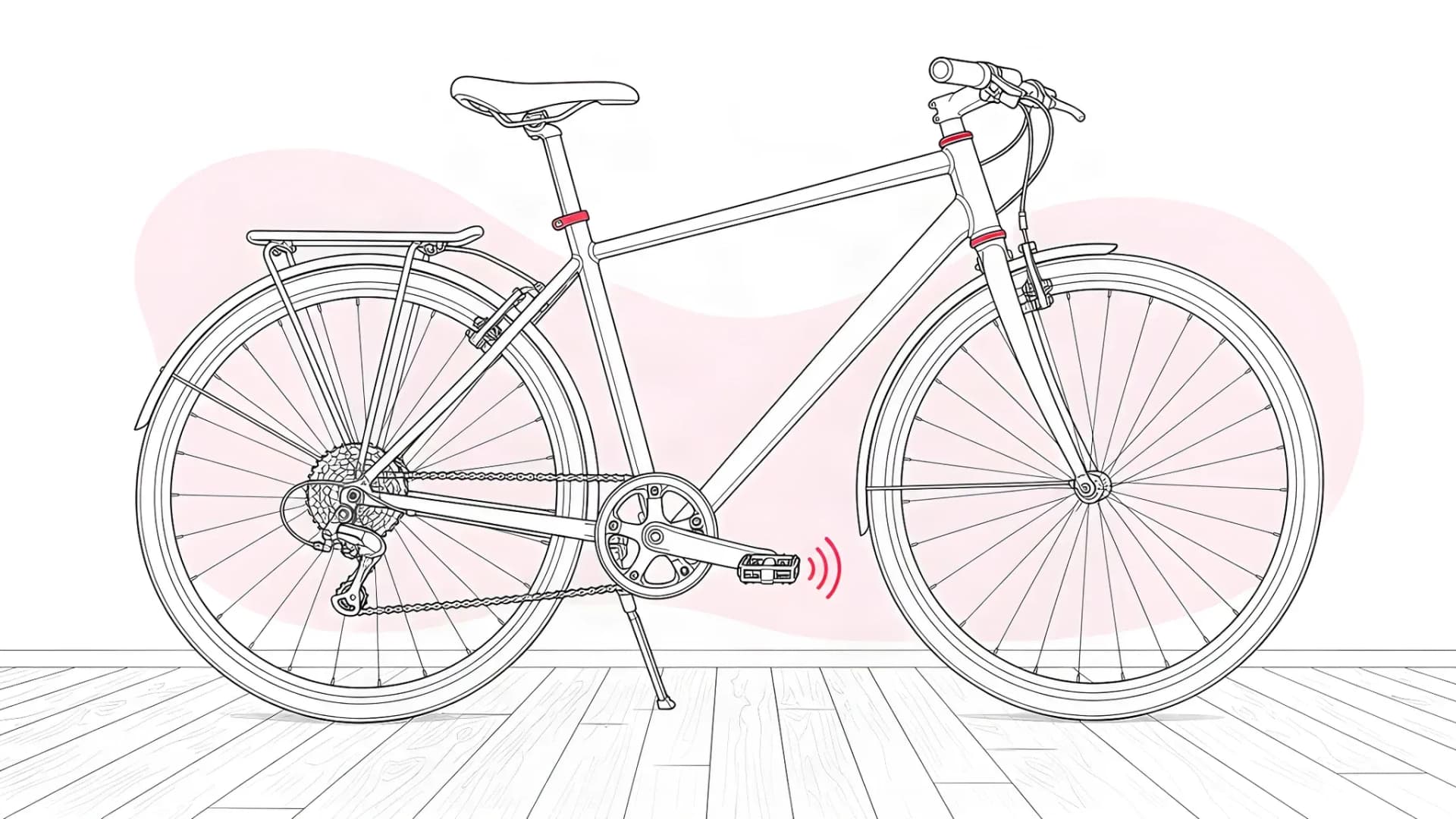
Short answer: bike noises are traced by the moment they happen, because sound travels through the frame and can seem to come from the wrong part. Note whether a noise comes once per pedal turn, with road speed or only over bumps, seated or standing, then test one change at a time, cheapest first. Sideways play in a crank, headset or wheel, a grinding bearing or a crack ends the home diagnosis.
Which bike noise do you have?
Name the sound first, then the moment it happens:
- Creak. A dry groan under load, on each pedal stroke, when you sit or when you pull on the bars: two parts rubbing together, in Park Tool's description.
- Click or tick. A sharp, repeating sound. Count it against the cranks or the wheel.
- Knock or clunk. A thud over bumps, under braking or when you turn the bars. The headset comes first.
- Rub, or a squeak under braking. The brake squeak guide finds the cause from when it happens. A squeak in time with pedalling starts with a dry chain and the right lube for it.
- Grind. Roughness you feel through the cranks, a wheel or the bars: a bearing, and a job for a mechanic.
- Rattle. Something loose: mudguard stays, rack, bottle cage, lock, lights, a pump, or cables inside the frame.
How do you find where a bike noise comes from?
Jim Potter, a shop owner quoted by BikeRadar, says carbon bikes carry sound more than older bikes, and a creaky front hub can sound as if it comes from the back.
1. Ride and note when it happens
Park Tool's method is short test rides: ride a loop on a quiet street and note whether the noise comes pedalling or coasting, seated or standing, on smooth road or bumps, braking or turning.
2. Count it against the cranks or the wheel
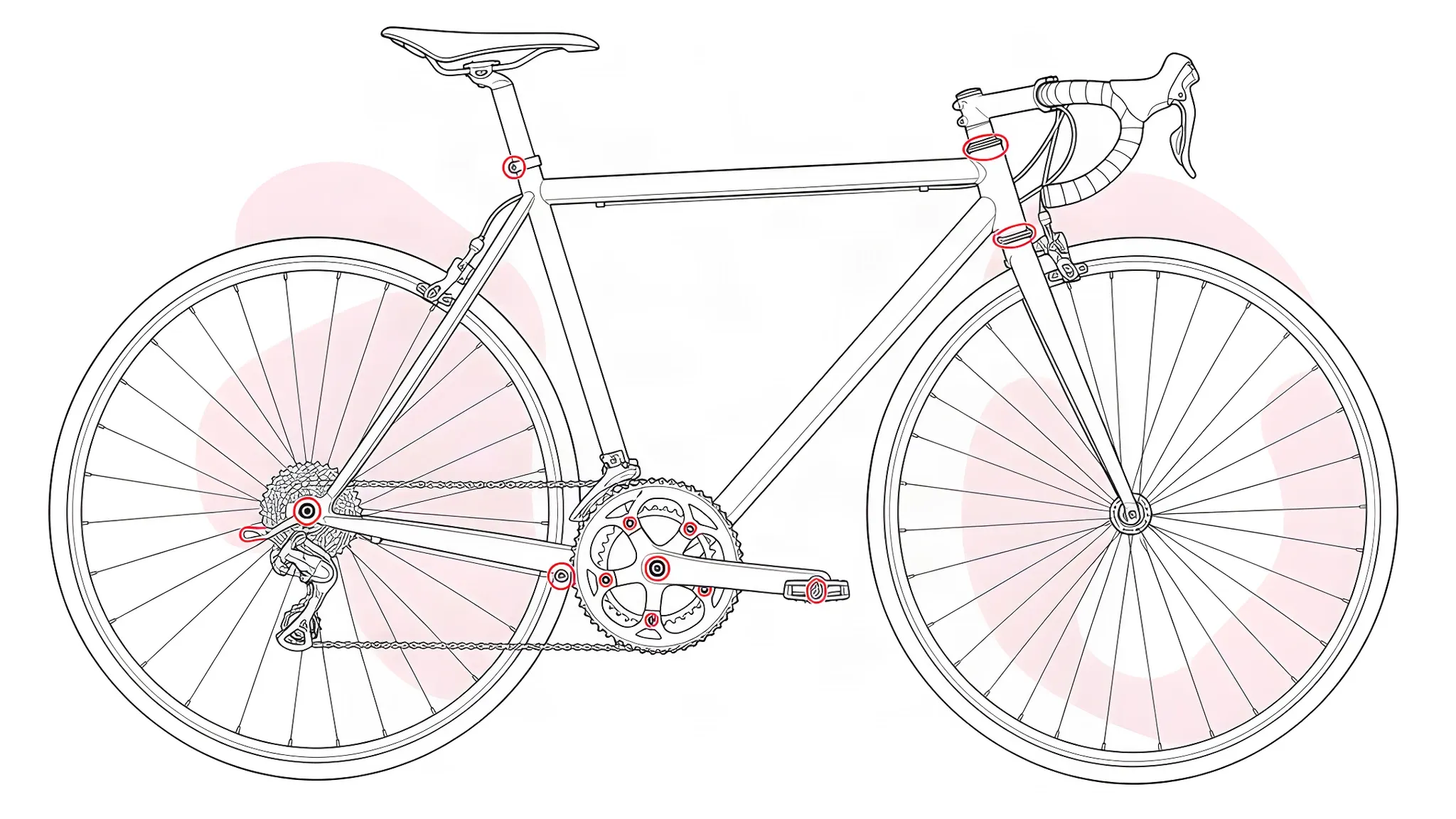
Park Tool's timing rule: a creak or squeak once per crank revolution is probably in the crankset and pedal area, and one every two to three revolutions may be the chain. A noise while you are not pedalling at all is likely elsewhere on the bike.
A noise that follows road speed, pedalling or not, points at the wheels.
3. Load the bike standing still
A static load test makes the noise without riding, so your hand can find it. Hold both brakes, put a foot on the nearest pedal and press inward. Bicycling says that once the crank bolts are tight, a creak or tick under that weight points at the bottom bracket.
Then tug the saddle and the bars both ways and press lightly on the brake levers. Jim Langley of Road Bike Rider names seatpost bolts, saddle clamps, stems, bars and brake lever clamps as parts that can tick or click.
4. Compare seated and standing
BikeRadar and MBR give the same rule: a creak only when you sit is very likely the saddle or seatpost. A creak only when you stand and push hard takes the saddle out of the list.
5. Swap one part, change one thing
Ride in other shoes to rule out cleats and laces, or fit a wheel from another bike. Langley traced a friend's tick, which started at about 20 mph, to the front wheel: swapping in another front wheel silenced it.
Why is my bike creaking when pedalling?
Work through a creak when pedalling in a fixed order, from the parts quickest to undo and refit to the ones that need special tools. Ride after each step. If the creak stops and stays gone over a few rides, the last change was the likely cause.
First, clean the bike and look for cracks around the head tube, the bottom bracket shell, the bars and the stem, as MBR advises. A crack ends the order: Park Tool says to stop riding and have the bike evaluated by a professional.
1. Pedals
Spin and wiggle each pedal, since Park Tool notes that pedal bearings can creak too. Then remove both pedals, clean the threads, grease them heavily as Park Tool's pedal guide says, and refit them. The left pedal has a left-hand thread, so it undoes clockwise. Park Tool gives a typical 40 Nm; your pedal maker's figure comes first.
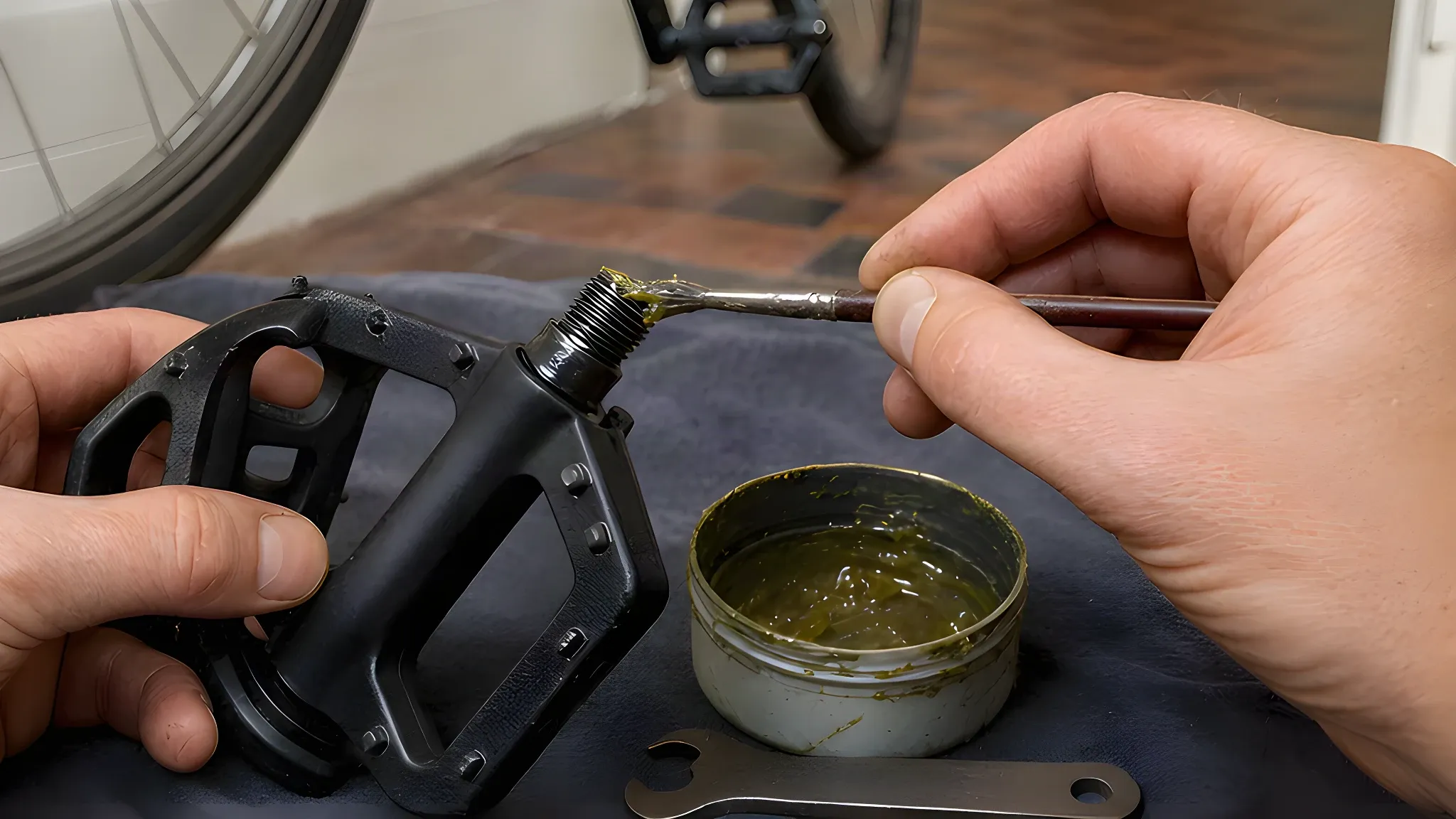
Stop here if the thread in the crank is damaged, or a pedal turns rough or rocks on its axle. Park Tool says pedal bearing service is typically best left to professional mechanics.
2. Cleats
Tighten the cleat bolts with mild threadlocker or grease, as Park Tool advises, and replace worn cleats, which Bicycling says can make the noise. BikeRadar quietens cleats with a light coat of silicone spray or wax-based furniture polish.
3. Saddle and seatpost, only if it creaks when seated
Mark the height with tape, pull the post, wipe it and the seat tube, and refit it with grease, or friction paste if either part is carbon, as BikeRadar and Bicycling advise. Tighten the binder to its printed figure; Park Tool notes that seatposts need only minimal tightening.
If the post is quiet, clean and lightly grease the saddle rails and clamp. Stop here if the saddle shell moves on its rails, which Park Tool says cannot be repaired.
4. Chainring bolts
Check each chainring bolt with an Allen key while a chainring nut tool holds the nut behind the ring. Park Tool suggests mild threadlocker or grease and about 8–12 Nm for steel bolts, depending on the maker. Aluminium bolts take the maker's own figure, which in Park Tool's torque table starts at 5 Nm for Shimano.
5. Crank bolts and the preload ring
Park Tool lists a crank loose on its spindle among the causes of creaking. Remove the crank bolts, grease the threads and under the heads, and refit them to the maker's torque. Park Tool's torque table lists 27 to 59 Nm for a crank held by one central bolt, depending on the maker.
Pinch-bolt cranks take far less: Park Tool's torque table lists 9.9–14.9 Nm for Shimano Hollowtech II pinch bolts, so read the figure printed on the arm first. On SRAM DUB and RaceFace Cinch cranks, Bicycling says the preload ring can loosen and click; reset it to the maker's instructions.
Stop here if a crank arm still moves on the spindle. Bicycling warns that a crank bolt that backs out can let the arm fall off while you ride.
6. Quick release or thru-axle
Park Tool says a loose quick release or thru-axle can let the hub move in the frame and creak. Clean the skewer or axle, add a thin coat of grease as Bicycling suggests, and refit it. Park Tool's check for a quick release is a lever that meets resistance at 90 degrees to the frame.
Stop here if the skewer or axle is cracked. Bicycling says a click from either can mean a crack, and the part needs replacing at once.
7. Bottom bracket play test
Push a crank arm sideways, then drop the chain off the chainring and spin the cranks by hand. Play, or a gritty, notchy or stiff turn, sends you to the bottom bracket section below.
8. The frame
Park Tool warns that frame creaks can masquerade as drivetrain creaks, and that a cracked weld or a separating glued joint creaks too, as a carbon bottom bracket shell did in its example. Stop here if you suspect a crack, and take the bike to a professional: Park Tool says repair is difficult once a crack has developed.
Why does my bike click when I pedal?
A click once per pedal turn comes from the same area as a creak, so the creak order above applies. Two clicks need their own look:
- Pedal bearings. A click or roughness inside the pedal body when you spin it off the bike is the bearing, which step 1 sends to a mechanic.
- Laces, soles and cable ends. MBR names shoes or laces tapping the crank arm, and excess gear inner cable tickling the crank arms or spokes. Tuck the lace in and trim the cable.
A click in one gear, or a chain that touches the derailleur cage, is indexing or a bent hanger. Our guide to skipping, ghost shifting or not shifting covers the checks, and on Tyred's gear repair page a mechanic sets the gears up where the bike stands.
A chain that hops as it passes the jockey wheels when you pedal backwards may have a tight link, by Park Tool's test. The stiff-link fix in our chain guide frees it.
Why does my bike click when I'm not pedalling?
A steady tick or buzz from the back wheel that comes only while you coast, and stops when you pedal, is the freehub. Hunt, a wheel maker with its own hubs, says the sound is the ratchets or pawls in the hub engaging as you freewheel.
BikeRadar notes that current Shimano hubs are notably quiet, so a loud hub and a quiet one can both be working properly. A change in the sound is worth a mechanic's look: a freehub that slips when you start pedalling, clunks as the drive takes up or grinds.
Other noises that follow road speed:
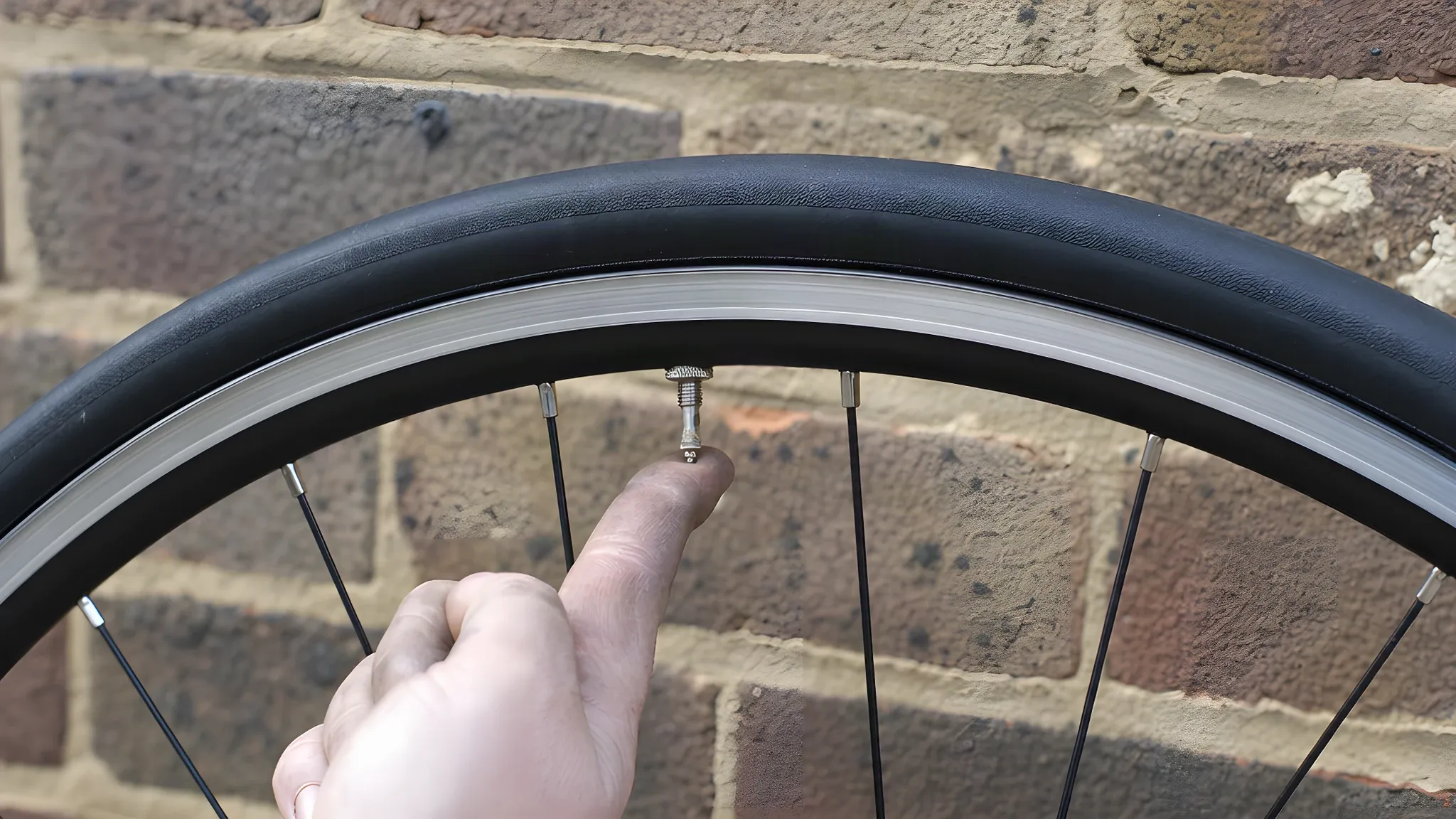
- Valve. Langley's 20 mph tick was the front valve, loose in a carbon rim and swinging into the edge of its hole; electrical tape held it still. He advises tightening valve nuts by hand only, so the tube still comes out at the roadside.
- Spokes. Park Tool explains that loose spokes can rub where they cross. BikeRadar suggests a drop of oil at each spoke crossing but calls retensioning the best solution: check spoke tension and whether the rim is buckled.
- Something touching the wheel. MBR names a misaligned computer magnet or sensor. Spin the wheel slowly and watch the mudguard stays, reflector and cable ties go past.
- Hub bearing. Park Tool's check is to pull the wheel side to side in the frame, turn it and test again. A knock or a rough turn is a hub job for a mechanic.
Why does my bike knock or clunk over bumps or when braking?
A bike that knocks under braking points at the headset first. Park Tool's test is to hold the front brake, press down on the bars and rock the bike forward and back. A knocking sensation may indicate a loose headset, though Park Tool adds that calliper arms and suspension fork legs can knock too.
The adjustment is in the headset and crank checks in a home service. Then work through the rest:
- Stem and bar bolts. Park Tool says a loose or dry stem or bar bolt can creak. Grease the threads and under the heads, and tighten to the figure on the stem.
- Turning the bars. A creak as the bars turn can come from metal housing end caps moving in the frame fitting. Park Tool calls lube a temporary fix and suggests a shim for a tighter fit.
- Internal cables. Bicycling says hoses and housing inside the frame can rattle over bumps. Some frames take a cable tie; on others the hoses, and sometimes the stem, come off, which is a workshop job.
- Accessories. Mudguards, racks, cages, locks, lights and pumps rattle: the weekly hand-on-every-clamp check finds them.
- Suspension. MBR links a noise that comes only over rough ground to a loose calliper or loose or worn suspension pivots, and BikeRadar says a creak at a fork crown can signal an impending failure. Both are for a mechanic.
Is it the bottom bracket, and what does replacing it involve?
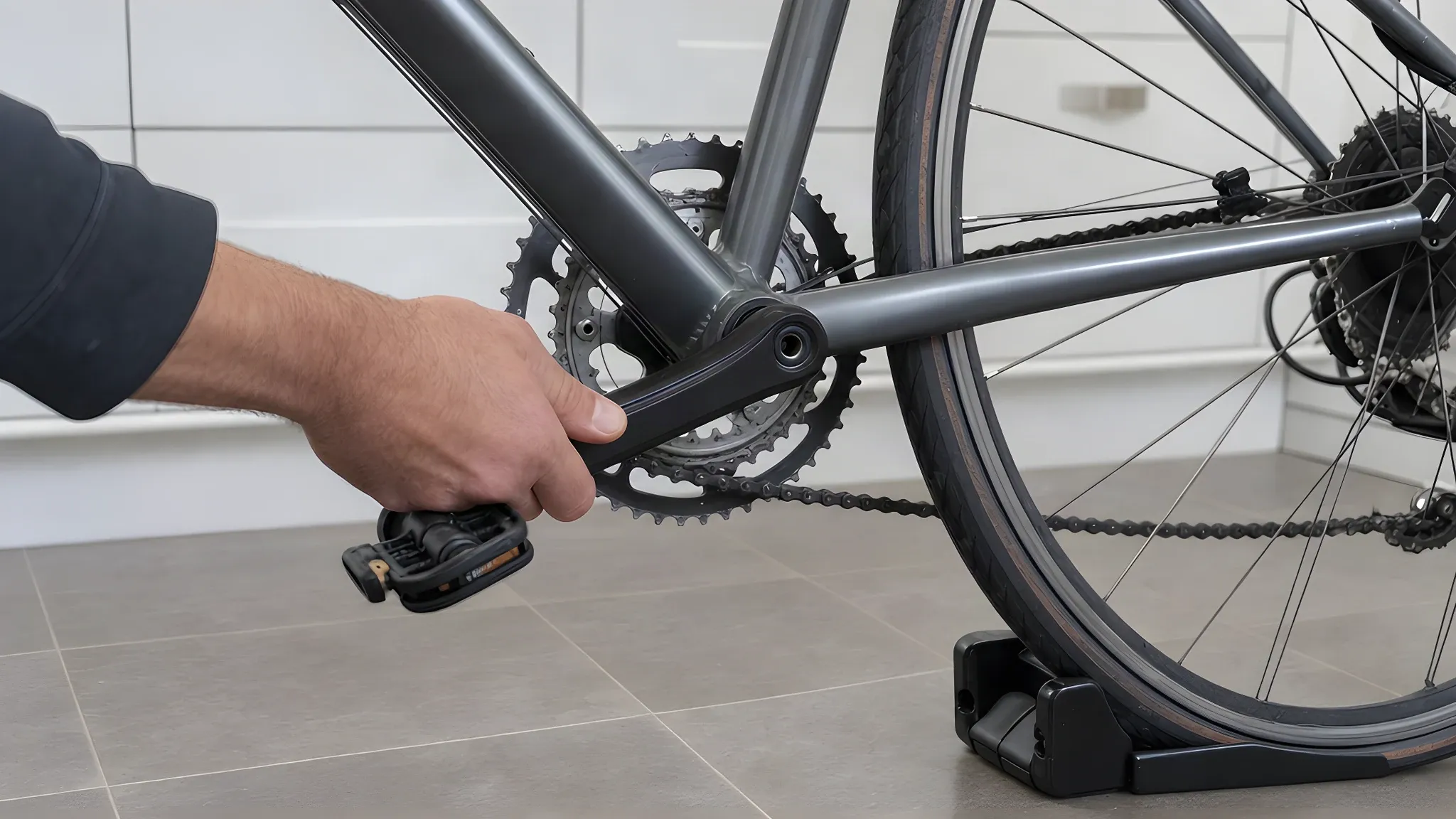
The bottom bracket is the bearing the cranks turn on, and it is the suspect once a creak survives steps 1 to 6. Tyred's bottom bracket replacement page notes that creaks travel through a bike frame, so the noise alone is not proof, and lists these signs:
- Play. Movement at the crank when you push it sideways with the pedal still.
- Rough rotation. A gritty, notchy or stiff turn when you spin the cranks with the chain off the chainring.
- Noise under load. A creak or click once per pedal stroke, loudest when climbing or pushing off from the lights, that stays whether you are seated or standing. A low rumble that rises with pedalling speed and stops when you coast counts too.
What happens next depends on the type of bottom bracket:
- Square taper cartridge. A sealed unit fitted to commuter, hybrid, Dutch and many children's bikes, which Tyred's page says is replaced as a whole unit rather than repaired.
- Threaded cups. Park Tool says loose cups or a loose lockring can let the threads move, and gives at least 35 Nm for threaded cartridge and thru-spindle types; the cup maker's figure comes first. The crank comes off to service them.
- Press-fit. Cups pressed into an unthreaded shell. Park Tool says a cup that moves under load creaks and is refitted with retaining compound using a press, and that makers expect a removed pressed bottom bracket to be replaced.
On Tyred's page, the mechanic traces the creak to the bottom bracket before removing anything. The old unit comes out, the shell threads are cleaned and greased, and the new unit is fitted and torqued before the bike is test ridden.
The page lists £15.00 labour to replace a worn square taper bottom bracket on a standard bike, e-bike or cargo bike, with the new unit priced before it is fitted. For other standards, you describe the bike when you book and the mechanic confirms the job and price before any work starts.
A cracked or damaged shell is inspected but not repaired, and the full safety check in every service package covers the bottom bracket for play and rough running.
Why does a new bike, a carbon frame or an e-bike creak?
New bikes. The same order applies. BikeRadar notes that many new cranks are assembled without grease, and MBR describes a new bike whose creak its maker traced to misaligned frame tubes. If the bike is weeks old, call the shop that built it first.
Carbon frames. Bicycling warns that hairline cracks in carbon frames can be hard to find with the naked eye, so a carbon creak that survives the whole order needs an inspection before the next ride.
E-bikes. The mechanical parts follow the same order. On a mid-drive e-bike the cranks turn on the motor's axle, so play or grinding there is a drive unit question. Tyred's e-bike repair page says motor, battery and controller faults are diagnosed and referred to an authorised service centre if the repair is outside its scope.
What not to do
- Do not spray a general lubricant over the bike. Bicycling names aerosol lubricants among the causes of contaminated disc pads and rotors.
- Do not tighten every bolt harder. MBR says overtightening stops parts sitting correctly and can cause creaks of its own.
- Do not ride with a crank arm that moves. Bicycling warns that the arm can fall off.
- Do not pack a freehub with grease to silence it. Hunt says low-friction grease can quieten its hubs, but too much grease, or thick grease, can keep the pawls from engaging as well.
- Do not knock out a press-fit bottom bracket to service it. Park Tool says striking the removal tool can deform the cup and bearing.
When it is a job for a mechanic
- Play at the cranks, headset or a wheel that comes back after adjustment. The bearing or its adjustment has gone.
- Grinding or a rough turn in the cranks, a wheel or the steering. Worn bearings.
- A creak that survives the whole order. That leaves press-fit cups, a bonded joint or a crack, which need a workshop.
- Any crack, or a carbon creak you cannot trace. The frame needs an inspection before the next ride.
- A freehub that slips or clunks when you start pedalling. The hub needs servicing or parts.
- Internal cable rattle, a suspension knock or e-bike drive noise. Each needs parts stripped or a diagnosis beyond home tools.
A mechanic comes to you with a fully stocked workshop, 9am to midnight, seven days a week, across London.
Book a repair · About mobile bike repair →
Related guides
- Bike brakes squeaking? Causes and how to stop it
- Bike gears skipping or not changing: causes and fixes
- How to service a bike at home: a seven-step DIY guide
Sources and further reading
- Park Tool: troubleshooting a noisy drivetrain (26 September 2023), the timing rule, creak as two parts rubbing, a crank loose on its spindle, the pedal and steel chainring bolt torques, threaded bottom bracket at least 35 Nm, quick release and thru-axle, cleats, spokes, housing end caps, frame cracks, saddle rails, rear sprocket pops and stem bolts.
- Park Tool: torque specifications and concepts, the central crank bolt range, the Shimano Hollowtech II pinch bolt range, the Shimano aluminium chainring bolt figure and the note that seatposts need only minimal tightening.
- Park Tool: pedal installation and removal, the left-hand thread on the left pedal, heavily greased threads, and pedal bearing service left to professional mechanics.
- Park Tool: threadless headset service, the front brake rock test and the note that calliper arms and fork legs can also knock.
- Park Tool: hub overhaul and adjustment, pulling the wheel side to side in the frame to feel for play.
- Park Tool: press-fit bottom bracket removal and installation, the press, retaining compound against creaks, striking the removal tool, and makers' expectation that a removed pressed bottom bracket is replaced.
- Park Tool: wheel removal and installation, a quick release lever that meets resistance at 90 degrees to the frame.
- Bicycling: how to diagnose and fix common bike noises (Tara Seplavy, 30 January 2025), the pedal press test, worn cleats, loose crank bolts, the SRAM DUB and RaceFace Cinch preload ring, internal cable rattle, cracked axles and skewers, aerosol contamination of disc brakes and hairline cracks in carbon.
- Road Bike Rider: finding and fixing a ticking noise (Jim Langley), the saddle and bar tug test, the wheel swap that found a valve tick at 20 mph, and hand-tight valve nuts.
- BikeRadar: silence those persistent mystery creaks (James Huang), Jim Potter on sound travelling through carbon frames, seated-only creaks, chainrings on new cranks, cleats, seatposts, spokes and fork crown creaks.
- MBR: mountain bike creaks, how to track them down (July 2021), the crack check first, seated-only creaks, overtightening, knocks over rough ground, laces and shoes on the crank, cable ends on the spokes and computer magnets.
- Hunt Bike Wheels: freehub noise, the coasting click as ratchets or pawls engaging, quietening with low-friction grease, and the warning about too much or thick grease.
- BikeRadar: loud freehubs are a crime against good manners (20 September 2025), current Shimano hubs being notably quiet.
- WD-40 UK: FAQs, the Multi-Use Product as a light lubricant and water displacer, and a specialised lubricant for longer-lasting lubrication.