Bike maintenance guide: everyday care for beginners
Bike maintenance for everyday riders: the tools, the two-minute M check, tyres, cleaning, chain, brakes and gears, a trigger-based routine and wet-ride care.

Written by Conor DonoghueCargo bike mechanic
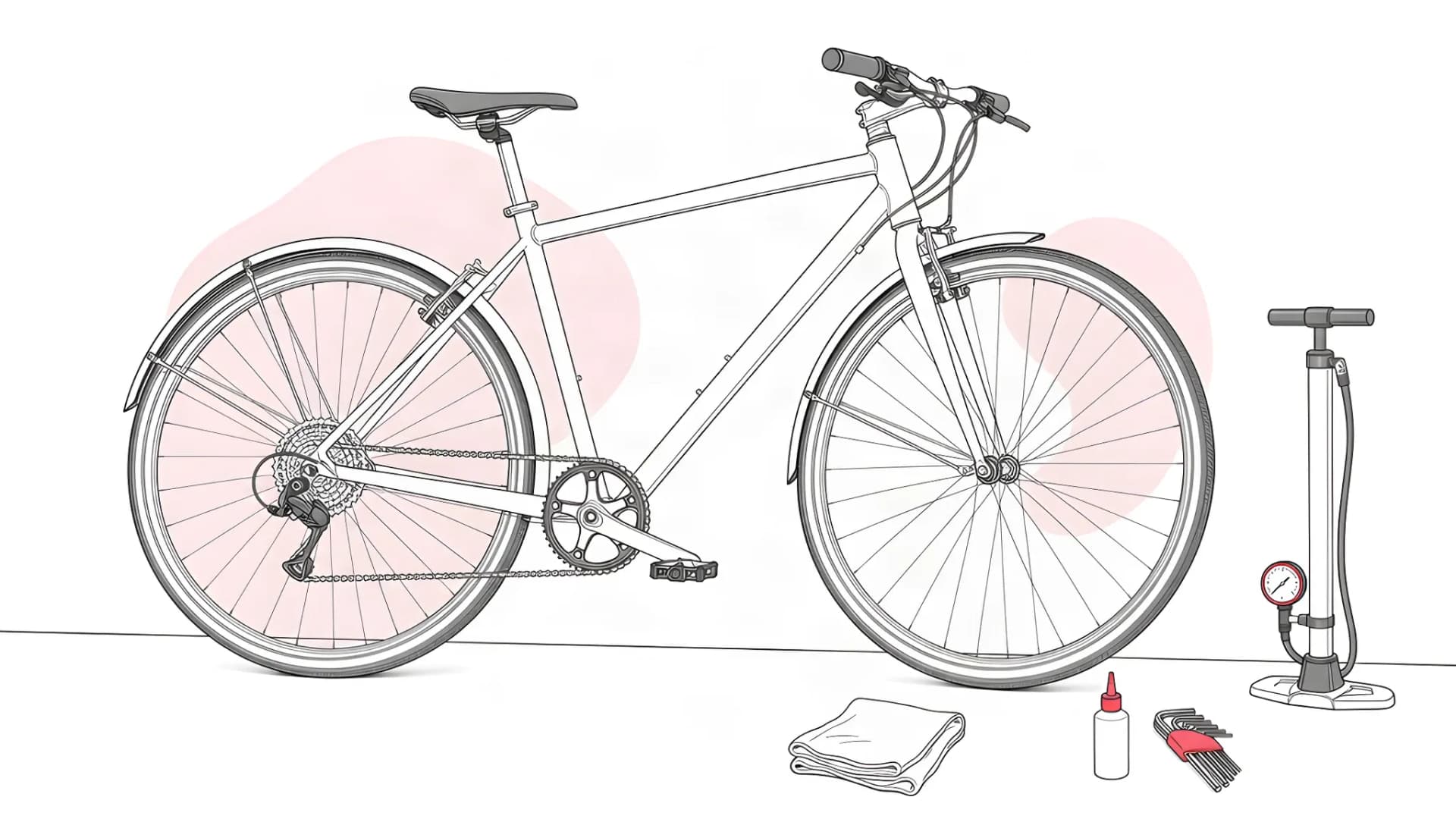
Short answer: bike maintenance for an everyday rider is three habits and one check. Keep the tyres inside the pressure range on the sidewall, keep the bike clean and dry, keep the chain lubricated, and run a two-minute M check before you ride. The rest is noticing change early, such as a new noise, a loose part or a brake that bites later, and knowing which guide or which mechanic owns the fix.
What tools do you need for basic bike maintenance?
A home kit for basic bike maintenance fits in a shoebox. BikeRadar's beginners' list (May 2026): multi-tool, track pump, mini pump, tyre levers, puncture kit, hex and Torx keys, torque wrench, chain tool, chain checker.
Split it into what stays at home and what rides with you:
- At home. Track pump with a gauge, Allen keys, chain checker, a soft and a stiff brush, bike cleaner, degreaser, chain lube and three rags. The stiff brush and the greasy rags are for the drivetrain only.
- On the bike. Mini pump, two tyre levers, a spare inner tube or patches, and a multi-tool with a chain tool. Tubeless riders add a plug kit and still carry a tube.
- A torque wrench. For any part with a printed figure in newton metres: stems, seatpost clamps, carbon parts, e-bike motor bolts. Park Tool's torque guide gives the reason: too much tightening deforms the threads or the part, too little lets the fastener loosen.
- A workstand. Optional. A bike leaning against a wall is enough for everything on this page.
How to check a bike before you ride: the M check
Cycling UK's "Before you set off" guide says to make sure the bike is safe before every trip, and lays the check out as the letter M: rear wheel, up to the saddle, down to the cranks, up to the handlebars, down to the front wheel. Canyon's checklist (February 2026) times a daily check at two to three minutes.
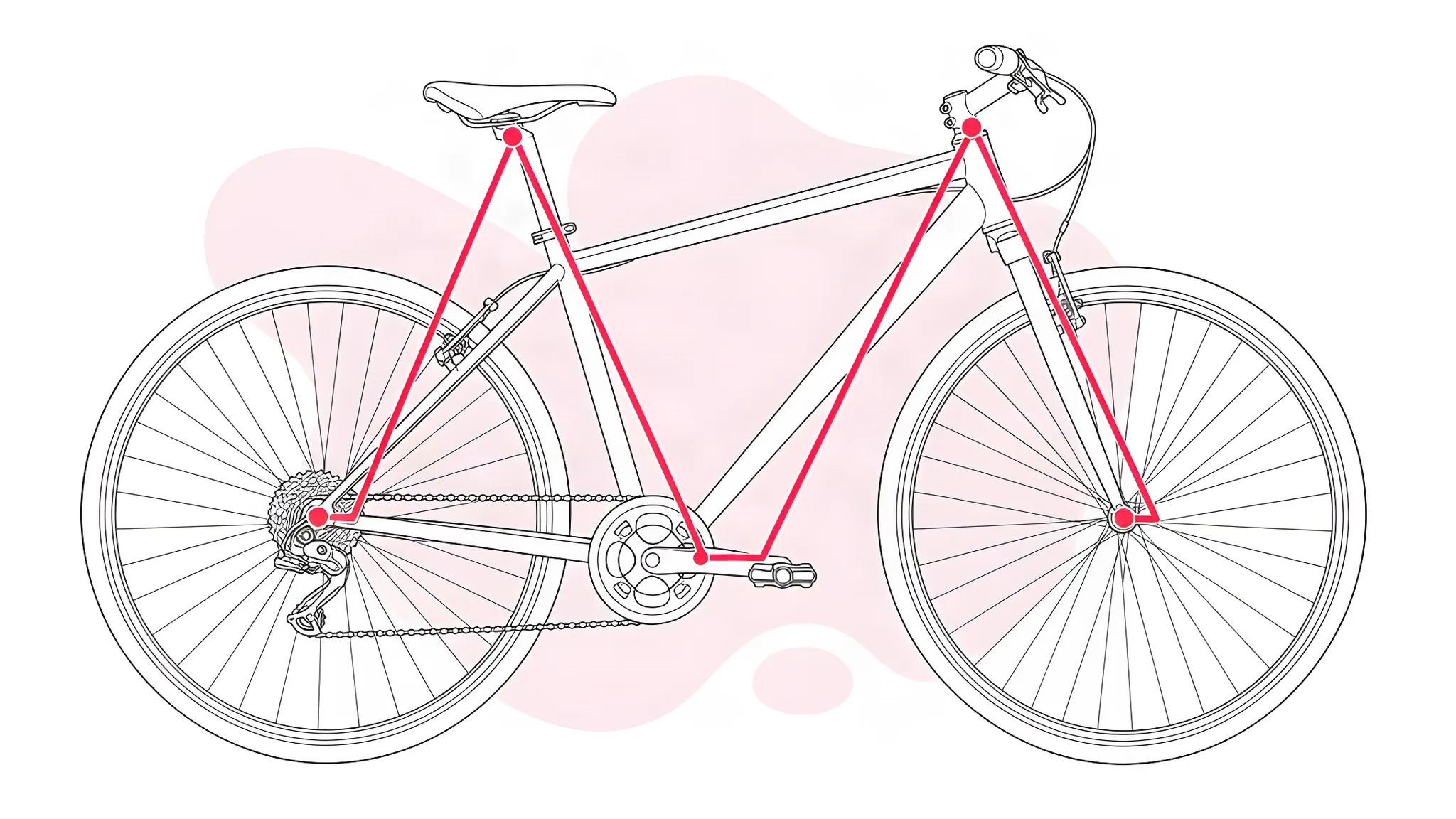
The five points of the M, with Cycling UK's checklist folded into each:
- Rear wheel. Axle nuts or quick release tight, no side-to-side play at the hub, no loose spokes, wheel spinning freely and straight. Tyre inflated and free of glass, thorns and nails.
- Saddle and seatpost. Saddle secure and at the right angle, seatpost clamp tight.
- Cranks, pedals and chain. Pedals fitted correctly, cranks not rocking. Turn the pedals backwards: the chain runs through without stiff links and both derailleurs shift smoothly.
- Handlebars, headset and brakes. Steering turns freely with no excessive play, cables not obstructing it. Squeeze each lever: on a UK bike the right lever is the front brake, the left the rear. Cycling UK's test is whether they would stop you in an emergency.
- Front wheel. As the rear: quick release, hub play, spokes, tyre.
Four findings mean you do not ride: a wheel that moves at the hub, a brake lever that reaches the handlebar, a crack in the frame or fork, and a bulging or cut sidewall. Cycling UK's service-check guide says a cut or bulging sidewall may fail without further warning.
The basic bike maintenance jobs to learn
Five jobs cover everyday care. Each gets the short answer here and a link to the guide that owns the full method.
Look after your tyres and wheels
Keep each tyre inside the range printed on its sidewall and check it with a gauge, not a thumb. Schwalbe's pressure FAQ says a loss of 1 bar a month is normal, that pressure should be checked at least once a month, and that the thumb test is unreliable because any tyre feels hard from about 2 bar.
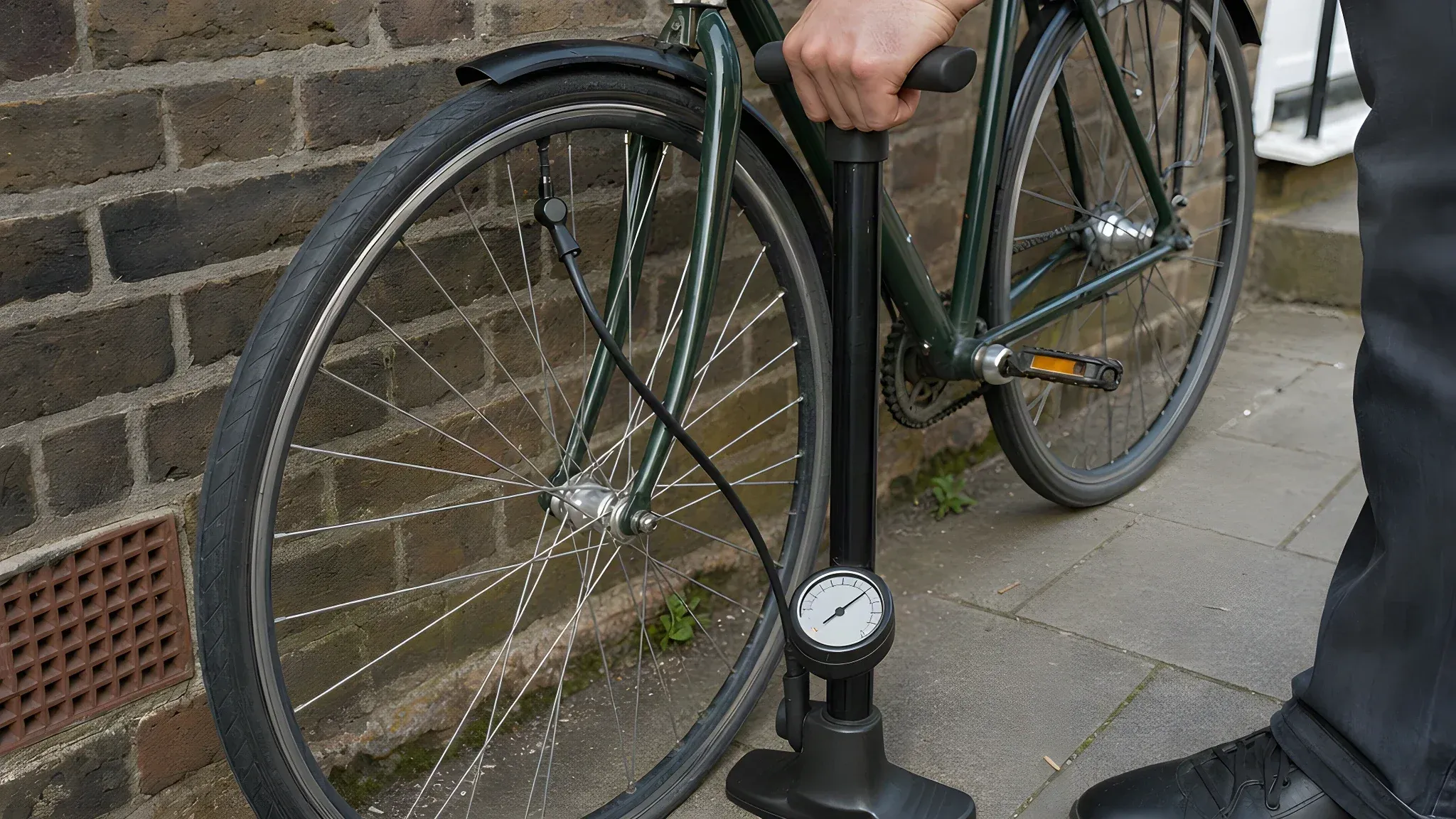
The sidewall maximum is a limit, not a target: the right figure depends on the load on each wheel, the tyre width and the rim's own limit. Our bike tyre pressure guide gives the method, and the tyre pressure calculator does the sum.
Look at the tread while the pump is out. Schwalbe's wear FAQ says a tyre is finished when the puncture-protection belt or carcass threads show through, and that sidewalls fail early after long use at low pressure.
A puncture is the first repair to learn: how to fix a bike puncture covers inner tubes, tubeless puncture repair covers sealant and plugs. A wobble at the rim rather than the hub is a truing job: how to true a bike wheel.
Keep the bike clean and dry
Cleaning is wear control: Cycling UK says it prevents the build-up of grit, dirt and grease that eats into moving parts, and its cleaning guide sets the intervals at every 160 km for road riders, more frequently in winter, and once a month for occasional riders.
The method is a bucket, a soft brush and a low-pressure rinse; Cycling UK says never to use a pressure washer. Keep degreaser and the drivetrain brush off rotors and pads, and dry the drivetrain and bolt heads, which Cycling UK names as the places that hold water. On an e-bike, switch off and remove the battery first.
The seven steps, the no-hose version for a flat and the e-bike precautions are in how to clean a bike. If drying uncovers orange bloom, how to remove rust from a bike sorts surface rust from damage.
Clean and lubricate the chain correctly
Lube goes onto a clean, dry chain, one drop per roller, and the excess comes off. Cycling UK's guide says to lubricate only when the bike is dry, because oil on wet parts stops the water evaporating. KMC's instructions: a drop on each roller along the bottom run, pedal backwards so every roller gets one, wipe with a cloth.
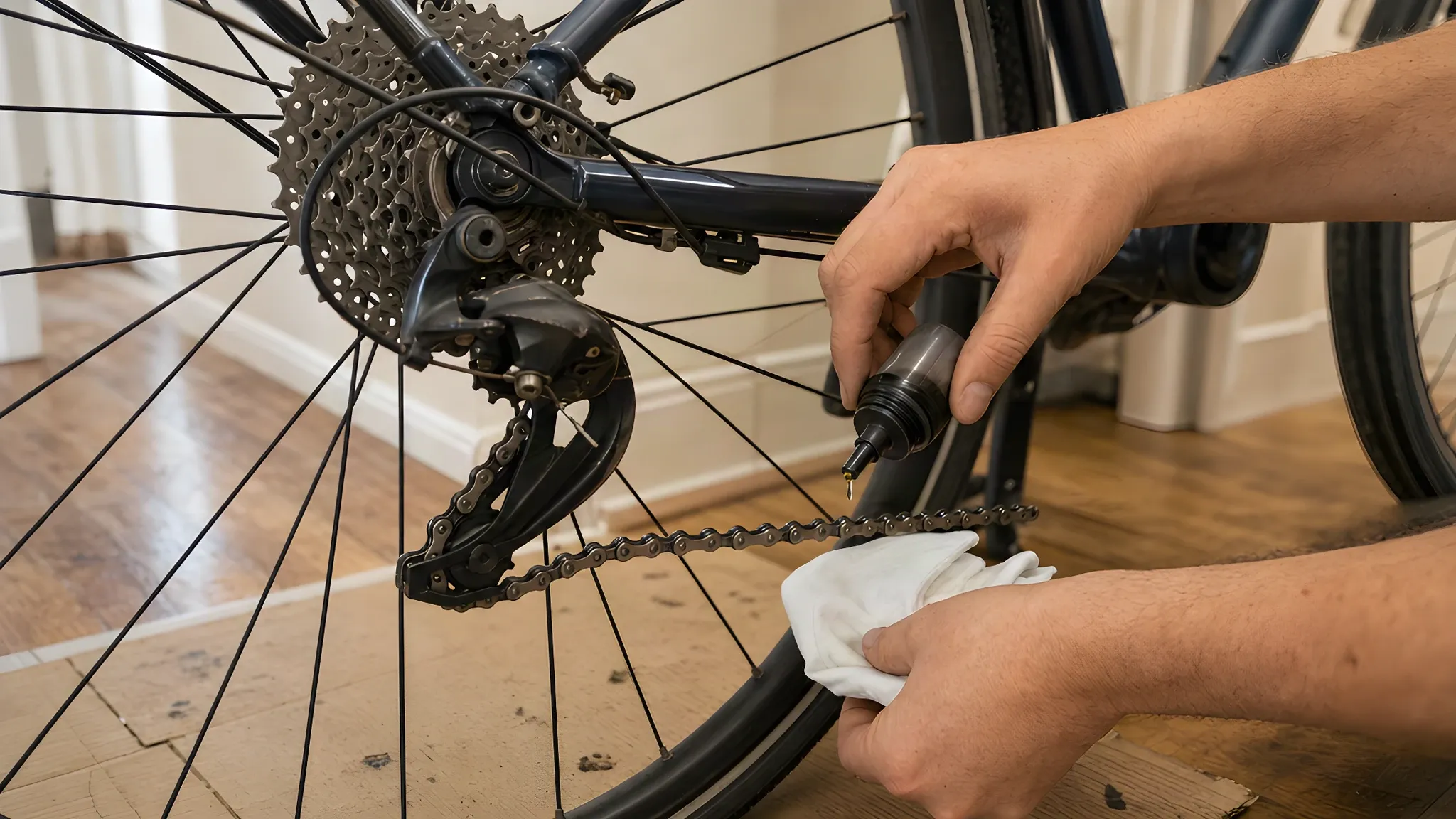
Cycling UK adds the timing: one rotation of the chain, a couple of minutes to seep in, then wipe with a rag, because too much oil attracts dirt and wears the parts faster. Do not spray the cassette or chainrings. Keep oil off rims, rotors and pads: Cycling UK says oiled braking surfaces make the bike dangerous to ride.
Pick the lube for the weather: Muc-Off's guidance is dry lube for dry and dusty conditions, wet lube for wet and gritty ones, and Cycling UK's Liz Colebrook adds dripper not spray. A waxed chain is re-waxed dry after every clean, in KMC's instructions. Lube choice for London roads is in how to clean a bike chain.
Wear is measured, not guessed. KMC suggests checking the chain every 500 km on dry roads and every 150 km off-road or in poor everyday conditions. Park Tool's thresholds are 0.5% elongation for 11-speed and above, 0.75% for ten-speed and below, 1% for single-speed. Measuring and replacing are in how to fix a bike chain.
Monitor brakes and gear changes
Squeeze each brake lever hard once a week: it should bite firmly well before the handlebar while the wheel spins freely. Cable brakes loosen as the cable settles and the pads wear, and the barrel adjuster takes that up. A hydraulic lever that slowly goes soft is a different fault, covered in how to adjust bike brakes.
Pads wear out quietly. Cycling UK's guide says rim pads carry a wear line, and pads worn to it need replacing. SRAM's brake service guide says to inspect disc pads monthly and replace them at 3 mm, pad and backing plate together. Noise has its own causes, in bike brakes squeaking.
Gears drift rather than fail: Cycling UK notes that cables loosen and derailleurs go out of line over time. A chain slow to climb to bigger sprockets is a cable-tension check first, because the barrel adjuster is quick and reversible. A chain that slips under load in one gear is wear, not tension: bike gears skipping or not changing.
Notice loose parts and developing wear
Once a week, put a hand on each clamp: stem, handlebars, saddle, cranks, rack and mudguard stays. Rock each part to feel for play, then tighten only to the figure printed on it. Park Tool's torque table gives 4 to 6.8 Nm for a seatpost binder and says seatposts need only minimal tightening.
New noises are information: note whether a creak, click or tick comes under pedalling, under braking or over bumps, because that is what a mechanic asks first. The season's end-to-end check, including cables, bearings and wheels, is in how to service a bike.
How to make bike maintenance part of your riding routine
Tie each job to a trigger rather than a calendar, because the right interval depends on distance, weather and the bike. KMC names wetness, dirt, salt and e-bike motor assistance as the factors that shorten chain life, and the same factors move every other job forward.
- Before every ride: the M check. Two to three minutes, in Canyon's timing.
- Once a week: lube and bolts. Wipe the chain, lube it if it looks or sounds dry, run a hand over the clamps. Cycling UK's guide suggests a few minutes each week.
- Once a month: the gauge and the pads. Schwalbe says check pressure at least monthly; SRAM says inspect disc pads monthly. Drop the chain checker on at the same time.
- After a wet or gritty ride: rinse, dry, re-lube. The method is in the next section.
- After 160 km on the road, or sooner when dirty: a full clean. Cycling UK's interval; BikeRadar puts it at weekly in summer and after every ride in winter.
- When something changes: find the symptom. A new noise, a later-biting brake, a lagging shift or a rubbing wheel goes to the section above that owns it, then to the mechanic list.
- When several checks turn up faults at once, or before a season of daily riding: a full service. The home method is in how to service a bike. Tyred's Standard package on the pricing page is a full safety check, brakes and gears adjusted, chain cleaned and lubricated.
Extra care after rain and before storage
A London commute in rain coats the bike in grit from road spray and, once the gritters are out, salt, which Cycling UK's winter guide says speeds up corrosion and rusting. Liz Colebrook's advice in Cycling UK: get the grit, salt and mud off, drip-dry the bike in a warm room, never leave it wet in the cold.
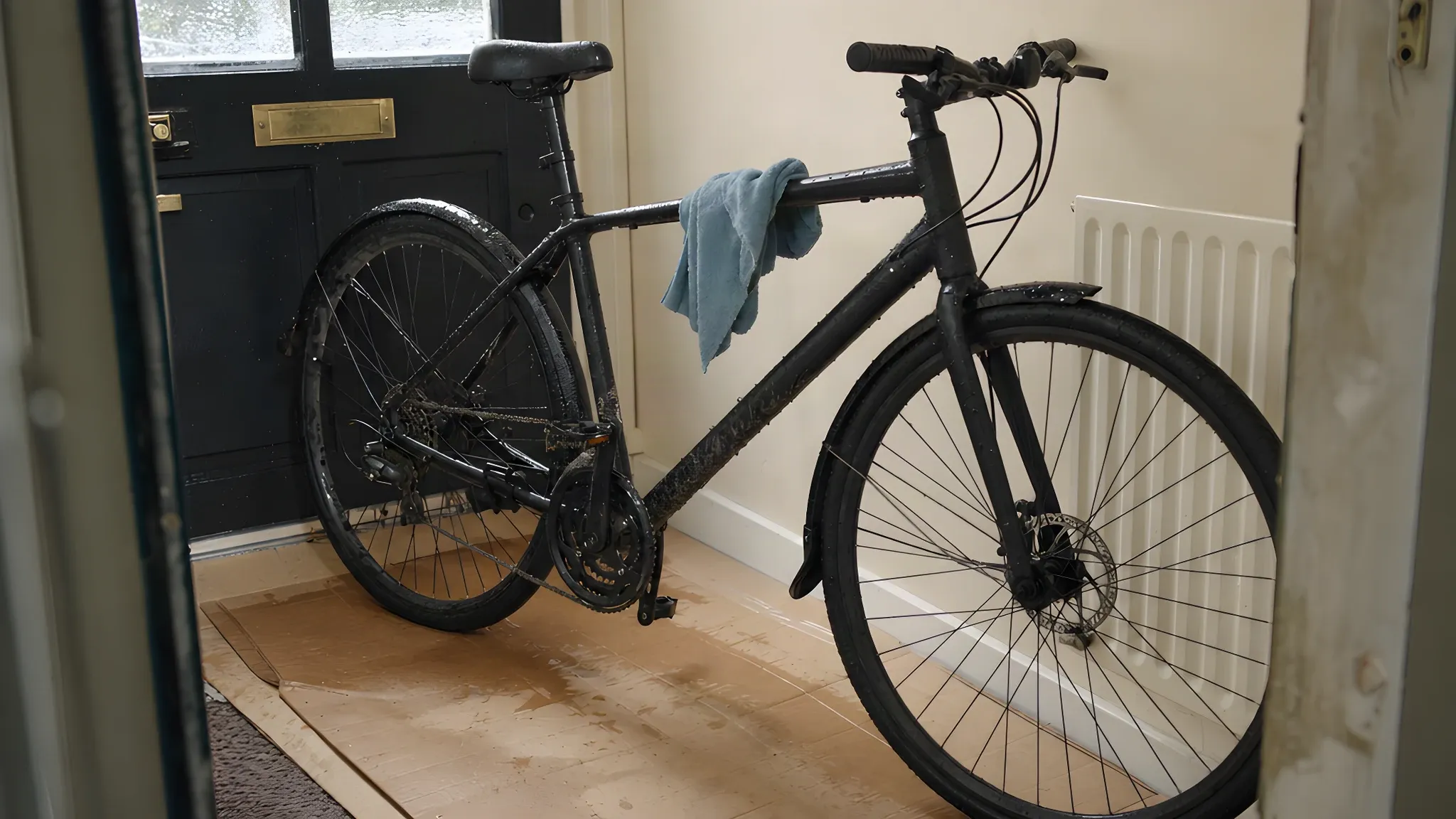
The version at the front door takes five minutes:
- Rinse or wipe the salt off. A watering can or a squeezed bottle over frame, wheels and drivetrain, then a damp rag down the tubes. On rim brakes, Cycling UK's winter guide puts salt removal from the rims first.
- Run the chain through a dry rag until it comes out grey rather than wet.
- Let the bike dry before it goes against the wall. Cardboard under both wheels, chain and bolt heads dry to the touch, then a drop of lube per roller. Cycling UK's rule stands: lube a dry chain, not a wet one.
Where the bike lives matters as much as how it is dried; Cycling UK's first tip is to keep it inside. The options for a flat, a shared hallway, a shed and a council hangar are in how to store a bike. On an e-bike the battery comes indoors; see the e-bike maintenance guide.
Common bike maintenance mistakes
- Oil on the brakes. Cycling UK says oil on rims, discs or pads makes the bike dangerous to ride. Lube the chain with a rag behind it, and wipe rotors with isopropyl alcohol, which SRAM names for the job.
- Too much lube, or lube on a wet chain. Cycling UK says excess oil attracts dirt and wears parts faster, and that oil on wet parts traps the water.
- Tightening until the creak stops. Park Tool's torque guide: too much tightening deforms threads and parts. Find the printed figure, or leave it for a mechanic.
- Replacing the chain by age. Cycling UK's technical editor and Park Tool both set the limit by measured elongation, and Cycling UK says early replacement extends sprocket life to four or five chains.
When basic bike maintenance needs a mechanic
- Brakes that do not bite after the barrel adjuster is wound out, or a hydraulic lever that sinks to the bar. New pads or a cable for the first, a bleed with the right fluid for the second.
- Play at a hub, the headset or the cranks that returns after tightening. Cycling UK's service-check guide says bearings that will not adjust out may be a loose fit in the frame and need a competent mechanic.
- A crack or dent in the frame or fork, a bent rim, a broken spoke or a cut sidewall. Structural damage is inspected before the bike is ridden again.
- A new chain that skips on the cassette. Cycling UK says the cassette then needs replacing immediately; the chainrings are checked for hooked teeth at the same time.
- A puncture on the rear wheel of an e-bike or cargo bike, or a third flat in a month. Puncture repair is from £30, tube repaired or replaced; a new tyre is not included.
A mechanic comes to you with a fully stocked workshop, 9am to midnight, seven days a week, across London.
Book a repair · About mobile bike repair →
Related guides
- How to service a bike at home, start to finish
- How to clean a bike: wash, dry and lube it properly
- Bike tyre pressure: the right psi for your weight and tyre
Sources and further reading
- Cycling UK: Before you set off, bike maintenance guide 1 (PDF), the M check before every trip and its checklist, a few minutes each week, lubricate only when dry, one rotation of the chain, a couple of minutes to seep in, too much oil attracting dirt, and oil on brakes or braking surfaces making the bike dangerous to ride.
- Cycling UK: simple bike maintenance guides (Chris Alston), the hub page for the five downloadable guides.
- Cycling UK: guide to simple cycle safety and service checks (Victoria Hazael, with Richard Hallett), the cut or bulging sidewall that may fail without warning, friction material worn away meaning no brake, no discernible free play in the headset, bearings that will not adjust needing a competent mechanic, and wheel nuts or quick releases as a daily check.
- Cycling UK: simple tips to keep your bike in peak condition (Rebecca Armstrong), keep it inside, grit and grease eating into moving parts, never over-lubricate, the wear line on brake pads, and gear cables loosening over time.
- Cycling UK: a beginners' guide to cleaning your bike (Rebecca Armstrong), every 160 km for road riders and more frequently in winter, once a month for occasional riders, never a pressure washer, the drivetrain and bolt heads holding water, and switching an e-bike off and removing the battery.
- Cycling UK: drivetrain longevity (Richard Hallett, Cycle magazine, 2015), the 0.75% and 1% chain thresholds, a new chain jumping on a worn cassette, early replacement extending sprocket life to four or five chains, and hooked chainring teeth.
- Cycling UK: ask the expert, Liz Colebrook on looking after your bike in winter, getting grit, salt and mud off, drip-drying in a warm room rather than leaving the bike wet in the cold, dry lube in summer and wet lube in winter in a dripper bottle, and cleaning a removed chain in a tub.
- Cycling UK: winter cycling, making your bike winter ready (Christina Bengston), salt speeding up corrosion and rusting, the quick wipe-down with a damp rag, over-oiling attracting grit, and salt off the rims on rim-brake bikes.
- BikeRadar: 10 essential bike maintenance tips for beginner cyclists (Oscar Huckle, 20 May 2026), the beginners' tool list and cleaning weekly in summer and after every ride in winter.
- Canyon: bike maintenance checklist (Robert Annis, February 2026), the daily check taking two to three minutes and the 2 to 25 Nm torque range for bike bolts.
- Schwalbe: tyre pressure, never exceed or fall below the printed limits, a loss of 1 bar a month, checking at least once a month, and the thumb test being unreliable from about 2 bar.
- Schwalbe: tyre wear, the wear limit when the protection belt or carcass threads show, and sidewalls failing after prolonged low pressure.
- KMC: maintenance step 3, lubricate, a drop on each roller along the bottom of the chain, pedalling to carry it round, and wiping off the excess.
- KMC: technical maintenance, checking the chain every 500 km on dry roads and every 150 km off-road or in poor everyday conditions, and wetness, dirt, salt and e-bike motor assistance as wear factors.
- KMC: care of waxed chains, a dry chain before waxing, re-waxing after every clean, not wiping off excess wax, and drying fully before riding.
- Park Tool: when to replace a chain on a bicycle, 0.5% for 11-speed and above, 0.75% for ten-speed and below, 1% for single-speed, and worn chains wearing cogs and chainrings early.
- Park Tool: torque specifications and concepts, too much tightening deforming threads or parts, too little letting a fastener loosen, seatpost binders at 4 to 6.8 Nm, and the maker's figure taking precedence.
- SRAM: brake service guide, inspecting pads every month, replacing at 3 mm pad plus backing plate, and cleaning rotors with isopropyl alcohol.
- Muc-Off: how to clean, protect and lube like a pro (September 2025), dry lube for dry and dusty conditions, wet lube for wet and gritty, drip onto the rollers while back-pedalling and wipe off the excess.
- Liv: bike maintenance tips for beginners, the ABC check (air, brakes, chain) before every ride.