Kids bike size chart: wheel size by age, height and inside leg
A kids bike size chart from four makers' own ranges, how to measure your child, the fit check on the bike, when to size up and a hand-me-down check.

Written by Conor DonoghueCargo bike mechanic
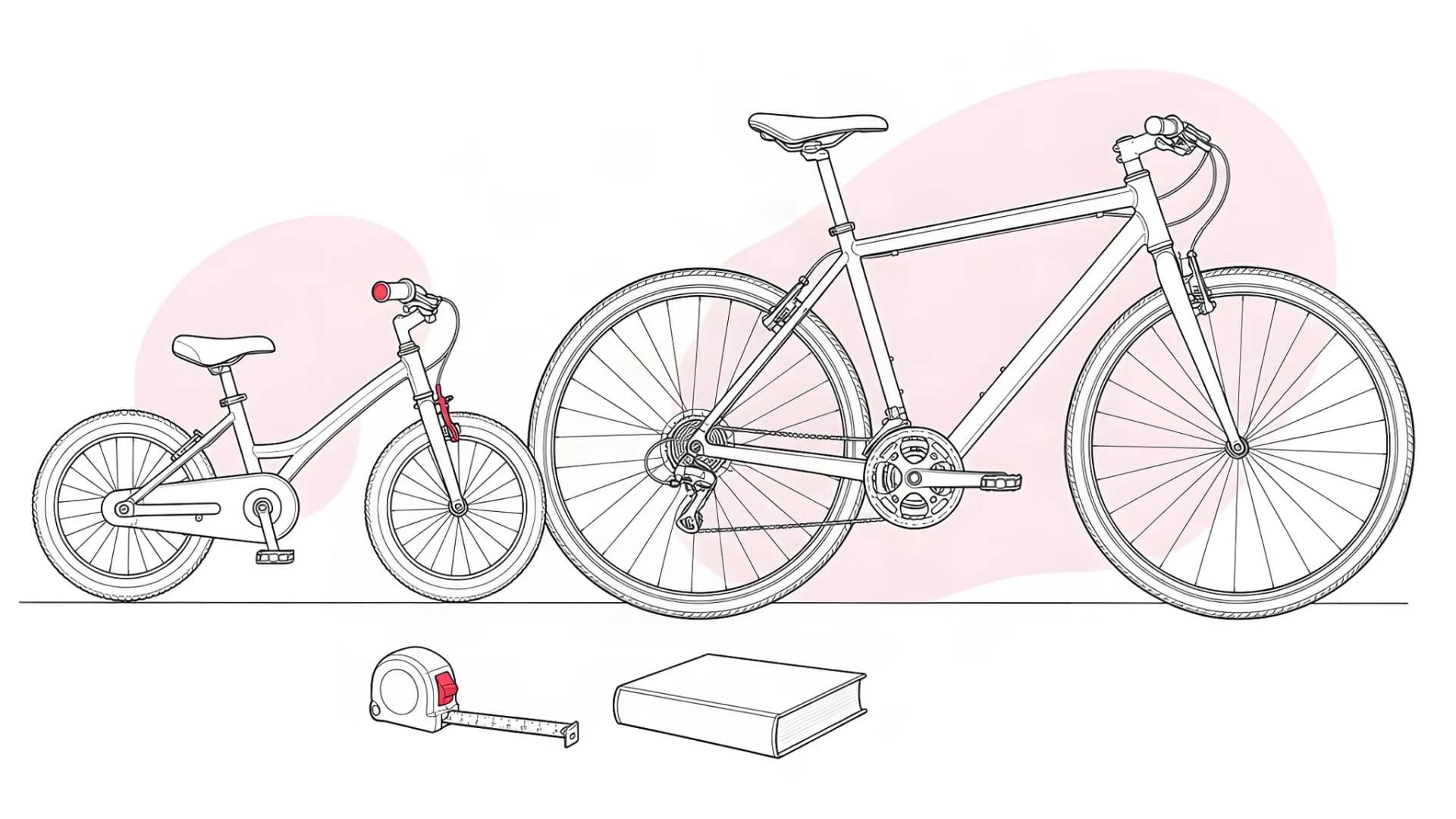
Short answer: a kids bike size chart sorts children's bikes by wheel diameter, from 12 inch balance bikes to 26 inch. The child's inside leg decides the size, and age is only a rough guide. Raleigh, Islabikes, woom and Trek GB publish different ranges for the same wheel, with 20 inch minimums about 9 cm apart, so finish with the fit check on the bike. Tyred's bike size calculator turns a measured inside leg into one wheel size.
Kids bike size chart by wheel size, age, height and inside leg
Ranges are from each maker's own site, read on 19 October 2026. Islabikes gives minimum height and age by model and generation, woom publishes its minimum inside legs in a separate table, and Trek GB uses feet and inches.
12 inch wheels. Islabikes' Rothan 12 and woom's GO 1 are balance bikes without pedals.
- Raleigh: height 85 to 98 cm, inside leg 33 to 41 cm.
- Islabikes Rothan 12 (balance bike): inside leg 30 to 42 cm, or 47 cm with the long seatpost, height from 88 cm, age 2+.
- woom GO 1 (balance bike): height 82 to 100 cm, age 1.5 to 3.5; woom's inside leg table gives no minimum for it.
- Trek GB: age 2 to 3, height 3' 0" to 3' 3", inside leg 15" to 18".
14 inch wheels. The minimum inside leg runs from 34 cm (Islabikes) to 37.5 cm (woom). Raleigh's range reaches 51 cm, overlapping its 16 inch size, and Trek GB lists no 14 inch size.
- Raleigh: height 88 to 104 cm, inside leg 36 to 51 cm.
- Islabikes Cnoc 14 (2023 generation): inside leg 34 to 42 cm, height from 92 cm, age 3+.
- woom GO 2: height 95 to 110 cm, age 3 to 4.5, inside leg from 37.5 cm.
16 inch wheels. The minimum inside leg runs from 38 cm (Islabikes) to 43.5 cm (woom).
- Raleigh: height 95 to 114 cm, inside leg 41 to 51 cm.
- Islabikes Cnoc 16 (2023 generation): inside leg 38 to 48 cm, height from 98 cm, age 3+.
- woom GO 3: height 105 to 120 cm, age 4 to 6, inside leg from 43.5 cm.
- Trek GB: age 4 to 6, height 3' 5" to 4' 0", inside leg 16" to 22".
18 inch wheels. Of the four makers, only Islabikes makes one; Raleigh, woom and Trek GB list no 18 inch size.
- Islabikes Cnoc 18 (2023 generation): inside leg 42 to 52 cm, height from 104 cm, age 4+.
20 inch wheels. The widest spread in the chart: minimum inside legs run from 47 cm (Islabikes) to 56.1 cm (woom EXPLORE 4). Starting ages run from 5 (Trek GB, Islabikes) to 7 (Sustrans' 2008 leaflet, 7 to 9).
- Raleigh: height 114 to 129 cm, inside leg 53 to 63 cm.
- Islabikes Beinn 20 (2023 generation): inside leg 47 to 57 cm, height from 112 cm, age 5+.
- woom GO 4 and EXPLORE 4: both height 115 to 130 cm and age 6 to 8; inside leg from 51.5 cm on the GO 4 and 56.1 cm on the EXPLORE 4.
- Trek GB: age 5 to 8, height 3' 9" to 4' 6", inside leg 19" to 25".
24 inch wheels. Raleigh and Islabikes agree on 57 to 68 cm of inside leg; woom starts at 60 cm.
- Raleigh: height 128 to 143 cm, inside leg 57 to 68 cm.
- Islabikes Beinn 24: inside leg 57 to 68 cm, height from 127 cm, age 7+.
- woom EXPLORE 5: height 125 to 145 cm, age 7 to 11, inside leg from 60 cm.
- Trek GB: age 8 to 11, height 4' 1" to 4' 11", inside leg 23" to 28".
26 inch wheels. The minimum inside leg runs from 61 cm (Raleigh) to 70 cm (woom). Sustrans' 2008 leaflet classes 26 inch and larger as adult bikes, and Trek GB's 13+ band notes that "a lot of older, taller kids can fit on the smallest adult bikes".
- Raleigh: height 135 to 150 cm, inside leg 61 to 81 cm.
- Islabikes Beinn 26 (2023 generation): inside leg 62 to 74 cm, height from 135 cm, age 8+.
- woom EXPLORE 6: height 140 to 165 cm, age 10 to 14, inside leg from 70 cm.
- Trek GB: age 10 to 12, height 4' 8" and up, inside leg 25" and up.
How are kids bikes sized, and why do the charts disagree?
Children's bikes are sized by wheel diameter, not frame size, as Raleigh and Trek GB both say. The inch figure is a category, not the tyre marking, which our guide to bike tyre sizes and rim markings explains. Cycling UK's Dan Joyce calls age "a blunt indicator at best".
Frames differ too: woom's GO 4 and EXPLORE 4 share 20 inch wheels and a 115 to 130 cm height range, yet start at inside legs of 51.5 and 56.1 cm. Raleigh's minimum and maximum inside legs are the saddle at its lowest and highest.
How to measure your child for a bike
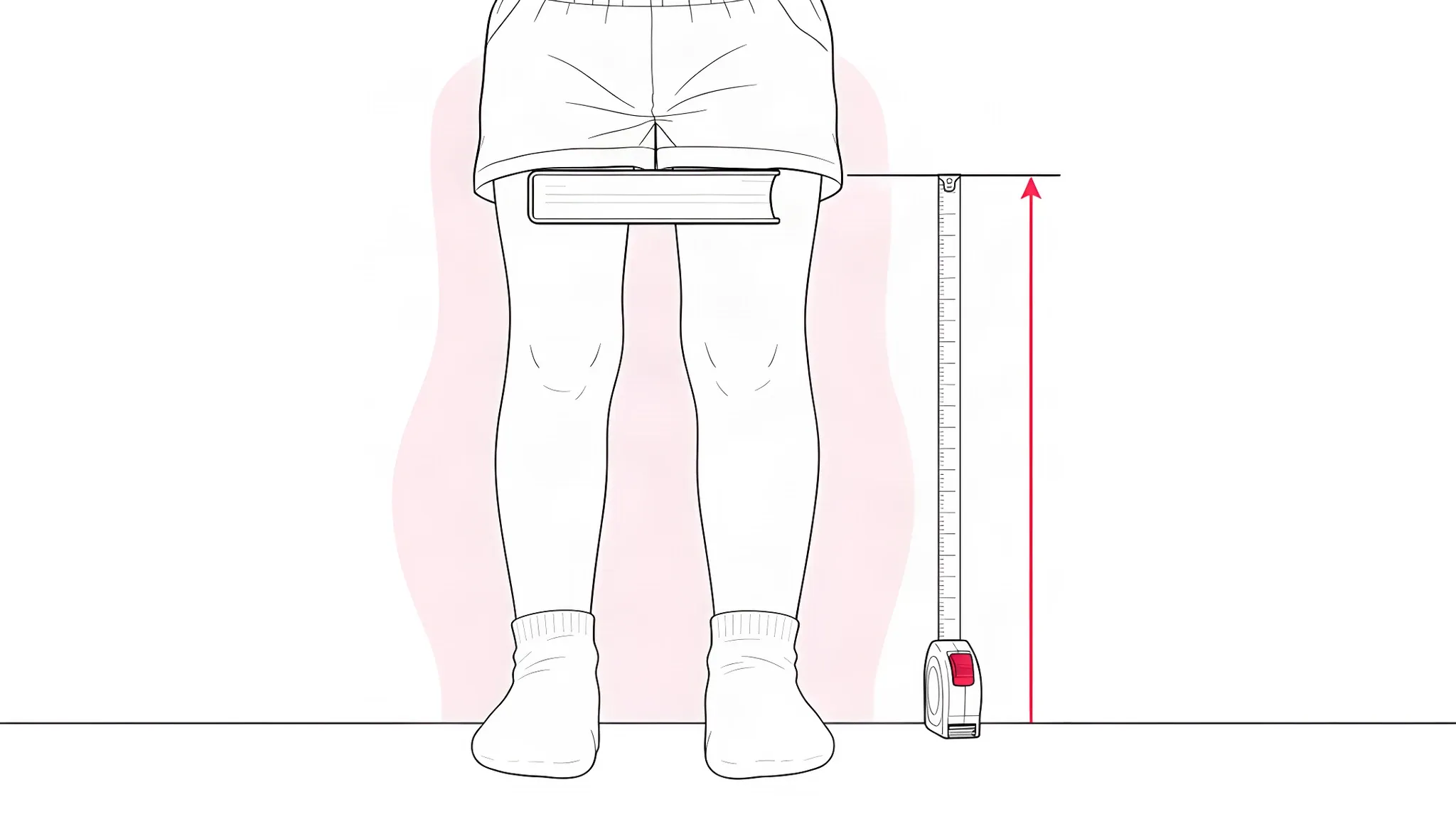
Measure your child in socks against a wall, with a hardback book: the inside leg first, then the height.
1. Measure the inside leg and the height
Stand your child with their back to the wall and feet flat. Islabikes' method: slide the book up between the legs until it contacts the crotch firmly, mark the wall at that point and measure down to the floor. For height, lay the book flat on the head and measure the same way.
2. Compare with the maker's minimums before the age
Islabikes calls its minimums "absolute": a child must meet both the height and the inside leg. Cycling UK's rule of thumb is a wheel diameter no greater than the inside leg, so a 60 cm (24 in) inside leg means 24 inch wheels or smaller.
woom sizes by height and riding ability instead, because inside leg measurements can be "out by a good few" centimetres.
3. Use the calculator for a single answer
Tyred's bike size calculator has a "Bike for a child" option: give the height, select "I know my inside leg" and enter the figure. Without it, the tool estimates the inside leg from height, so enter the measured one.
It returns one wheel size from a single maker's thresholds, which sit above most minimums in the chart. It suggests a balance bike below 40 cm, where Islabikes, Raleigh and woom start 14 inch bikes at 34 to 37.5 cm. Check its answer against the bike's own range.
How to check the fit when your child sits on the bike
Run these checks with the saddle at its lowest and the bike held steady.
1. Feet on the ground at the lowest saddle
Trek GB wants both feet flat on a balance bike or a first bike without stabilisers, and woom says every child should reach the ground with both feet at the lowest saddle. Confident riders can manage on toes (Trek GB) or one foot flat and one on its ball (Cycle Sprog).
2. Standover gap over the top tube
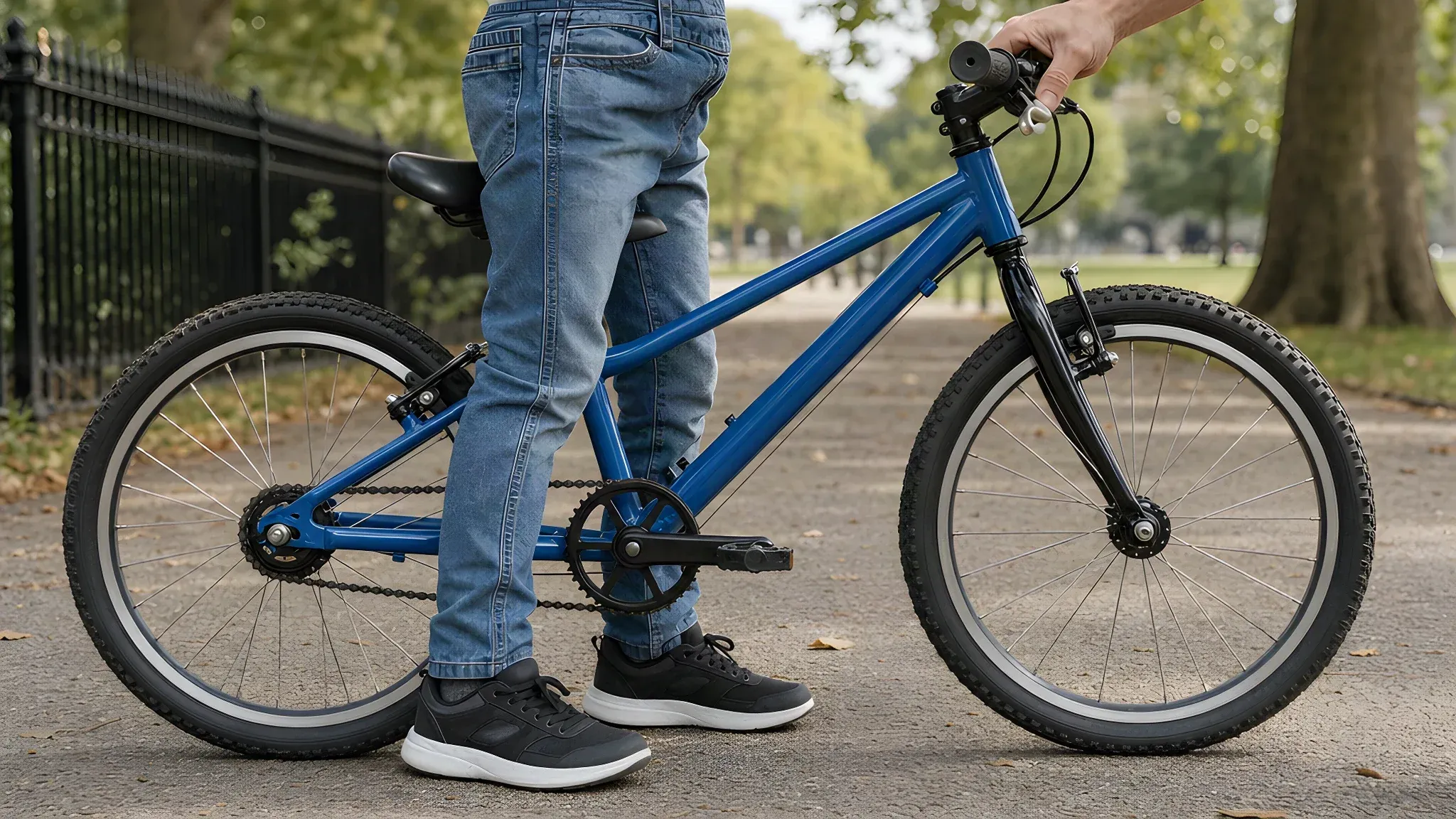
With your child astride the top tube about halfway along, feet flat, Cycle Sprog looks for a 2 to 3 cm gap and Trek GB "an inch or two". Both feet on tiptoe means the frame is too big (Cycle Sprog).
3. Saddle height for pedalling
With one pedal at the bottom, the foot should sit flat on the pedal with the knee slightly bent (Cycle Sprog). The seat post must stay below its limit mark (Walk Wheel Cycle Trust M check, Cycle Sprog).
4. Reach to the handlebar
Cycle Sprog wants a relaxed upper body with the arms slightly flexed, and Cycling UK a shorter reach and higher bar than an adult's: "If they look over-stretched, they are."
5. Brake levers and gears for small hands
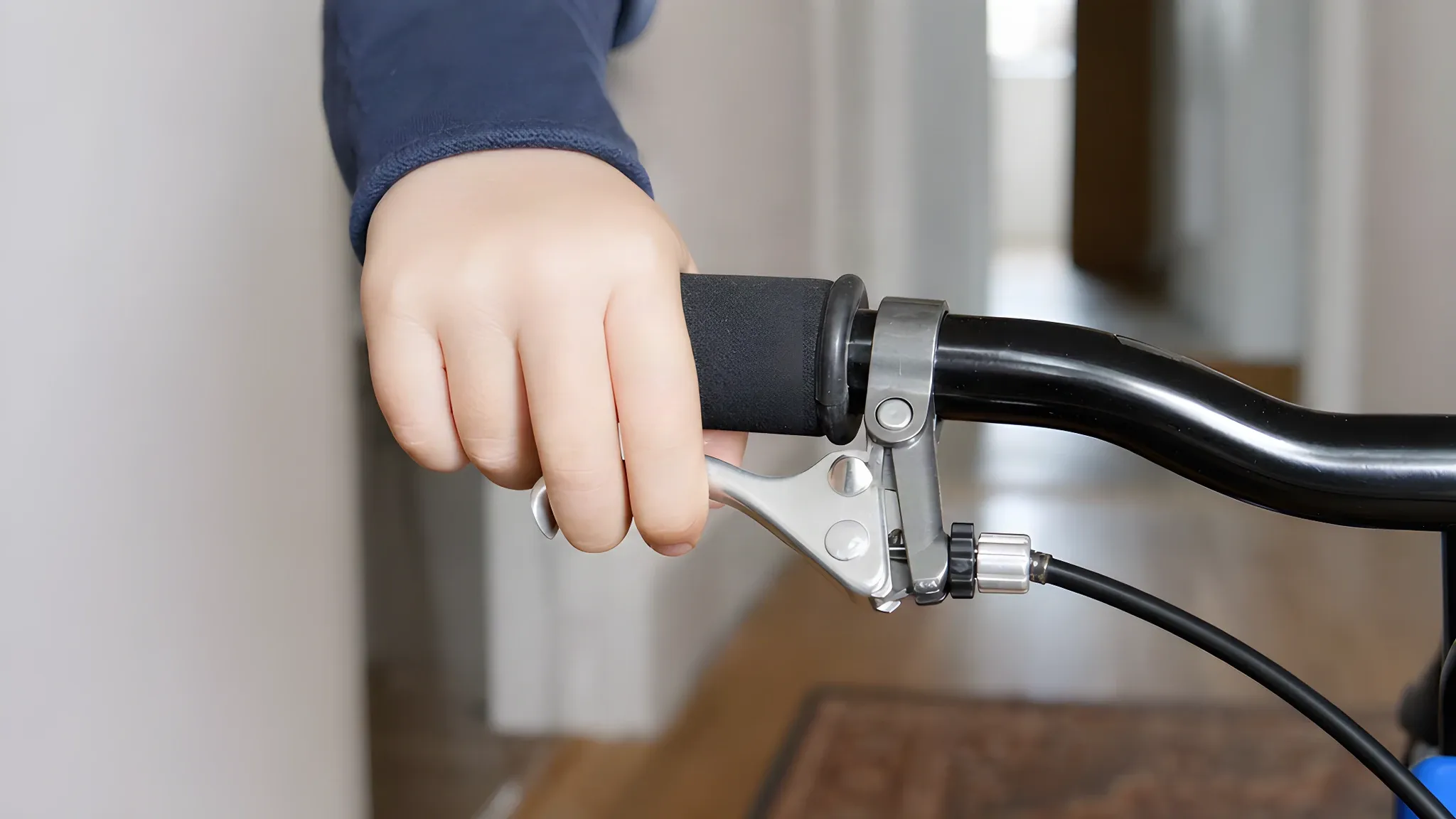
Ask your child to pull each brake lever fully from the riding position and shift through the gears. Cycling UK calls this critical: adjust stiff or out-of-reach controls, and if that is not enough, change the bike or the levers.
A reach screw on some levers brings the blade closer to the bar, and our guide shows how to set the lever reach.
6. Crank length and weight
Cycling UK suggests cranks no longer than about 10% of the child's height, so 100 mm for a child one metre tall. Lift the bike too: Cycling UK says some children's bikes weigh more than an adult's.
Should you buy a bigger bike for your child to grow into?
Makers and cycling organisations disagree. Against sizing up:
- Islabikes: do not size up, because "they won't be able to ride it".
- woom: avoid sizing up and do not skip a size; the smaller bike is easier to handle.
- Trek GB: "don't size up thinking they'll grow into it".
- Ridgeback: fit now and size up when needed; a bike that is too big "can be hard to control".
For a bigger bike, with conditions:
- Cycling UK: "the biggest that they can comfortably fit on", within its inside leg rule.
- Raleigh: a bike chosen at the minimum inside leg "may last a little longer"; between sizes, the smaller wheel suits new or nervous riders.
- Sustrans (2008 leaflet): a bigger bike is fine if the child "isn't stretched and can reach the brakes safely and change gear easily".
A rule consistent with all of them: the bike is the right size while the saddle sits inside its range and the feet, standover and brake checks pass.
Move up when the saddle is at its limit mark and the knees still come up high when pedalling, Cycle Sprog's sign of an outgrown bike. It adds that a longer seat post "usually won't solve the problem".
What size bike for a 6 year old?
A 6 year old can fit 16, 18 or 20 inch wheels, and the inside leg decides which. Trek GB puts age 6 in its 16 and 20 inch bands, and woom's GO 3 and GO 4 both include 6. No 20 inch bike in the chart starts below a 47 cm inside leg.
Is a 26 inch bike good for a 10 year old?
Only if the inside leg reaches the bike's minimum: 61 cm (Raleigh), 62 cm (Islabikes Beinn 26) or 70 cm (woom EXPLORE 6). Trek GB places 26 inch at ages 10 to 12, and Cycling UK's rule of thumb needs about 66 cm (26 in). Below 61 cm, look at the 24 inch row.
Balance bikes, stabilisers and the first pedal bike
Bikeability's FAQs say a child "cannot take part in Level 1 or above if they use stabilisers". Bikeability recommends a balance bike, or a normal bike with the pedals removed, and Ridgeback also calls balance bikes "generally the better option".
If you fit stabilisers, Sustrans' 2008 leaflet says the bike should lean a little. If it does not, the rear wheel is off the ground and the brakes will be ineffective.
What to check on a second-hand or hand-me-down kids bike
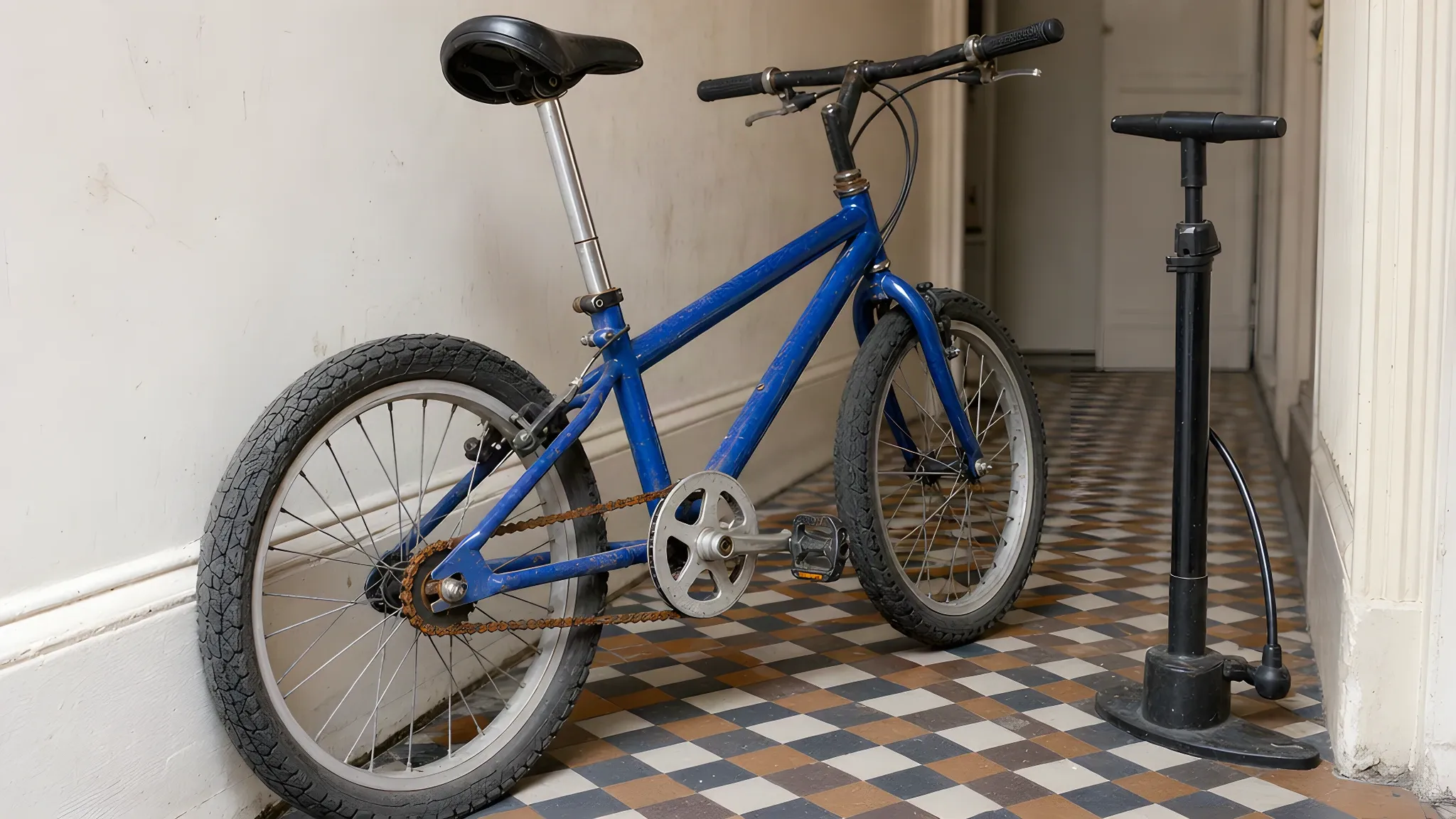
Check the size first, then work round the bike with the Walk Wheel Cycle Trust M check. Bikeability's roadworthy list is the pass line: tyres "as hard as an apple", two working brakes, a well-oiled chain, and the saddle and handlebars fixed on tight.
1. Identify the model and generation, then check the fit
Islabikes changed its sizes between generations, so read the full model name on the frame, suffix included (such as Cnoc 14S). A Cnoc 16 made between 2006 and 2023 has the 42 to 52 cm range of today's Cnoc 18.
A bike that fails the standover or brake checks is the wrong bike for this child, whatever its condition.
2. Frame and fork
Look for cracks, especially where the frame joins the head tube (M check). Women on Wheels, a Glasgow cycling charity, says a frame with significant rust or any cracks is no longer safe to ride.
3. Wheels and tyres
Check the wheels are tight and the spokes sound alike when plucked (M check). Pump the tyres to the pressure printed on the sidewall, replace perished ones and fix a puncture at home if a tube goes soft overnight.
4. Brakes
The lever must not pull against the grip, both sides of a rim brake should move, and each block should meet the rim flat (M check). Our guides cover adjusting bike brakes and brakes that squeal.
5. Saddle, handlebar and headset
The seat post clamp should be tight, the bar should not turn independently of the front wheel, and the headset should not rock or click with the front brake on (M check).
6. Chain, pedals and cranks
The chain should be clean and oiled but not over-oiled, and the cranks tight and free of creaks (M check). Our guides show how to clean and oil the chain and run a full home service.
When it is a job for a mechanic
Book a mechanic when the check finds a fault a home adjustment cannot put right:
- A cracked, dented or badly rusted frame or fork. The bike should not be ridden until a mechanic has inspected it.
- A lever that reaches the grip with the adjuster used up, or a hydraulic lever that stays soft. The cable needs resetting or replacing, or the brake a bleed.
- A wobbling wheel, or loose or missing spokes. The wheel needs truing and tensioning.
- A seized seat post or stem. Freeing it without damaging the frame takes workshop tools.
- Gears your child cannot shift. Rule out a stiff shifter or dragging cable before blaming the child's strength.
- A bike that has stood for years and needs tyres, cables and pads at once. On the pricing page, Essential includes brake and gear cable replacement and wheels trued, and Premium adds new tyres and brake pads.
A mechanic comes to you with a fully stocked workshop, 9am to midnight, seven days a week, across London.
Book a repair · About mobile bike repair →
Related guides
- How to adjust bike brakes (rim and disc)
- How to service a bike at home: a seven-step DIY guide
- Bike tyre sizes explained: markings, chart and rim fit
Sources and further reading
- Raleigh UK: kids bike size guide, the size chart (height and inside leg per wheel size), sizing by wheel diameter, what the minimum and maximum inside leg mean, the measuring method and the advice for children between sizes.
- Islabikes: size chart, inside leg, minimum height and age for the Rothan, Cnoc and Beinn by generation, the measuring method and the statement that minimums are absolute; with the Cnoc 14, Cnoc 16 and Cnoc 18 product pages (re-sizing and the advice not to size up), the Islabikes parts finder (model names on the frame) and the spare-parts pages for the 2023-generation Rothan 12, Beinn 20, Beinn 24 and Beinn 26 (12, 20, 24 and 26 inch tyres and wheels).
- woom: how to pick the right children's bike size, both feet on the ground at the lowest saddle, avoiding sizing up and skipping sizes, test rides, and why woom sizes by height and riding ability rather than leg length; with the woom inside leg table (minimum inside leg and height per model) and the model pages for the GO 1, GO 2, GO 3, GO 4, EXPLORE 4, EXPLORE 5 and EXPLORE 6 (wheel size, age, height).
- Trek GB: kids bike buyer's guide, age, height and inseam per wheel size in feet and inches, the seat height and standover cues, the advice not to size up, same-size bikes fitting differently, and older children on small adult bikes.
- Cycling UK: how to choose the right size bike for a child (Dan Joyce), age as a blunt indicator, the wheel diameter rule and its examples, crank length at 10% of height, reach, controls, bike weight and trying the bike before buying.
- Cycle Sprog: is my kid's bike the right size for them? (revised 3 October 2024), the standover gap, feet and saddle height tests, reach, the limit mark on the seat post, the longer seat post point, the signs of a bike outgrown and controls on an adult bike.
- Walk Wheel Cycle Trust: the M check for your bike in 11 steps (15 January 2019), wheels, spokes, tyres, seat post limit, chain, pedals, stem, headset, brakes and frame.
- Bikeability: FAQs, stabilisers and Level 1, balance bikes and removing pedals, and the four points of a roadworthy cycle.
- Sustrans: Cycling with children (leaflet, March 2008, hosted by Brighton & Hove City Council), wheel sizes by age band, the note on a bigger bike, and the stabiliser lean tip.
- Ridgeback: what size bike does my child need?, fitting now versus sizing up, and balance bikes compared with stabilisers.
- Women on Wheels: what size bike for my child? (Shgufta Anwar, December 2023), checking a second-hand bike, not buying one with significant frame rust or cracks, and test rides.