When to replace bike tyres: the wear signs, how long they last, and what a worn tyre costs you
When to replace bike tyres: each wear sign with a rule, the makers' mileage and age figures, why the rear goes first, and a new tyre fitted at the door.

Written by Conor DonoghueCargo bike mechanic
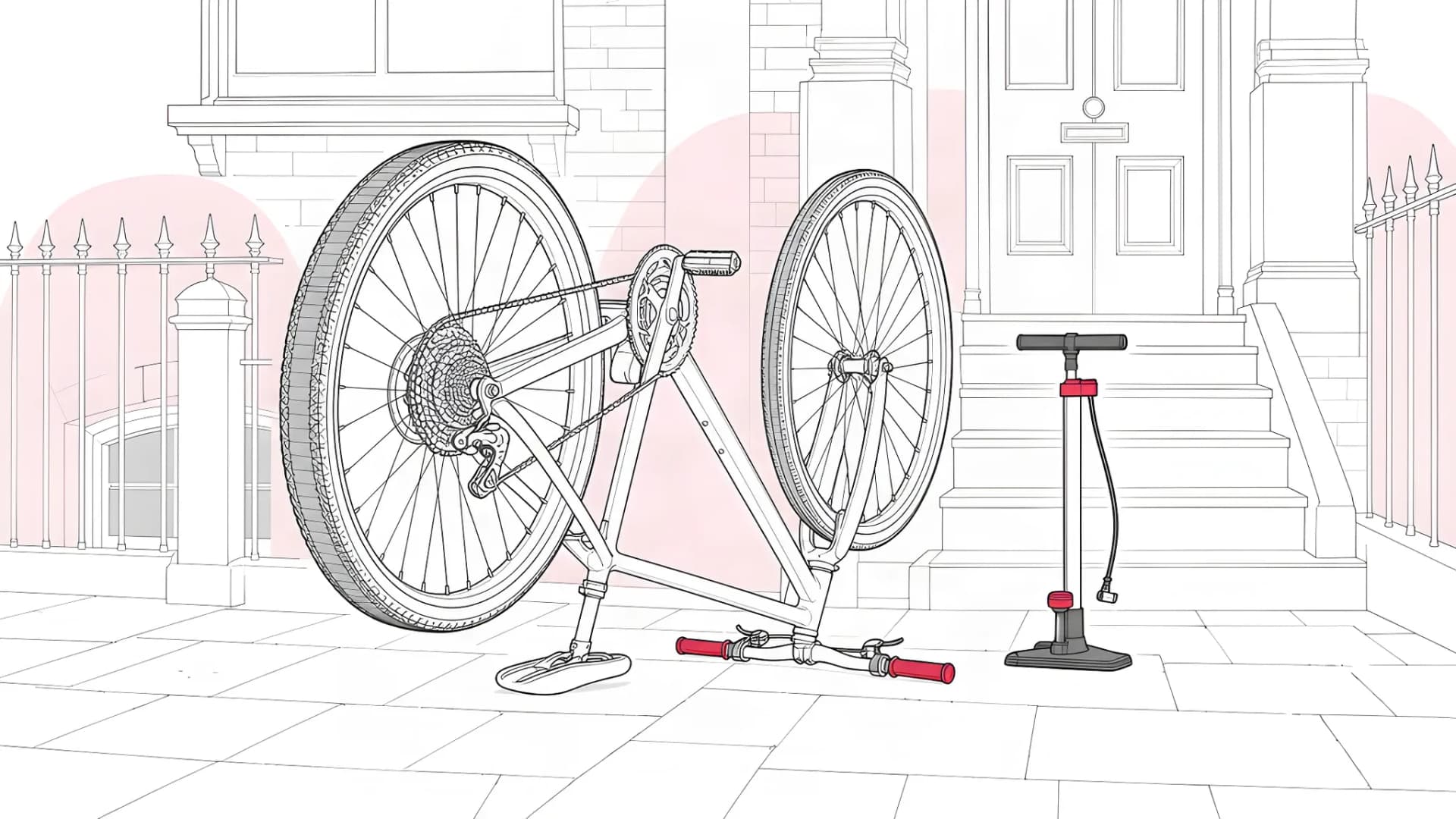
Short answer: replace a bike tyre when the wear indicator has gone, the protection belt or casing threads show through the tread, the sidewall is cracked through or bulging, or a cut reaches the casing. A run of punctures on one wheel says the same, and the rear generally wears first. Schwalbe's distances run from 2,000 km to well over 10,000 km, and makers' age advice from three years (Continental) to ten (Michelin), so the tyre's condition decides.
How do you know when a bike tyre needs replacing?
Pump the tyre up, lift the wheel and turn it slowly: tread centre first, then both sidewalls, then any cut.
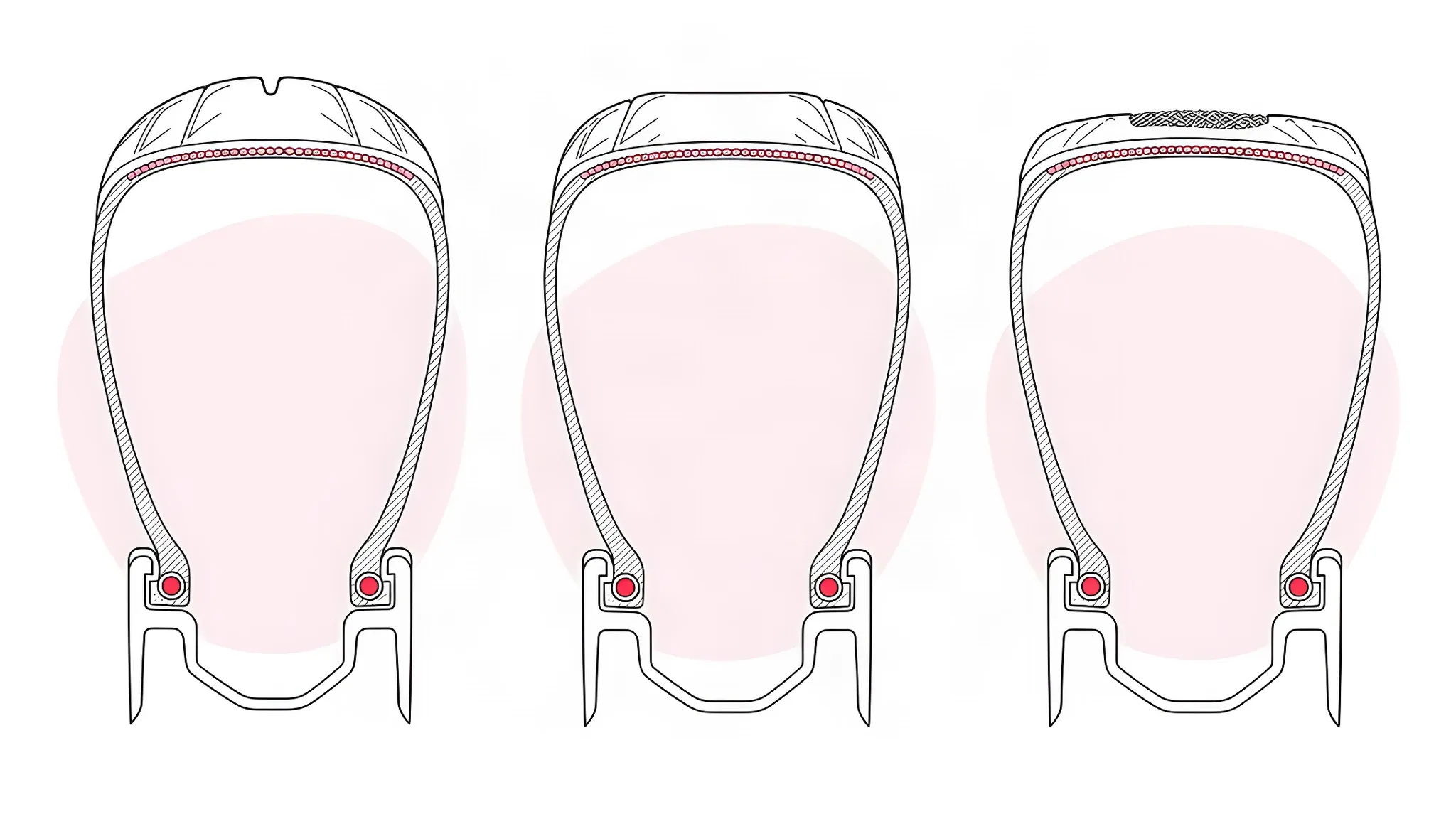
- The wear indicator has gone. Continental's tyre FAQ describes its indicator as a very small indentation in the centre of the tread: once it has worn away, replace the tyre. Rule: replace soon.
- The centre is squared off. Continental says a worn road tyre can feel flattened or squared-off in the centre. Its then UK distributor told road.cc in 2016 that it looks square rather than round in cross-section. Rule: replace at the next chance.
- The belt or casing threads show. Schwalbe sets the wear limit where the puncture protection belt or the carcass threads show through the tread, and says that tyre must be changed urgently. Rule: stop riding on it.
- A cut or tear. Continental's then UK distributor told road.cc that a casing breach of any size in the sidewall, or 2 mm under the tread, would normally mean a new tyre. A tear that shows the tube is unsafe. Rule: tube visible, replace now; if not, ride on but have the tyre checked.
- A bulge. Canyon's guide treats any bulge as a replacement sign, whether from an impact, a failing sidewall or a loose bead. Rule: replace now.
- A flat spot from a skid. road.cc's guide warns that a skid can wear through the tread in one place while the indicators survive elsewhere. Rule: replace it, even with the indicators intact.
- Sidewall cracks. Fine, even cracks can be watched; a deep one means a new tyre (see the age section).
What does not mean a new tyre
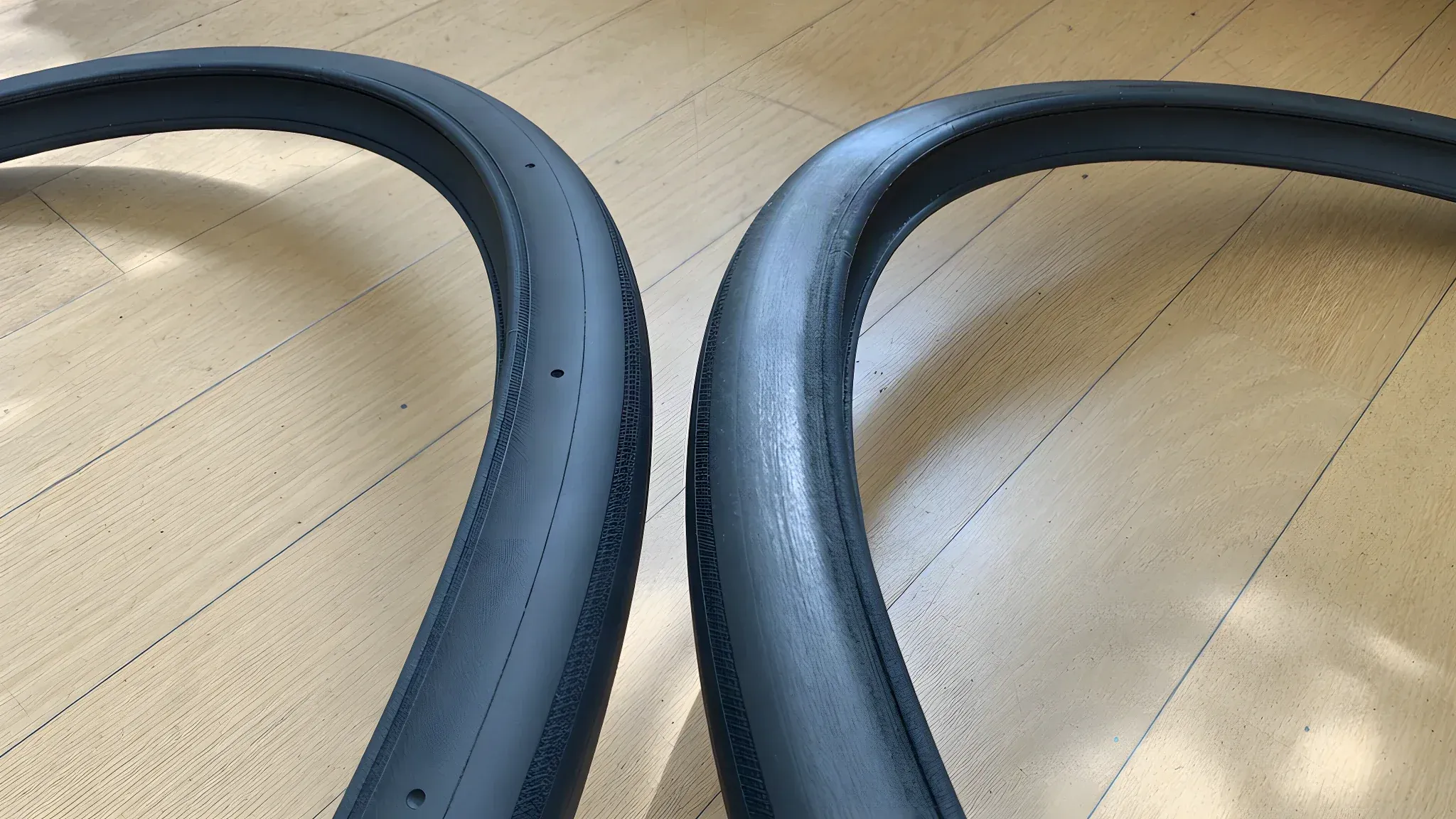
- A smooth tread with rubber still over the belt. Schwalbe's example photo says that tyre could still be ridden, though puncture resistance falls as the tread thins.
- A fading pattern on a road tyre. Schwalbe says tread matters far less on a bicycle than on a car, mountain bike tyres excepted.
- White marks on a new tyre. Continental's 2018 mounting and care instructions call this protective anti-ageing wax.
Is it the tyre or the tube? Repeated punctures and slow leaks
Two flats on the same wheel within a few weeks point at the tyre before the tube. road.cc, Canyon and Vittoria all read a run of punctures as tread worn thin.
After the second flat, check the tread for the belt and feel inside the casing for glass before fitting another tube. Our puncture guide shows what a pattern of repeat flats means.
On a tubeless tyre, Michelin warns that sealant can plug small cuts unnoticed, and that they can reopen. See what old sealant can hide and a tubeless tyre that keeps losing air.
Why does the rear tyre wear out first, and should you swap front and rear?
The rear tyre carries more of your weight. Continental's maintenance advice puts its faster wear down to weight distribution, and Michelin names it as the tyre that generally wears out fastest, more so with late braking that locks the wheel.
The makers disagree on swapping. Continental's then UK distributor told road.cc it is not advisable, because a worn rear is square and on the front it affects handling. Schwalbe's Dave Taylor called it the rider's choice and would accept a swap for a daily commute. Canyon says to rotate tyres but gives no method.
Replacing only the rear is normal, and none of the maker pages read here asks for pairs. If you do move tyres, the better one goes on the front, because the front tyre steers.
How long do bike tyres last?
In Schwalbe's figures a bike tyre lasts 2,000 km to well over 10,000 km, and the other makers state it differently:
- Schwalbe. Standard tyres 2,000 to 5,000 km, the Marathon family 6,000 to 12,000 km, and the Marathon Plus often much more than 10,000 km. No figure for mountain bike tyres, because riding style dominates.
- Vittoria. An average of 3,000 to 4,000 for road and mountain bike tyres, labelled "mileage" with no unit given, and the wear signs matter much more than the distance.
- Michelin. No distance, but for e-bikes it estimates wear can happen twice as quickly as on a non-electric bike, mainly at the rear.
- Continental. No distance in its FAQ; its age advice is below.
- Canyon, a bike maker. Reports road tyre claims from 1,000 km up to 40,000 km.
Do bike tyres go off with age, and can you ride on cracked sidewalls?
Rubber ages whether the bike is ridden or not, and three tyre makers give three different ages:
- Continental. Its 2018 instructions say tyres, inner tubes and rim strips should be replaced after three years, irrespective of the mileage.
- Schwalbe. Its tyres can be stored for up to 5 years without issue, in a cool, dry and above all dark place.
- Michelin. A rough lifespan of 10 years from manufacture, with a professional inspection after the first year of use.
These are a replacement interval, a shelf life and an outer limit, and none is law: the Pedal Cycles (Construction and Use) Regulations 1983 cover brakes, not tyre age or tread.
Schwalbe separates fatigue cracks, a few large ones in the upper sidewall from riding on low pressure, from ageing cracks, which are small and spread evenly across the sidewall. Michelin says a tyre hardens and cracks over time, and Canyon says sunlight and outdoor storage speed it up.
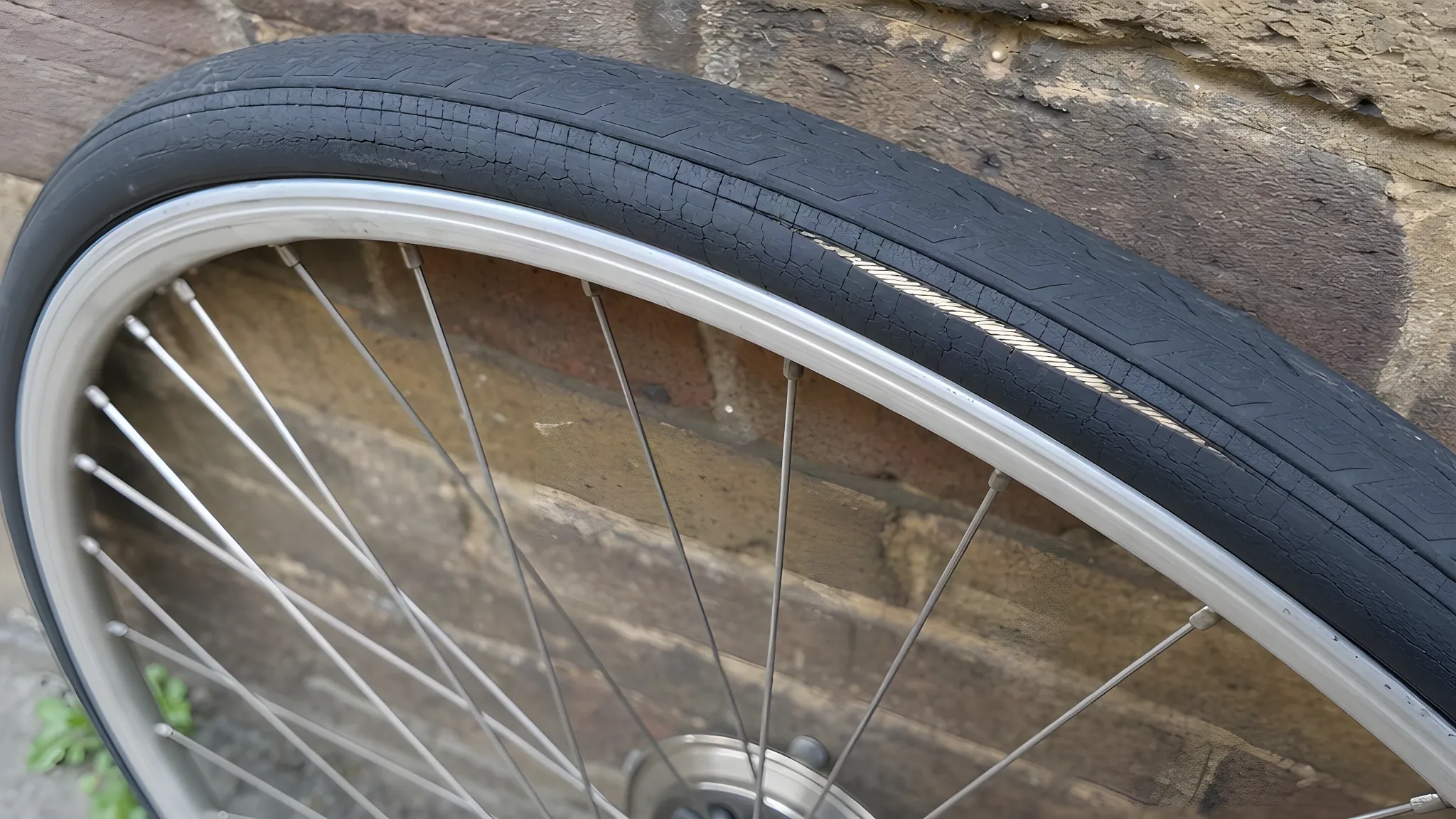
Fine, even cracks with no threads showing can be ridden and checked at each pump-up. A crack that opens when you squeeze the sidewall, shows threads or sits beside a bulge means a new tyre. Continental says moisture and dirt can get into a cracked tyre, and the tube could burst.
Schwalbe says a bike left on flat tyres may damage the sidewalls, so keep the weight off flat tyres in storage.
Do London roads wear tyres faster?
A London commute contains several of the conditions the makers say shorten tyre life:
- Potholes and kerbs. Continental's then UK distributor told road.cc that if you hit a pothole and feel the rim touch the road, the sidewall may be breached with no air lost, so stop and check. Our pressure guide covers potholes, kerbs and pinch flats.
- Wet roads and glass. Canyon says riding year-round wears tyres faster than summer riding, because the moisture helps sharp debris work into the tyre. Michelin recommends checking for micro-cuts after every ride, and brushing the tread shows embedded glass.
- Low pressure. Schwalbe calls a monthly gauge check the most important habit, because sidewalls fail early on soft tyres. Set the pressure for your weight and tyre width.
What does a worn tyre cost you, and what does the mechanic do at the door?
A worn tyre costs you in punctures and grip: Continental's FAQ says a tyre worn in the centre is more prone to punctures and no longer grips the road adequately.
Tyred's mobile puncture repair page says the mechanic inspects the tyre for embedded debris and checks the rim tape. If the tyre itself is worn or damaged, the page says, the mechanic will recommend a replacement and fit it there and then.
On Tyred's service prices, puncture repair starts from £30 and a new tyre is not included. The Premium package includes new tyres fitted, and a part the mechanic does not carry is priced before it is fitted.
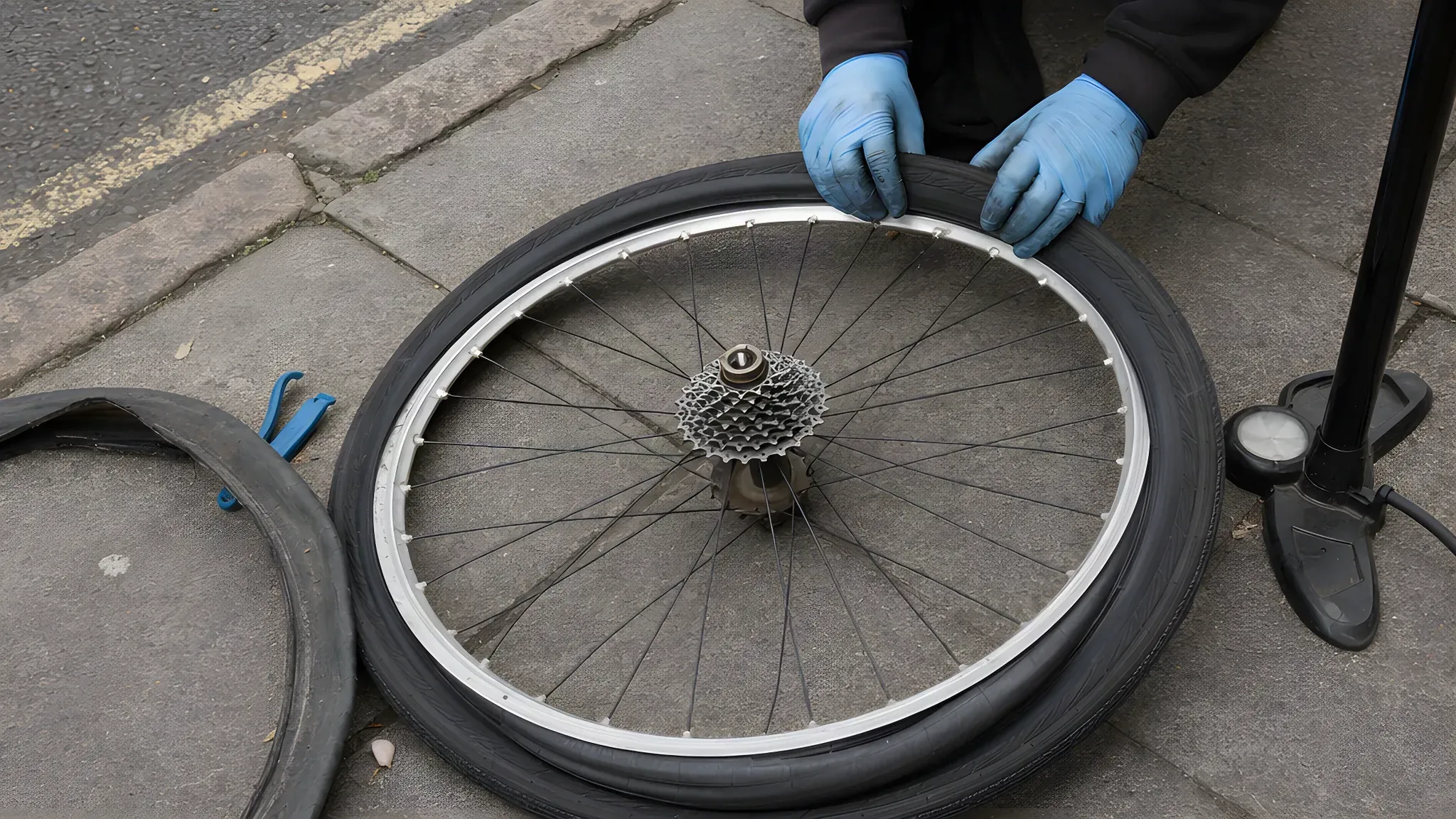
Fitting a new tyre means reading the size off the old tyre or the rim and inflating the new one inside the range printed on its sidewall. Continental's instructions pair a new tyre with a new tube, because tubes age too.
If you buy the tyre yourself, our sizes guide shows how to read the size on the old tyre or the rim.
When it is a job for a mechanic
- Belt or casing threads showing. The tyre is past Schwalbe's wear limit, and Continental warns the tube could burst.
- A bulge, or a tear with the tube showing. The casing has failed.
- A tyre that came off the rim when pumped. road.cc's guide says a damaged bead that blows off the rim means a new tyre.
- A worn rear tyre on an e-bike or cargo bike. The wheel is heavy, and a hub motor has a cable to disconnect. Tyres are within the work on e-bike repair.
- Repeat flats you cannot trace. The cause can sit in the tyre, the rim tape or the rim.
- Cracked sidewalls after storage. The tyres and tubes need checking before the first ride.
A mechanic comes to you with a fully stocked workshop, across London.
Book a repair · Mobile puncture repair →
Related guides
- Bike tyre sizes explained: markings, chart and rim fit
- How to fix a bike puncture (and when to call a mechanic)
- Bike tyre pressure: the right psi for your weight, tyre and bike
Sources and further reading
- Schwalbe: tyre wear FAQ, the wear limit and its two example photos, mileage by tyre family, fatigue and ageing cracks, low pressure and sidewall failure, the monthly gauge check and storage for up to 5 years.
- Continental: bicycle tyre knowledge FAQ, the tread wear indicator, the squared-off centre, punctures and grip on a worn tyre.
- Continental: bike tyre maintenance, faster rear wear from weight distribution.
- Continental: mounting and care instructions for clincher and folding tyres (PDF, 2018), replacing brittle or cracked tyres, the three-year replacement advice, anti-ageing wax and a new tube with a new tyre.
- Michelin UK: how long do bike tyres last? (updated 7 January 2026), rear wear, late braking, e-bike wear, sealant hiding cuts, checks after every ride, storage below 0°C, the transformer warning and the 10-year lifespan.
- Vittoria: how often to replace bike tires? A short guide (20 October 2023), the 3,000 to 4,000 average, signs mattering more than distance, and thin rubber and frequent punctures.
- road.cc: when to change your bike tyres, 7 warning signs to look for (Mat Brett, 27 April 2016), Continental's then UK distributor, Cambrian Tyres, on casing breaches, potholes, square profiles and swapping, Schwalbe's Dave Taylor on swapping, skid patches, repeat flats and bead failure.
- Canyon: when to change road bike tyres and how to do it (3 September 2024), the spread of mileage claims, wet-weather wear, cracking and sunlight, bulges and rotating tyres.
- legislation.gov.uk: The Pedal Cycles (Construction and Use) Regulations 1983, rules for a bicycle's brakes; tyres appear only in measurements and in the ban on a brake acting directly on a tyre, with no rule on tyre condition or age.
- GOV.UK: government bans old coach, bus and lorry tyres from roads (15 July 2020), the 10-year tyre ban and the vehicles it covers.